


Weaning is defined as the transition from a puppy’s complete reliance on mother’s milk to independent solid food consumption, and this process directly shapes digestive health, immune function, and behavioral development for life. The weaning process matters for puppy health in ways that go far beyond simple feeding logistics. Get it right, and you set a puppy up for a strong gut, a calm temperament, and a resilient immune system. Get it wrong, and the consequences can follow that dog for years. At Lakewoodranchdoodles, with over 20 years of hands-on breeding experience, this transition is treated as one of the most critical windows in a puppy’s early life.
Why does the weaning process matter for puppy health?
The weaning period is the single most important nutritional and biological transition a puppy will ever make. During this window, the puppy’s gut microbiota colonizes rapidly, maternal antibodies decline, and the immune system must begin functioning independently. Premature or improper weaning increases gastrointestinal dysbiosis and immune vulnerability, often requiring antibiotic intervention. That is a significant consequence for what many owners assume is just a feeding change.
The gut microbiome colonization that happens during weaning is not a passive process. It is an active, time-sensitive biological event. When the transition is abrupt or too early, the puppy’s digestive system cannot adapt fast enough. The result is dysbiosis, a disruption in the balance of gut bacteria, which leads to diarrhea, poor nutrient absorption, and a weakened immune response. This is why the timing and method of weaning are not optional considerations. They are medical ones.

Maternal antibodies provide passive immunity to puppies through milk, but this protection fades between 3 and 16 weeks of age. The puppy’s own immune system must take over during this exact window. A well-managed weaning process supports that handoff. A poorly managed one leaves a gap that pathogens can exploit.
Pro Tip: Ask your breeder exactly when and how weaning was started. A breeder who cannot answer that question in detail is a breeder who may not be managing this critical stage carefully.
Key physiological risks of improper weaning include:
- Gut dysbiosis leading to chronic digestive instability
- Elevated cortisol from stress, which suppresses immune function
- Poor vaccine antibody responses due to compromised gut health
- Hypoglycemia from irregular or insufficient feeding
- Stunted growth from inadequate caloric intake during rapid development
How does weaning shape puppy behavior and social development?
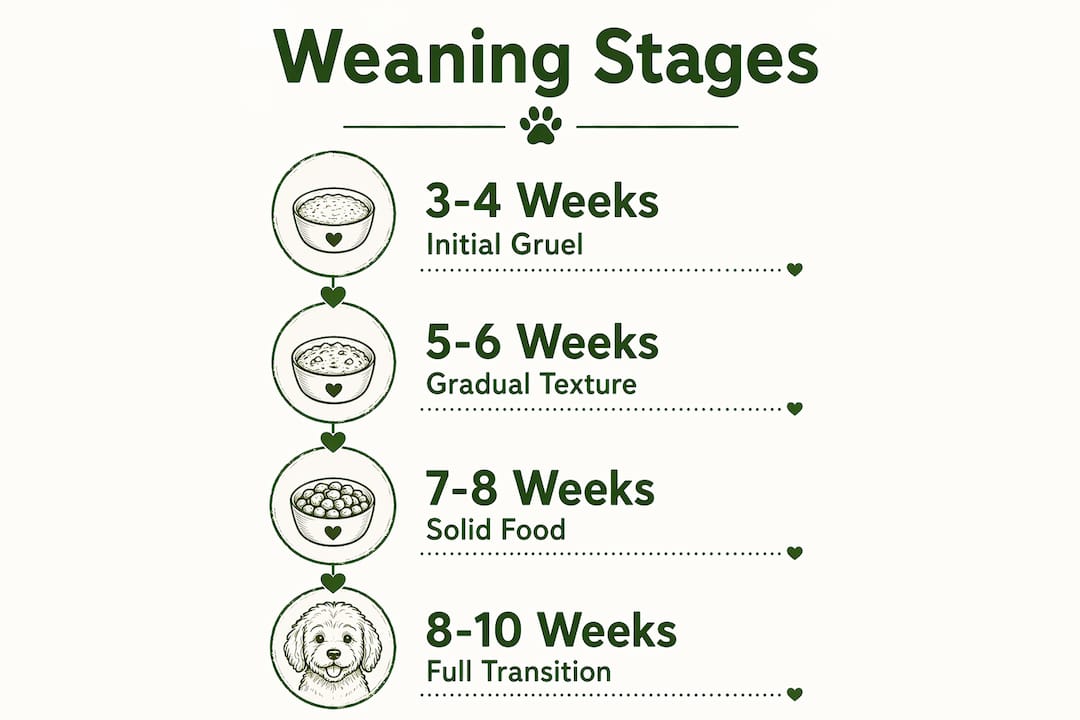
Weaning is not only a physical process. It is a behavioral one. Gradual weaning from 3–4 weeks to 8–10 weeks allows puppies to develop confidence, independence, and proper social skills within the litter. Puppies that are weaned too early miss critical time with their mother and littermates, and that deficit shows up as anxiety, reactivity, and poor bite inhibition in adult dogs.
The mother plays an active role in teaching puppies how to regulate their own behavior. She corrects them, sets limits, and models calm responses to stress. When a puppy is removed from that environment before 8 weeks, it loses access to that instruction. No amount of human socialization fully replaces what a mother dog teaches during those final weeks of weaning.
Gradual weaning also reduces stress on the puppy’s developing nervous system. Early-life stress during weaning negatively affects immune function and stress hormone regulation. Puppies that experience abrupt separation show elevated cortisol levels, which can deregulate their stress response for months. A calm, gradual transition protects both the gut and the brain.
The behavioral benefits of a well-managed weaning process include:
- Greater confidence when exploring new environments
- Better tolerance for being alone, reducing separation anxiety
- Improved bite inhibition from extended litter interaction
- Calmer responses to novel sounds, people, and experiences
- Stronger foundation for puppy training and socialization programs
What are the best practices for a safe weaning process?
The standard weaning timeline starts at 3–4 weeks and completes by 8–10 weeks. This is not arbitrary. It aligns with the natural decline of maternal milk production and the puppy’s growing ability to chew and digest solid food. Rushing this timeline creates health risks. Extending it beyond 10 weeks can delay independence and create feeding dependency.
Food texture progression
Dry kibble is too hard for young puppies to manage initially. Start with wet food or dry kibble softened with warm water to a gruel-like consistency. Over the following weeks, gradually reduce the water content as the puppy’s chewing ability and digestive capacity develop. By 8–10 weeks, most puppies can handle standard moistened or dry puppy food without difficulty.
Feeding frequency and portion size
Small, frequent, scheduled meals stabilize blood glucose and reduce digestive strain during the diet transition. Puppies have limited stomach capacity. Three to four small meals per day is the right approach during active weaning. Skipping meals or offering large portions creates glucose crashes and digestive upset, both of which are avoidable with consistent scheduling.
Managing litter dynamics
Multiple feeding stations are necessary in large or uneven litters. Without them, dominant puppies monopolize food access, and smaller or less confident puppies fall behind on nutrition. This creates uneven growth across the litter and adds stress to already vulnerable puppies. One station per two to three puppies is a practical minimum.
Pro Tip: Weigh each puppy daily during the weaning period. Daily weight tracking catches nutritional shortfalls before they become health crises. A puppy that fails to gain weight for two consecutive days needs immediate attention.
| Weaning stage | Age range | Food type | Feeding frequency |
|---|---|---|---|
| Early introduction | 3–4 weeks | Wet food or gruel | 3–4 times daily |
| Active transition | 4–6 weeks | Softened kibble | 3–4 times daily |
| Consolidation | 6–8 weeks | Moistened kibble | 3 times daily |
| Completion | 8–10 weeks | Standard puppy food | 3 times daily |
What health challenges arise during weaning, and how do you prevent them?
Diarrhea is the most common health challenge during weaning. It signals digestive stress, and it should never be dismissed as normal. Mild, brief loose stools during the first days of food introduction can be expected. Persistent diarrhea lasting more than 48 hours, or diarrhea accompanied by lethargy or loss of appetite, requires veterinary attention.
Hypoglycemia is a serious risk in small breeds and toy-sized puppies during weaning. Puppies that miss meals or fail to eat enough solid food can experience dangerous drops in blood sugar. Signs include weakness, trembling, and unresponsiveness. Consistent feeding schedules and caring for your dog with close daily monitoring prevent most cases.
Probiotic supplementation is one of the most evidence-backed tools available during weaning. Specific strains including Lacticaseibacillus rhamnosus and Lactiplantibacillus plantarum have been shown to reduce diarrhea, antibiotic use, and stress responses in weaning puppies. These strains also improved vaccine antibody responses, which means gut health directly affects how well a puppy responds to its early immunizations.
Avoiding environmental stressors during weaning is critical because the puppy’s gut microbiota is fragile and easily disrupted. Loud noises, frequent handling by strangers, temperature fluctuations, and changes in routine all add stress that the developing gut cannot buffer effectively. A calm, consistent environment is not a luxury during weaning. It is a health requirement.
Key warning signs that require veterinary attention during weaning:
- Diarrhea lasting more than 48 hours
- Vomiting after multiple consecutive meals
- Failure to gain weight over two or more days
- Lethargy or unresponsiveness between feedings
- Pale gums or signs of dehydration
Hydration is easy to overlook when transitioning puppies to solid food. Fresh water must be available at all times once puppies begin eating solid food, even in small amounts. Dehydration accelerates during bouts of diarrhea and compounds every other health risk during this stage. A shallow dish that puppies can access without climbing is the right setup.
Key Takeaways
Proper weaning is the single most important early-life process for establishing a puppy’s gut health, immune function, and behavioral stability.
| Point | Details |
|---|---|
| Timing is non-negotiable | Start weaning at 3–4 weeks and complete by 8–10 weeks to match biological development. |
| Gut health drives immunity | Disrupted weaning causes dysbiosis, which weakens immune response and increases antibiotic dependency. |
| Behavior follows weaning quality | Gradual weaning reduces anxiety, improves bite inhibition, and builds confidence in adult dogs. |
| Daily weight monitoring matters | Tracking weight each day catches nutritional shortfalls before they become serious health problems. |
| Probiotics support the transition | Strains like Lacticaseibacillus rhamnosus reduce diarrhea and improve vaccine responses during weaning. |
What 20 years of watching puppies wean taught me
Most new puppy owners underestimate weaning. They think it is something that just happens, a background process managed by the mother and the breeder. The truth is that weaning is the moment where a puppy’s entire future health trajectory gets set. I have watched adult dogs struggle with chronic digestive issues, anxiety, and reactivity that trace directly back to a rushed or poorly managed weaning period.
The biggest misconception I see is that earlier is better. People assume that getting a puppy onto solid food quickly means it is thriving. It does not. A puppy eating solid food at three weeks is not advanced. It is stressed, and its gut is not ready. The mother’s milk is doing work that no commercial food can replicate at that stage.
Patience during weaning is not passive. It is active, daily attention to weight, stool quality, behavior, and feeding response. The puppies that come out of a well-managed weaning process are noticeably different. They are calmer, more curious, and more resilient. That difference does not disappear. It compounds over a lifetime.
The go-home puppy kit we send with every Lakewoodranchdoodles puppy reflects everything we have learned about this transition. The feeding schedule, food recommendations, and health monitoring guidance in that kit exist because weaning does not end the day a puppy leaves its mother. It continues in your home, and you are the one managing it.
— Lakewood
Lakewoodranchdoodles puppies: bred with weaning in mind
At Lakewoodranchdoodles, every puppy goes through a carefully managed weaning process before coming home with you. Our team in Lindsay, Ontario, monitors daily weight, manages feeding stations, and follows a gradual food texture progression from the first introduction of solid food through completion.
Every family that brings home a Goldendoodle puppy or a Bernadoodle puppy from Lakewoodranchdoodles receives detailed feeding guidance, a weaning-informed go-home kit, and lifetime breeder support. You are not starting from scratch. You are continuing a process we have already begun with care. Call us at 705 875 5195 or book a virtual visit to ask about our current litters and how we prepare each puppy for a healthy life with you.
FAQ
When should weaning start for puppies?
Weaning should begin at 3–4 weeks of age and be completed by 8–10 weeks. This timeline aligns with the natural decline of maternal milk production and the puppy’s developing digestive capacity.
What food should puppies eat during weaning?
Start with wet food or dry kibble softened with warm water to a gruel consistency. Gradually reduce moisture content over several weeks as the puppy’s chewing ability and digestion mature.
How does weaning affect a puppy’s immune system?
Weaning disrupts the transition from maternal antibodies to the puppy’s own immune function. Improper or premature weaning causes gut dysbiosis, which weakens immune response and can reduce the effectiveness of early vaccinations.
Can probiotics help during the weaning process?
Yes. Strains including Lacticaseibacillus rhamnosus and Lactiplantibacillus plantarum reduce diarrhea, lower stress responses, and improve vaccine antibody levels in weaning puppies.
What signs indicate a puppy is struggling with weaning?
Watch for persistent diarrhea lasting more than 48 hours, failure to gain weight over two consecutive days, lethargy, vomiting after meals, or signs of dehydration such as dry gums.