


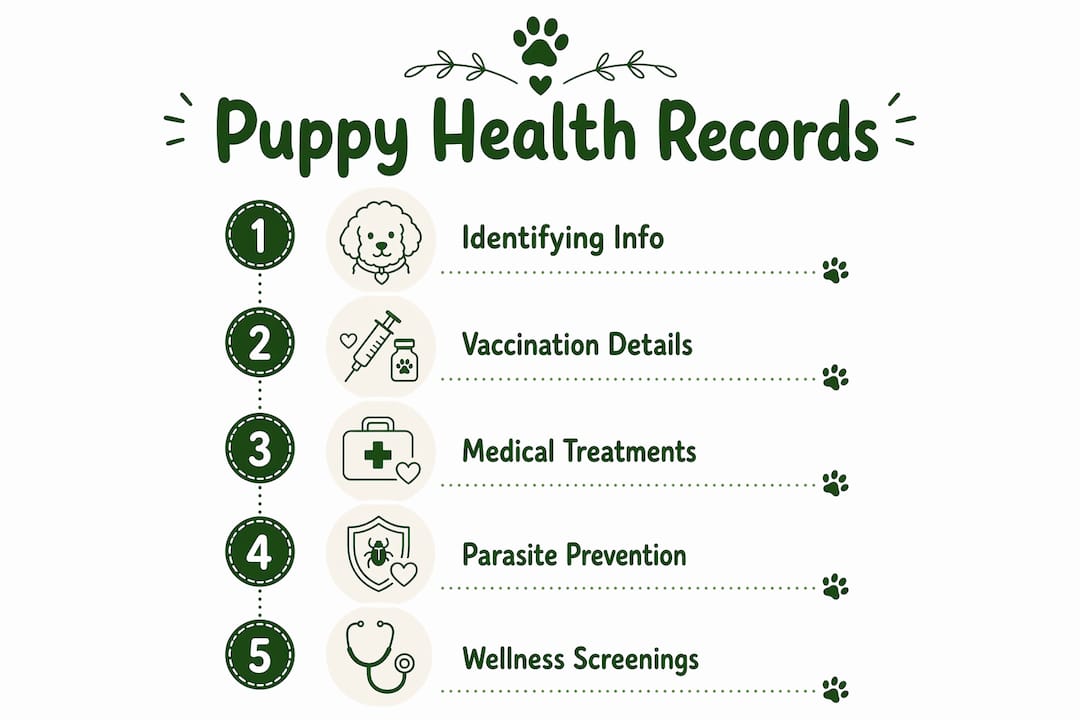
A complete puppy health record is a formal compilation of vaccination history, identifying information, medical treatments, and preventive care documentation. Knowing what puppy health records should include protects your dog at every vet visit, supports insurance claims, and satisfies legal requirements across Canadian provinces. The Canadian Veterinary Medical Association recognizes thorough health documentation as a baseline standard of responsible pet ownership. Without it, you risk gaps in care that can cost you time, money, and your puppy’s wellbeing. This guide breaks down every component your puppy’s file needs from day one.
What puppy health records should include: identifying information first
The foundation of any puppy health file is accurate identifying information. This section establishes who your dog is, who owns them, and where they came from. Without it, every other document in the file loses context.
A complete puppy health record must include:
- Full name of the puppy as registered
- Breed, sex, and date of birth
- Color and distinguishing markings for physical identification
- Breeder’s name and contact information
- Acquisition date (the date you took the puppy home)
Registration papers and breeder certificates belong in this section too, but they serve a different purpose than health records. Registration and hereditary screening certificates confirm lineage and ownership, and they reveal genetic health risks that may surface later in life. Health records document what has happened medically. Both are necessary, and they should be stored together but kept clearly labeled as separate documents.
Lakewoodranchdoodles provides new owners with complete breeder documentation at pickup. That starting point makes building the rest of the file much easier.
What vaccination details must appear in every puppy record?
Vaccination records are the most legally significant part of essential puppy health paperwork. A basic entry that says “vaccines given” is not enough. Each vaccination entry must include six specific fields to be valid for boarding, travel, and legal purposes.
| Field | What to Record |
|---|---|
| Vaccine name | Full product name (e.g., DA2PP, Nobivac Rabies) |
| Manufacturer | The company that produced the vaccine |
| Lot number | Printed on the vaccine vial |
| Date administered | Exact date of injection |
| Administering vet | Name and clinic |
| Next due date | Scheduled booster or renewal |
Core puppy vaccinations start at 6–8 weeks of age. The DA2PP series requires 3–4 doses, with boosters continuing until at least 16 weeks. Rabies vaccination is typically given once between 12–16 weeks. Missing a booster window can restart the entire series, which is why recording the next due date matters as much as recording the date given.
The lot number field is the one most owners skip. Vaccine brand names and lot numbers are legally required as proof of rabies vaccination in bite incidents and for cross-border travel. A vet’s signature alone does not satisfy this requirement in many Canadian jurisdictions. Always request the full invoice after each appointment, because it typically contains the lot number even when the paper vaccine certificate does not.
How to document medical treatments, parasite prevention, and wellness screenings
Vaccination records cover one layer of your puppy’s health story. The rest of the file should document everything else that happens medically, from the first deworming to routine blood work.

Parasite prevention is one of the most frequently under documented areas in puppy health files. Record every deworming treatment, including the product name, dosage, and date. Do the same for flea and tick prevention. Canadian puppies face regional parasite risks that vary by province, so a clear prevention history helps any vet assess exposure and coverage gaps quickly.
Routine wellness exams and parasite screenings detect conditions that are invisible externally. Stool testing, baseline blood work, and tick-borne disease screens are standard at a puppy’s first vet visit and should be documented with results, not just noted as “completed.” Results give your vet a baseline to compare against at future appointments.
Your puppy’s wellness record should also capture:
- Behavioral observations noted at each exam (anxiety, reactivity, energy level)
- Diet information including current food brand, feeding schedule, and any known sensitivities
- Weight at each visit to track growth against breed norms
- Heartworm prevention product name, dose, and dates given
- Any adverse reactions to medications or foods, with dates
Veterinarians treat a health record as a medical story, not just a vaccination log. Behavioral and dietary information are key parts of that story. A vet seeing your puppy for the first time can make much better decisions when they know your dog has a chicken sensitivity or showed signs of anxiety at the 8-week exam. Lakewoodranchdoodles documents behavioral observations from birth as part of its holistic approach to puppy development, giving new owners a head start on this section.
Pro Tip: Keep a running notes section at the back of your puppy’s health file. Write down anything unusual you observe at home, including changes in appetite, stool consistency, or energy. Bring these notes to every vet visit. Vets call this owner-reported history, and it fills gaps that clinical exams cannot.
How should you organize and maintain puppy health records?
Organization determines whether your puppy’s health file is useful in an emergency or useless when you need it most. A well-kept file takes less than 30 minutes to set up and saves hours of stress later.
-
Create a digital copy immediately. Photograph or scan every document the day you receive it. Keeping digital copies in a cloud folder prevents loss during the chaotic early weeks of puppy ownership. Use a folder labeled with your dog’s name and birthdate so it is easy to find.
-
Build an emergency medical summary. This is a single page that contains your puppy’s microchip number, known allergies, current medications, your vet’s name and after-hours number, and your nearest emergency animal hospital. An emergency medical summary with this information aids rapid care decisions and improves outcomes when minutes matter.
-
Use a health record template or tracker. Printed vaccine tracker templates are available from veterinary clinics and reputable online sources. A structured template prevents you from forgetting fields like lot numbers or next due dates.
-
Request complete invoices after every appointment. Invoices contain vaccine lot numbers, product names, and dosages that paper certificates often omit. File the invoice alongside the certificate for every visit.
-
Review and update the file every six months. Set a calendar reminder. Check that upcoming booster dates are noted, that parasite prevention is current, and that your emergency summary reflects any changes in medications or vet contacts.
Pet insurance companies require a complete, organized medical history to process claims. A disorganized file with missing dates or unsigned certificates can delay or deny a claim. Building good habits from week one means your file is always claim-ready. The go-home kit from Lakewoodranchdoodles includes documentation that gives new owners a solid starting point for this file.
Key Takeaways
A puppy’s health record must include vaccination details with lot numbers, identifying information, parasite prevention history, wellness exam notes, and an emergency medical summary to meet Canadian veterinary and insurance standards.
| Point | Details |
|---|---|
| Vaccination record fields | Record vaccine name, manufacturer, lot number, date given, and next due date for every dose. |
| Identifying information | Include microchip number, breed, birthdate, and breeder contact alongside registration papers. |
| Wellness and parasite records | Document deworming, flea and tick prevention, blood work results, and behavioral notes at each exam. |
| Emergency medical summary | Keep a single-page summary with microchip ID, allergies, medications, and emergency vet contacts. |
| Digital backup | Photograph all documents immediately and store them in a labeled cloud folder to prevent loss. |
What I have learned after 20 years of watching owners manage puppy paperwork
Most new owners treat health records as a formality. They tuck the papers in a drawer and forget about them until the first vet visit. That approach costs them later, and I have seen it play out more times than I can count.
The owners who struggle most are the ones who skip the lot number field on vaccine records. They find out it matters when they try to cross into the United States with their dog, or when a bite incident requires legal proof of rabies vaccination. A missing lot number means starting the documentation process over, sometimes at significant expense.
The owners who do it right treat the health file like a financial record. They keep it current, they back it up, and they bring it to every appointment. Their vets can make faster decisions. Their insurance claims go through without delays. Their dogs get better care because the medical story is complete.
One thing I tell every family who brings home a puppy from Lakewoodranchdoodles: the file we hand you on pickup day is the beginning, not the end. Your job is to keep adding to it. Every vet visit, every parasite treatment, every behavioral note you add makes that file more valuable. A puppy health record is only as good as the owner who maintains it.
— Lakewood
Puppies from Lakewoodranchdoodles come with records already started
Every puppy that leaves Lakewoodranchdoodles in Lindsay, Ontario comes with complete health documentation already in place. Vaccination records, deworming history, behavioral observations, and breeder certificates are all prepared before your puppy goes home. You are not starting from scratch.
Lakewoodranchdoodles breeds Goldendoodles, Bernadoodles, Cockapoos, and on occasion Moyen Poodles and Golden Retrievers, all with the same attention to documented health and temperament. If you are ready to bring a fully documented puppy home, browse the available puppies at Lakewoodranchdoodles or call 705 875 5195 to book a visit. Virtual visits are available too. You can also explore caring for your dog resources on the Lakewoodranchdoodles website to prepare for life with your new puppy.
FAQ
What does a puppy health record include?
A puppy health record includes vaccination history with lot numbers, identifying information such as microchip number and breed, deworming and parasite prevention dates, wellness exam notes, and an emergency medical summary. Each section serves a different purpose for veterinary care, insurance, and legal compliance.
When do core puppy vaccinations start?
Core vaccinations start at 6–8 weeks of age. The DA2PP series requires 3–4 doses, and rabies is typically given once between 12–16 weeks, with records required for boarding and travel.
Why does the vaccine lot number matter?
The vaccine lot number is legally required as proof of rabies vaccination in bite incidents and for cross-border travel. Many basic vaccine certificates omit it, so always request the full clinic invoice after each appointment.
Does pet insurance require puppy health records?
Pet insurance companies require a complete medical history to process claims. A disorganized or incomplete file can delay or deny reimbursement, making organized record-keeping a financial priority from day one.
How should I store my puppy’s health records?
Store physical records in a labeled folder and create digital copies in a cloud folder immediately after receiving them. Also keep a one-page emergency summary with your puppy’s microchip number, allergies, medications, and vet contacts for quick access during emergencies.