


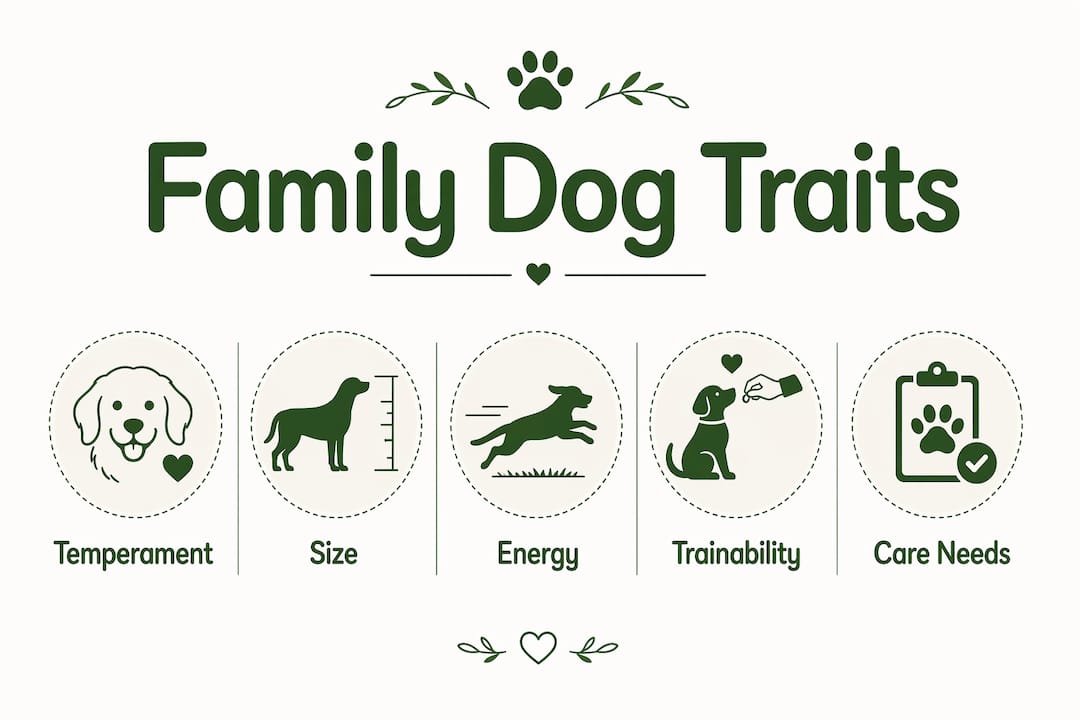
A family-friendly dog breed is defined by a combination of gentle temperament, manageable size, appropriate energy levels, and care needs that fit naturally into a home with children. The American Kennel Club and veterinary behaviorists agree that no single trait makes a dog family-safe. The full picture includes trainability, tolerance for noise and unpredictable movement, and a dog’s willingness to accept handling from small hands. For Canadian families weighing this decision, understanding those core traits is the difference between a great match and a frustrating mismatch.
What is a family-friendly dog breed, and which ones top the list?
Labrador Retrievers, Golden Retrievers, and Cavalier King Charles Spaniels consistently rank among the most recommended breeds for families with children. Each earns that reputation through a specific combination of traits, not just a friendly face. Labrador Retrievers are patient, eager to please, and physically sturdy enough to handle rough play from toddlers. Golden Retrievers share that patience and add an almost instinctive gentleness that makes them reliable around babies and school-age kids alike.
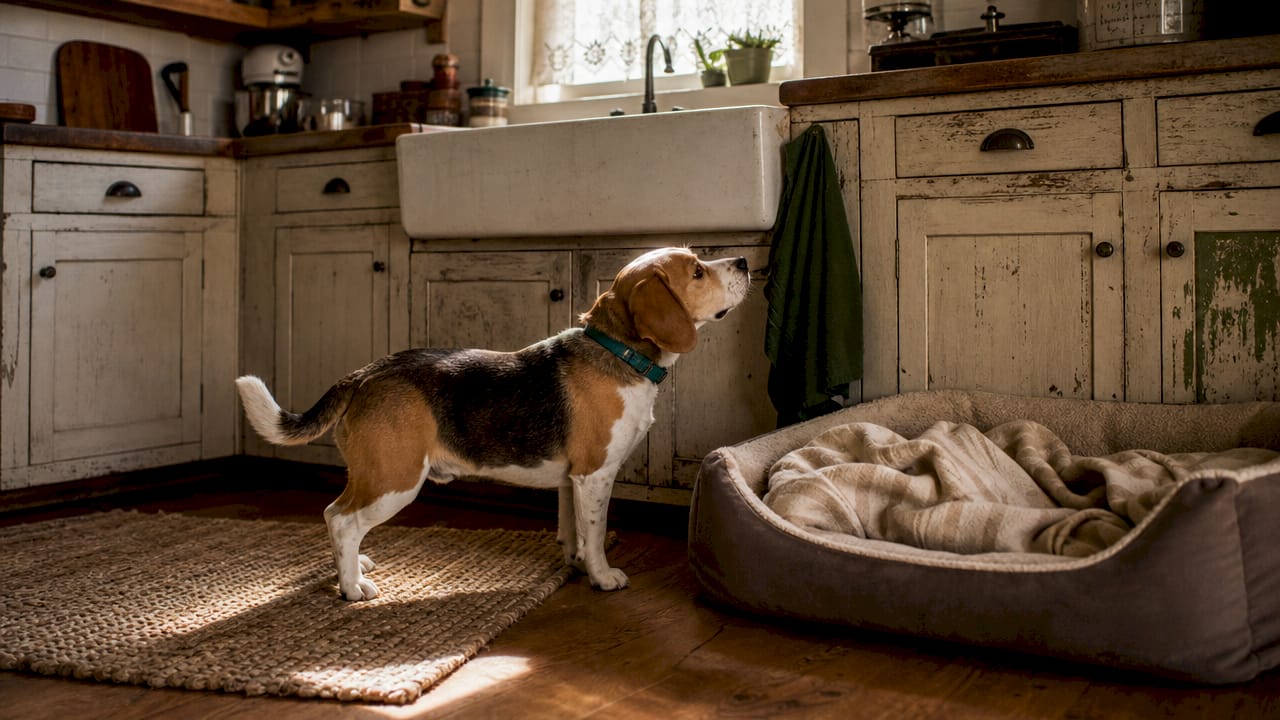
Beagles bring curiosity and a compact size that suits smaller homes, though their strong nose means they need a securely fenced yard. Newfoundlands and Boxers round out the top tier for larger families. Newfoundlands are famously calm and protective, earning the informal nickname “nanny dog” in popular culture. Boxers are playful and loyal, with enough energy to keep up with active kids without becoming unmanageable.
The term “nanny dog” is not an official breed category. It reflects a dog’s calm, watchful temperament rather than any certified standard. Families should treat it as a useful shorthand, not a guarantee of behavior.
Key traits shared by top-ranked family breeds:
- Patience under pressure: tolerates noise, sudden movement, and physical contact without reacting
- Trainability: responds consistently to positive reinforcement, which makes household rules easier to establish
- Low predatory drive: less likely to chase or nip at running children
- Social flexibility: comfortable with strangers, guests, and other pets
- Moderate to low aggression threshold: does not guard food or toys aggressively
Cavalier King Charles Spaniels deserve a specific mention for Canadian families in apartments or condos. They adapt well to smaller living spaces and require less daily exercise than larger breeds. That adaptability makes them one of the best options for urban families in Toronto, Ottawa, or Vancouver.
How does temperament variability affect family compatibility?
Breed reputation is a starting point, not a guarantee. Even within the same breed, behavioral variability is significant, and experts caution against blanket breed recommendations for that reason. A Labrador from a working line bred for field trials behaves very differently from one bred as a companion. The working dog may be too intense and reactive for a home with young children, even though both dogs share the same breed label.
Individual temperament assessment matters more than breed stereotype. A practical approach is what behaviorists call a “study of one.” Watch whether a specific dog willingly follows cues, tolerates noise, and enjoys being touched. A dog that stiffens when a child reaches for its collar is sending a clear signal, regardless of breed.
Herding breeds like Border Collies and Australian Shepherds present a specific challenge. Their natural mouthing and chasing instincts can be misread as aggression when they nip at running children. That behavior is not malicious. It is instinct. But it requires extra management and is often underestimated by families who fall in love with a breed’s intelligence before understanding its behavioral wiring.
Pro Tip: Ask your breeder whether a puppy comes from working lines or companion lines. That single question tells you more about likely behavior than any breed profile.
Responsible breeders do not let families self-select puppies based on appearance alone. Good breeders place puppies based on the puppy’s personality and the family’s specific environment. That practice dramatically improves the odds of a successful long-term match.
What practical factors should Canadian families consider?
Matching a dog to your household requires honest answers to a few concrete questions. How active is your family? How much space do you have? What are the ages of your children? A high-energy breed like an Irish Setter needs approximately 2 hours of daily exercise. That is a real daily commitment, not an occasional weekend hike.
Canadian winters add a layer of complexity that families in warmer climates do not face. Short-coated breeds like Boxers feel the cold quickly and need coats for outdoor walks from november through march. Double-coated breeds like Golden Retrievers handle cold well but shed heavily in spring, which matters for families with allergies or a preference for a clean home.
“The best family dog is not the most popular breed. It is the dog whose individual temperament, energy level, and care needs match your specific household. Choosing based on a breed’s reputation alone is the most common mistake families make.”
Children’s ages shape the decision significantly. Families with toddlers need a dog with an exceptionally high tolerance for unpredictable behavior. Families with teenagers can consider more energetic or sensitive breeds that require consistent handling. Teach children proper dog interaction from day one. That means no pulling ears, no approaching a dog while it eats, and no disturbing a dog that has retreated to its crate.
Practical steps for Canadian families before bringing a dog home:
- Audit your living space. Measure your yard or confirm your building’s pet policy before choosing a breed size.
- Calculate your weekly exercise capacity honestly. Match it to the breed’s documented needs.
- Research grooming costs. Some low-shedding breeds require professional grooming every 6–8 weeks.
- Budget for veterinary care, food, training classes, and boarding during vacations.
- Visit the breeder in person or virtually before committing. Observe how puppies interact with people and each other.
Size matters more than most families expect. A guide to size ranges helps narrow the field before you fall in love with a breed that does not fit your home.
What are the best practices for training and socializing a family dog?
Proper socialization and training are the foundation of a safe, happy family dog, regardless of breed. Socialization means controlled, positive exposure to different people, sounds, surfaces, and situations during the critical window between 3 and 14 weeks of age. A puppy that misses this window is harder to settle into a busy household later.
Consistent training methods produce the most reliable results. Positive reinforcement training rewards the behaviors you want to see repeated. It builds a dog’s confidence and strengthens the bond between the dog and every member of the family. Punishment-based methods create anxiety and unpredictability, which is the opposite of what a family needs.
Best practices for training a family dog:
- Start training the day the puppy arrives home, not after a “settling in” period
- Keep sessions short: 5–10 minutes, several times a day, works better than one long session
- Involve every family member, including children, in training so the dog respects all humans in the home
- Use crate training to give the dog a safe retreat and prevent destructive behavior when unsupervised
- Enroll in a group puppy class within the first few weeks to combine socialization with structured learning
Educating children about dog behavior is as important as training the dog itself. A child who knows how to read a dog’s body language and respect its boundaries reduces the risk of bites and builds a relationship based on mutual trust. Two-way training, dog and child together, produces the safest and most harmonious family environment.
Pro Tip: If your dog shows any signs of resource guarding or anxiety around children, contact a certified professional trainer immediately. Early intervention is far easier than correcting an established behavior problem.
Working with a professional is not a sign of failure. Getting a trainer early sets a clear behavioral foundation and gives families tools they can use for the dog’s entire life.
Key Takeaways
A family-friendly dog breed succeeds in a home when temperament, size, energy level, and training all align with the specific needs of that household.
| Point | Details |
|---|---|
| Temperament over breed fame | Assess the individual dog’s behavior, not just the breed’s reputation, before committing. |
| Breed variability is real | Working and companion lines within the same breed behave very differently around children. |
| Match energy to lifestyle | High-energy breeds like Irish Setters need up to 2 hours of daily exercise. |
| Train the whole family | Teaching children proper dog interaction is as important as training the dog itself. |
| Breeder placement matters | Responsible breeders match puppies to families based on personality and environment, not buyer preference. |
What 20 years of breeding has taught me about “family-friendly”
Families come to us with a breed in mind almost every time. They have done their research, read the rankings, and decided. What they have not done is meet the individual dog. That gap between breed reputation and individual reality is where most mismatches happen.
The breeds we work with at Lakewoodranchdoodles, Goldendoodles, Bernadoodles, and Cockapoos, earn their family-friendly reputation through consistent temperament selection across generations. But even within those lines, I watch each puppy carefully. Some are bold and curious. Some are gentle and quiet. A bold puppy placed with a timid toddler is a recipe for stress on both sides.
The other thing families consistently underestimate is their own role. A dog does not arrive family-ready. It arrives with potential. Training, socialization, and clear boundaries are what convert that potential into the dog you imagined. Families who invest in those first six months rarely regret it. Families who skip them often do.
One more thing: do not overlook adult dogs. A well-socialized adult dog from a responsible breeder often integrates into a family faster than a puppy, with fewer sleepless nights and a clearer picture of its temperament.
— Lakewood
Lakewoodranchdoodles: family-matched puppies from Lindsay, Ontario
Lakewoodranchdoodles has spent over 20 years breeding Goldendoodles, Bernadoodles, and Cockapoos with one consistent goal: placing the right puppy with the right family. Every puppy is raised with early socialization, health screening, and temperament assessment built into the process.
Families across Canada can browse available puppies and filter by breed, size, and temperament to find a match that fits their home and lifestyle. Lakewoodranchdoodles also offers Goldendoodle puppies and Bernadoodle puppies known for their calm, child-friendly temperaments. Every placement comes with lifetime breeder support, a health guarantee, and access to training resources. Book a visit in person at the Lindsay, Ontario ranch, or connect virtually at 705 875 5195.
FAQ
What makes a dog breed family-friendly?
A family-friendly breed combines a patient temperament, low aggression threshold, and trainability with care needs that fit a household with children. Temperament consistency across generations is the most reliable indicator.
Are mixed breeds like Goldendoodles good family dogs?
Yes. Goldendoodles and Bernadoodles are bred specifically for gentle, trainable temperaments and low-shedding coats, making them well-suited for families, including those with mild allergies.
What age should children be before getting a family dog?
Most behaviorists recommend waiting until children are old enough to follow basic rules about dog interaction, typically around age 5 or 6, though the right breed and individual dog temperament matter more than a fixed age.
How do I know if a specific puppy is right for my family?
Observe whether the puppy tolerates handling, noise, and movement without stiffening or retreating. Responsible breeders assess individual puppy personalities and match them to family environments rather than letting buyers choose on appearance alone.
Do apartment-dwelling families in Canada have good breed options?
Yes. Cavalier King Charles Spaniels, Cockapoos, and smaller Goldendoodle varieties adapt well to apartment living. The key factor is daily exercise and mental stimulation, not square footage alone.