


A responsible breeder’s role in puppy development begins at birth and runs through handover and beyond. From the first neonatal weigh-in to the final owner orientation, breeders who do this work well follow a structured sequence: daily health checks, Early Neurological Stimulation (ENS) during weeks one and two, timed socialization across the sensitive window, progressive weaning starting in the early weeks after three weeks, enrichment and handling protocols, temperament screening with the Volhard Puppy Aptitude Test (Volhard PAT), complete medical records, and a documented handover education session. The American Kennel Club (AKC) sets the baseline expectation clearly: weigh every puppy daily for the first two weeks and confirm each pup doubles its birth weight within 7–10 days.
Buyers evaluating a breeder should expect to receive:
- A daily weight log from birth through weaning
- Vaccination and deworming records with dates and products used
- Veterinary exam notes and any intervention records
- Temperament observations and Volhard PAT results
- A written feeding and weaning schedule
- Early training notes and socialization exposure log
- Breeder contact information and a lifetime support commitment
Lakewoodranchdoodles models this approach across every litter, combining over 20 years of hands-on experience with documented protocols for health, temperament, and owner education.
Table of Contents
- How breeders shape puppy development during the socialization window
- What Early Neurological Stimulation does and how breeders apply it
- Health monitoring and recordkeeping every breeder must do
- How breeders manage nutrition and weaning from weeks 3 to 8
- What housing and enrichment practices actually build confidence
- Why temperament testing matters and how breeders use the Volhard PAT
- A practical breeder checklist: daily tasks and buyer red flags
- How breeders prepare puppies and new owners for handover
- How Lakewoodranchdoodles implements these practices every day
- Key Takeaways
- What the early weeks actually mean for the dog you bring home
- Lakewoodranchdoodles: where these practices are standard, not exceptional
- Useful sources for further reading
How breeders shape puppy development during the socialization window
The socialization-sensitive period begins around three weeks of age and runs through approximately 12–16 weeks, according to the American Veterinary Society of Animal Behavior (AVSAB). Most of that window falls while puppies are still with the breeder, which makes the breeder’s choices during this stretch the single most consequential factor in a dog’s lifelong social confidence.
What breeders must introduce during this period:
- People: different ages, genders, body types, and appearances (hats, glasses, uniforms)
- Sounds: vacuum cleaners, hair dryers, children’s voices, traffic, doorbells
- Surfaces: carpet, tile, grass, gravel, metal grating, and textured mats
- Other species: supervised, calm interactions with cats or other dogs
- Novel objects: umbrellas, rolling carts, balloons, and anything visually unusual
A practical week-by-week progression looks like this. Before eyes open (weeks one to two), breeders focus on gentle handling and scent-cloth exposure to introduce non-present people and species. Weeks three to four bring supervised meet-and-greets with calm, vaccinated adult dogs and new humans. Weeks five to seven are the window for controlled novel-sound desensitization, starting at low volume with positive food associations. By weeks seven to eight, puppies should be experiencing short car rides, new rooms, and brief separations from the dam.
Pro Tip: Start low-dose, high-frequency exposures before the 8–12-week fear period. A puppy that has already met 20 different people calmly has a confidence buffer that makes the fear period far less disruptive.
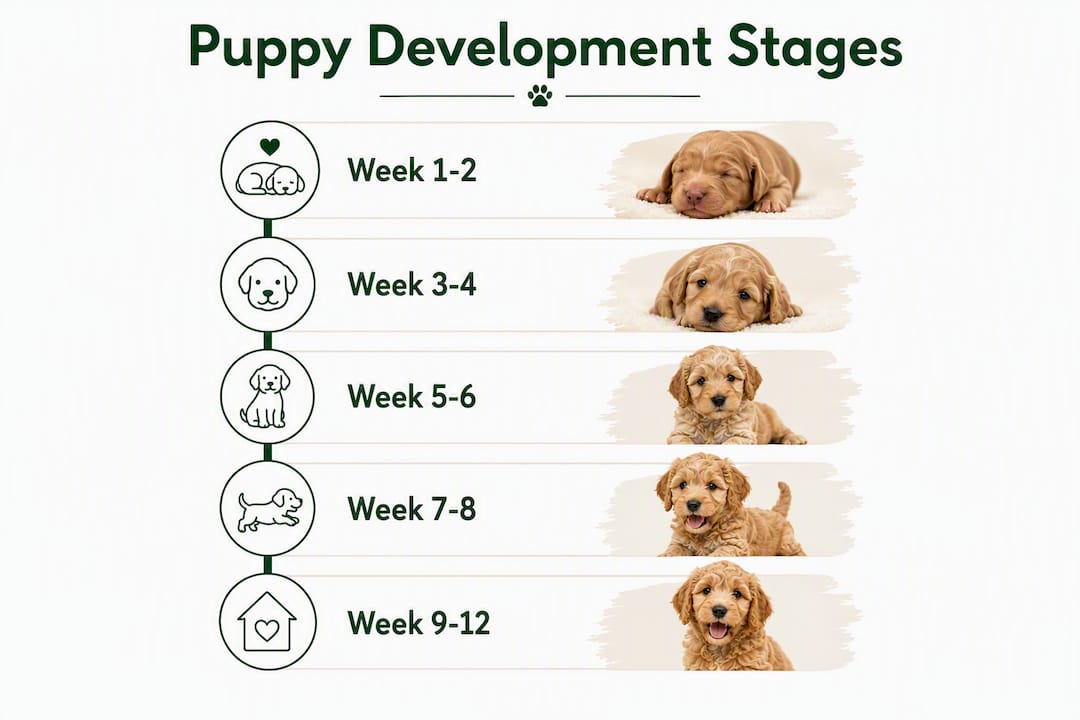
Sessions should stay short (five to ten minutes), end on a positive note, and never push a puppy past visible stress signals. Frequency matters more than duration. Early socialization done right is quiet, repetitive, and unremarkable to the puppy — that is exactly the point.
What Early Neurological Stimulation does and how breeders apply it
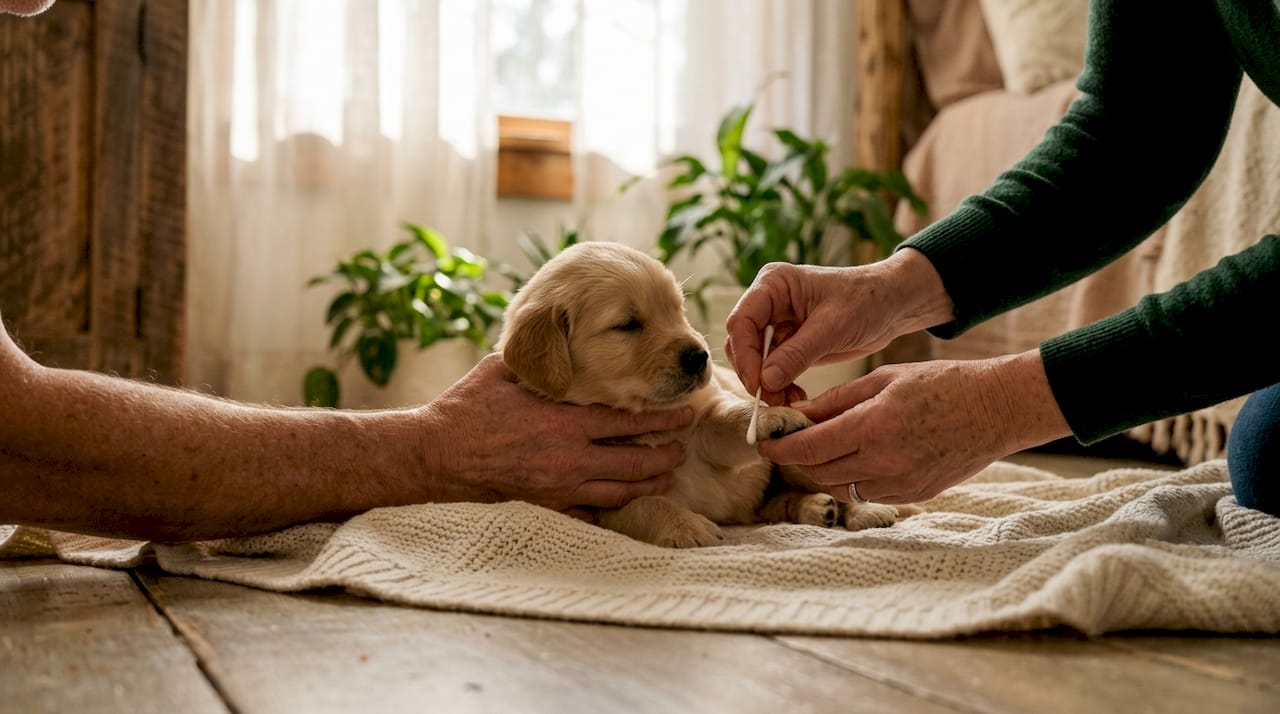
Early Neurological Stimulation is a defined protocol, not a casual handling routine. It consists of five brief exercises performed once daily during days three through sixteen of a puppy’s life, targeting the neurological system during a window when mild stress produces lasting resilience rather than lasting damage.
The five standard ENS exercises are:
- Tactical stimulation: hold the pup in one hand and gently tickle between the toes with a cotton swab for three to five seconds
- Head-held erect: hold the pup perpendicular to the ground, head pointing up, for three to five seconds
- Head-pointed down: invert the pup gently so the head points downward for three to five seconds
- Supine position: hold the pup on its back, cradled in both palms, for three to five seconds
- Thermal stimulation: place the pup on a cool, damp towel for three to five seconds
Each session covers all five exercises and takes under two minutes per puppy. The goal is mild cardiovascular and adrenal stimulation, not distress.
ENS is low-dose, short-duration stimulation during the first two weeks. Its value lies in marginally increased resilience in some studies, but it must never replace careful neonatal veterinary oversight. A pup that is failing to gain weight, showing labored breathing, or crying persistently needs a vet, not more ENS.
Two cautions matter here. First, ENS is not a substitute for later socialization. A puppy that received ENS but was then isolated in a kennel until eight weeks will still show fear and reactivity. Second, hygiene is non-negotiable: wash hands between pups, use clean towels, and monitor neonates for any signs of stress response after sessions. If a puppy is medically fragile, pause ENS and consult your veterinarian before continuing.
Health monitoring and recordkeeping every breeder must do
Daily neonatal care is where most problems are caught early enough to fix. The AKC recommends weighing every puppy daily for the first two weeks, with a key milestone: healthy neonates should double their birth weight within 7–10 days. A pup that fails to hit that milestone is a candidate for supplemental intervention.
| Age Range | Health Actions | Weight Milestone |
|---|---|---|
| First two weeks (Neonatal) | Daily weigh-ins, check for nursing, monitor dam milk supply, ENS days 3–16 | Double birth weight within 7–10 days |
| Weeks 2–3 (Transitional) | Eyes and ears open; begin gentle handling; watch for fading puppy signs | Steady daily gain |
| Weeks 3–4 (Pre-wean) | Introduce gruel; first deworming; observe elimination independence | Consistent weight gain |
| Weeks 4–8 (Socialization/Weaning) | Progressive solid food; first vaccines (typically week 6–8); vet exam | Weight gain accelerates with solid food |
Red flags requiring immediate veterinary attention:
- Puppy loses weight or fails to gain over 24 hours
- Persistent crying, especially high-pitched or weak
- Puppy appears to nurse but weight does not increase (possible failure-to-thrive; supplemental tube feeding may be needed)
- Bloated abdomen, diarrhea, or labored breathing
- Dam rejecting a specific puppy repeatedly
- Any puppy significantly smaller than littermates with no catch-up trend
Recordkeeping is not optional. Buyers deserve a complete paper trail: weight log by date and pup ID, vaccine and deworming records with product names and lot numbers, vet exam notes, maternal health documentation, and a log of any interventions. Photo timestamps tied to weight logs are a practical way to make records both transparent and verifiable.
How breeders manage nutrition and weaning from weeks 3 to 8
Weaning is a process, not a date. Puppies typically begin transitioning to solid food at 3–4 weeks and are usually fully weaned by eight weeks. The breeder’s job is to manage that transition so every puppy in the litter gets adequate nutrition without competitive eating or digestive upset.
The practical sequence:
- Week 3–4: Introduce a soupy gruel made from high-quality puppy kibble soaked in warm water or puppy milk replacer. Offer it in a shallow dish two to three times daily. Temporarily separate the dam for 20–30 minutes before each feeding so puppies are hungry.
- Week 5–6: Gradually thicken the gruel by reducing liquid. Increase feeding frequency to three to four times daily. Monitor each puppy’s intake and watch for competitive eating in larger litters.
- Week 7–8: Transition to moistened kibble, then dry kibble. Dam access becomes increasingly limited and natural.
Nutritional considerations worth noting: use a puppy-formulated food with appropriate protein and fat ratios for the breed size. For neonates that appear to nurse but fail to gain weight, supplemental tube feeding is the intervention of choice. The AKC notes that some pups appear to nurse actively but have no milk in their stomachs, which is why daily weighing catches what visual observation misses.
Sanitation during feeding matters as much as the food itself. Wash dishes after every meal, rotate puppies through feeding stations in large litters, and check for aspiration signs (milk bubbling from the nose) in very young pups being introduced to gruel.
What housing and enrichment practices actually build confidence
Where puppies live during their first eight weeks shapes their baseline stress response more than most buyers realize. In-home whelping areas expose puppies to the ambient sounds of a household — appliances, voices, footsteps, doorbells — passively and continuously. An isolated kennel building provides none of that. Research supports moving the whelping box to busier household areas as puppies enter the socialization period, and splitting the whelping box into a sleeping zone and a toilet zone to encourage early elimination habits.
Practical enrichment steps:
- Provide safe, varied toys (different textures, sizes, and sounds) from week three onward
- Rotate substrates in the whelping area: carpet squares, rubber mats, smooth plastic, grass patches
- Introduce novel objects weekly: a cardboard box, a small tunnel, a crinkle mat
- Use scent cloths from non-present people or species during the neonatal period for olfactory socialization
Sound desensitization works best when it is gradual and paired with something positive. Start with recordings of household sounds at low volume during feeding. Increase volume across days, not hours. Never flood a puppy with loud noise and call it socialization.
Pro Tip: Rotate the people who handle the litter. Different ages, genders, and physical characteristics each represent a new social experience. A puppy handled only by one adult woman will not automatically generalize that comfort to a six-year-old boy or a man with a beard.
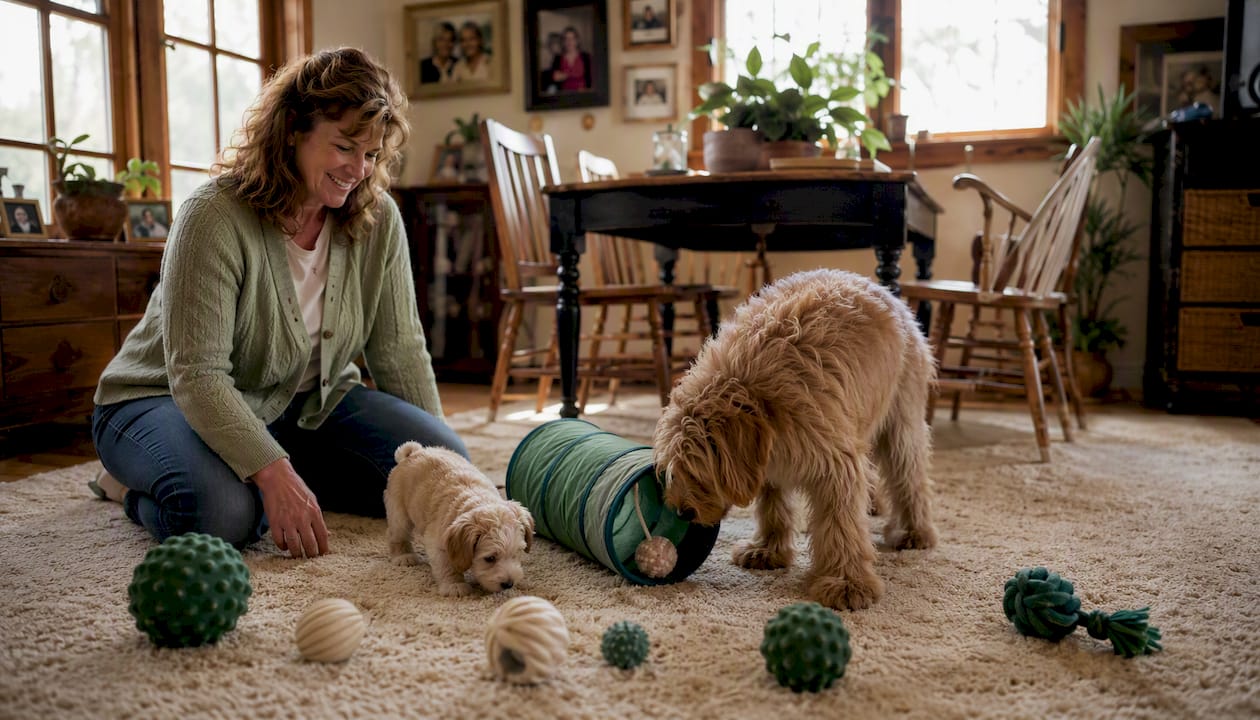
Daily handling should cover every body part: ears, paws, mouth, tail, and belly. This is not just socialization — it is the foundation for veterinary exams, grooming, and nail trims throughout the dog’s life. Short, supervised separations from the dam starting around week four build frustration tolerance and reduce the risk of separation anxiety later.
Why temperament testing matters and how breeders use the Volhard PAT
The Volhard Puppy Aptitude Test is a structured behavioral assessment typically administered at seven weeks. It measures a puppy’s responses across several dimensions: social attraction, following, restraint, social dominance, elevation dominance, retrieving, touch sensitivity, sound sensitivity, sight sensitivity, and stability. Each response is scored on a scale, and the pattern of scores suggests placement suitability — high-drive puppies for working homes, softer puppies for families with young children, and so on.
What the Volhard PAT actually tells you:
- Social attraction: how readily a puppy approaches a stranger
- Restraint: how a puppy responds to being held on its back (a proxy for acceptance of human control)
- Sound sensitivity: whether a puppy startles and recovers or startles and freezes
- Sight sensitivity: response to a moving object
- Stability: overall composure under mild, novel stress
The test is a snapshot, not a verdict. Experienced breeders use temperament testing longitudinally, combining Volhard PAT scores with daily behavioral observations across multiple weeks. A puppy that scores high-drive on one day but has been consistently calm and social in daily notes is a different placement candidate than one whose notes match the test score.
Breeders should communicate results honestly to buyers: strengths, tendencies, and the home environment most likely to bring out the best in that specific puppy. AKC and clinical behaviorist guidance both emphasize that temperament test results should inform placement and early puppy training recommendations, not replace them. Avoid overinterpreting a single test, and never use scores to justify withholding a puppy from a qualified buyer without a substantive conversation.
A practical breeder checklist: daily tasks and buyer red flags
Daily and weekly breeder responsibilities:
- Weigh every puppy daily (weeks one to two), then weekly through weaning
- Check dam health: milk supply, nipple condition, appetite, and behavior toward pups
- Clean and sanitize whelping area at least once daily; more frequently during weaning
- Run socialization sessions (five to ten minutes, varied stimuli, positive reinforcement)
- Rotate enrichment items weekly
- Update weight and developmental milestone logs
- Schedule and attend all vet checks on time
What buyers should receive at handover:
- Complete weight log from birth to handover date
- Vaccination and deworming records (product name, lot number, date, administering vet)
- Veterinary exam notes
- Temperament observations and Volhard PAT results
- Written feeding schedule and current food brand
- Socialization exposure log
- Microchip and registration information
- Breeder contact details and lifetime support terms
Red flags buyers should watch for:
- No written records of any kind
- Puppies offered before eight weeks without a breed-specific medical reason
- Whelping area visibly dirty or puppies showing signs of illness
- Minimal human handling (puppies that flinch from touch or hide)
- No veterinary exam on record
- Breeder cannot answer basic questions about the dam’s health history
- Pressure to decide quickly or pay a deposit before seeing documentation
A breeder who hesitates on any of these points is telling you something important.
How breeders prepare puppies and new owners for handover
The minimum age for rehoming is eight weeks for most breeds. Cornell University’s Riney Canine Health Center notes that toy breeds are often kept until ten to twelve weeks given their small size and developmental pace. Breed-specific considerations should always override a blanket rule.
The week before handover, breeders should:
- Increase the duration of short separations from the dam and littermates
- Maintain all enrichment and socialization exposures (no “quiet time” before the transition)
- Reinforce basic handling routines so the puppy arrives calm with touch
- Schedule a new-owner orientation session, in person or virtual
Handover packet checklist:
- Written feeding and weaning plan with current food brand and daily quantity
- Vaccine and deworming log
- Early training notes (any cues introduced, house-training progress)
- Temperament observations
- Microchip number and registration details
- Emergency vet contact and breeder’s direct line
First 72 hours post-adoption checklist for buyers:
- Keep the puppy in one quiet room initially; limit overwhelming introductions
- Maintain the breeder’s feeding schedule and food brand for at least two weeks
- Schedule a vet wellness exam within 48–72 hours
- Contact the breeder with any questions — a good breeder expects and welcomes this
How Lakewoodranchdoodles implements these practices every day
Lakewoodranchdoodles raises every litter inside the home, not in an isolated kennel. That single decision means puppies hear a dishwasher, a television, children’s voices, and a front door opening from their first days of life. It is the kind of passive habituation no enrichment schedule can fully replicate.
Daily protocols at Lakewoodranchdoodles include:
- Individual weigh-ins from birth, logged with photo timestamps for transparent handover documentation
- ENS exercises during days three through sixteen, with veterinary oversight for any fragile neonates
- Progressive socialization sessions introduced by week three, scaled by developmental stage
- Temperament screening using the Volhard PAT at seven weeks, combined with ongoing behavioral notes
- Vaccination and deworming on schedule, with complete records provided to every buyer
- Lifetime breeder support from first inquiry through the dog’s senior years
A typical week during weeks four to six looks like this: mornings start with weigh-ins and dam health checks, followed by a feeding session with gruel. Midday brings a ten-minute socialization session with a new person or novel object. Afternoons include enrichment rotation and a brief handling session covering paws, ears, and mouth. Records are updated daily. Vet visits are scheduled, not reactive.
Lakewoodranchdoodles’ breeding program also offers virtual and in-person visits by appointment, so prospective buyers can observe these practices directly before committing. Transparency is built into the process, not added at the end.
Pro Tip: The most efficient documentation system is also the simplest: a shared photo album organized by puppy ID, with each photo captioned with the date and weight. Buyers receive the full album at handover. It takes two minutes per day and produces a complete developmental record.
Key Takeaways
Breeders who shape healthy, confident puppies follow a documented sequence from birth through handover: daily neonatal monitoring, timed socialization, ENS, progressive weaning, temperament screening, and structured owner education.
| Point | Details |
|---|---|
| Daily weigh-ins are non-negotiable | AKC guidance: puppies should double birth weight within 7–10 days; daily logs catch failure-to-thrive early. |
| Socialization starts at three weeks | The AVSAB places the sensitive window at roughly 3–16 weeks, most of which occurs while puppies are with the breeder. |
| ENS is short and specific | Five exercises, once daily, days 3–16 only; it builds resilience but never replaces veterinary oversight or later socialization. |
| Temperament testing informs placement | The Volhard PAT at seven weeks, combined with ongoing behavioral notes, gives breeders and buyers a reliable placement guide. |
| Lakewoodranchdoodles | Raises litters in-home with daily weigh-ins, photo-timestamped records, Volhard PAT screening, and lifetime breeder support. |
What the early weeks actually mean for the dog you bring home
Most people focus on what happens after they pick up their puppy. The honest truth is that the most consequential decisions were made weeks before that moment, in the whelping box.
A breeder who skips daily weigh-ins is not just being lazy. They are missing the earliest and most treatable signs of failure-to-thrive. A breeder who keeps puppies in an isolated kennel is not just cutting costs. They are producing dogs that will startle at a vacuum cleaner for the rest of their lives. The gap between a well-socialized puppy and a fearful one is not genetics. It is what happened between weeks three and eight.
What frustrates me about how this topic gets discussed is the tendency to treat socialization as a checklist you hand to the new owner. “Expose your puppy to 100 things in 100 days.” That advice is not wrong, but it arrives too late for the most critical exposures. By the time a buyer picks up their puppy at eight weeks, the fear period is already beginning. The confidence buffer that makes that period manageable was built, or not built, by the breeder.
The breeders who do this well are not doing anything exotic. They are weighing puppies every morning, rotating who handles the litter, running ten-minute socialization sessions, and writing it all down. The difference between a good breeder and a great one is usually just consistency and documentation.
Lakewoodranchdoodles: where these practices are standard, not exceptional
Twenty years of raising Goldendoodles, Bernedoodles, Cockapoos, and Golden Retrievers with service-animal-quality temperaments means Lakewoodranchdoodles has run these protocols across hundreds of litters. Every puppy leaves with a complete weight log, vaccination and deworming records, temperament notes, a written feeding plan, and a breeder who answers the phone after handover.
Buyers who want to see these practices firsthand can book a virtual or in-person visit by appointment. You will see the whelping area, meet the dam, review the weight logs, and ask every question on your checklist before you commit. Available puppies are listed with breed, temperament notes, and current developmental stage. If you are looking specifically for a Goldendoodle, the breed listing includes litter details and expected handover timelines. Reach out at 705 875 5195 or visit the site to check current availability and schedule your visit.
Useful sources for further reading
These are the primary sources behind the claims in this article. Each covers a distinct aspect of breeder responsibilities and early puppy development.
- The Important Role of Breeders in Getting Puppies Off to a Healthy Start — American Kennel Club: AKC’s practical guidance on daily weigh-ins, weight milestones, failure-to-thrive intervention, and neonatal care protocols.
- A Puppy Growth Timeline: Transitions in Puppyhood — American Kennel Club: Covers developmental stages from neonatal through juvenile, including the fear period and socialization window timing.
- AVSAB Socialization Position Statement — American Veterinary Society of Animal Behavior: The clinical authority on socialization timing and the 3–16 week sensitive window.
- Tips for Breeders for Raising Behaviorally Healthy Puppies — APDT: Practical breeder guidance on short separations, frustration tolerance, bite inhibition, and early training foundations.
- Puppy Growth and Development Stages — Purina: Covers the 3–4 week solid food introduction timeline and full weaning by eight weeks.
- Breeders’ Role and Responsibilities in the Long-Term Behavioural Health of Canines — The Veterinary Nurse: Research-backed recommendations for whelping area setup, enrichment, and early handling practices.
- A Quantitative Exploration of Australian Dog Breeders’ Breeding Goals and Puppy Rearing Practices — MDPI: Cross-sectional study showing wide variation in socialization practices and the case for standardized breeder checklists.
- How Long Should Puppies Stay with Their Mother? — Cornell University Riney Canine Health Center: Breed-specific rehoming age guidance, including the case for keeping toy breeds until 10–12 weeks.
- The Puppy Timeline: Physical and Mental Changes — Texas A&M Veterinary Medicine & Biomedical Sciences: Veterinary technician-sourced overview of the five major puppy developmental stages.