


A puppy starter kit checklist comes down to seven categories you need covered before your puppy’s first night: feeding gear, a crate and bedding, a leash and ID, potty supplies, grooming basics, a first-aid kit, and a couple of chew toys. The single most time-sensitive action isn’t a purchase at all. Book the first veterinary exam within 72 hours of bringing your puppy home so a vet can establish a health baseline and start a parasite prevention plan before small issues become expensive ones.
Everything else on this list can wait a day or two. That appointment can’t, because early screening catches problems while they’re still cheap and simple to treat.
Here’s what needs to be sitting by your front door on pickup day:
- The exact food brand your breeder or shelter was already feeding
- A crate or secure travel harness sized for the ride home
- A blanket or towel carrying the litter’s scent, for comfort in the car
- A properly fitted collar with a temporary ID tag
- A 4 to 6 foot leash
- A small stash of poop bags
- One safe chew toy to occupy nervous energy on the drive
We put together a printable go-home checklist you can run through the night before, so nothing gets forgotten in the excitement of pickup morning.
Key Takeaways
A complete puppy starter kit checklist covers feeding, containment, walking gear, cleaning supplies, grooming, first aid, and enrichment, backed by a vet exam booked within 72 hours of arrival.
| Point | Details |
|---|---|
| Vet visit comes first | Book the first exam within 72 hours to establish a health baseline and start parasite prevention. |
| Keep the original food | Bring or buy the breeder’s or shelter’s current brand to avoid stomach upset in week one. |
| Size the crate correctly | Use a divider so the space stays just big enough to stand, turn, and lie down. |
| Enzymatic cleaner is essential | Regular soap won’t break down urine proteins, which drives repeat accidents in the same spot. |
| Lakewoodranchdoodles kits cover the basics | The Go-Home, Classic, and Deluxe Holistic Starter Kits handle day-one supplies so new owners can focus on the vet visit and routine. |
Table of Contents
- What Goes in a One-Page Go-Home Puppy Kit?
- What Supplies Does a New Puppy Actually Need?
- What Should You Do in the First Day, Week, and Month?
- How Do You Pick the Right Size and Safety Features?
- What Do Breeders and Vets Wish New Owners Knew?
- Why We Pack a Go-Home Kit for Every Puppy That Leaves Here
- Get a Head Start With a Ready-Made Starter Kit
- Sources
What Goes in a One-Page Go-Home Puppy Kit?
The go-home kit is different from the full supply list. It’s the smaller, tighter set of items you physically pack into a box or bag for the car ride and the first 24 hours, before you’ve had time to set up the rest of the house.
Group it by moment, not by category, and packing goes faster.
For the car ride home:
- Travel crate or harness, secured with a seatbelt attachment
- Scent towel from the litter (this one detail cuts down on whining more than almost anything else)
- A few paper towels and a plastic bag, in case of carsickness
- Water and a collapsible travel bowl
For the first night:
- Crate set up in your bedroom or just outside it
- Washable crate pad or bed
- A dim night-light if the room is very dark
- One chew toy, nothing squeaky that will keep everyone awake
For feeding:
- A few days’ supply of the breeder’s or shelter’s current food
- Stainless steel or ceramic food and water bowls
- A measuring scoop
For cleanup:
- Enzymatic cleaner (you’ll use this more than any other item in the first month)
- Puppy pads, if you’re using them as a backup indoor option
- Extra poop bags
For paperwork:
- Vaccine and deworming records
- Microchip number and registration paperwork
- Breeder or shelter contact information
- Health guarantee documents, if applicable
Sources like Petful recommend gathering every piece of paperwork into one folder or digital file from the very first day, before receipts and vaccine slips scatter across the house.
Pro Tip: Keep the go-home box in the car, not the house, until pickup morning. It’s one less thing to remember on a day when you’re already juggling directions, nerves, and a wiggling puppy.
What Supplies Does a New Puppy Actually Need?
Once the first 24 hours are behind you, the full starter kit fills out across eight categories. Some of these purchases matter more than others, and a few common ones are honestly optional.
Feeding
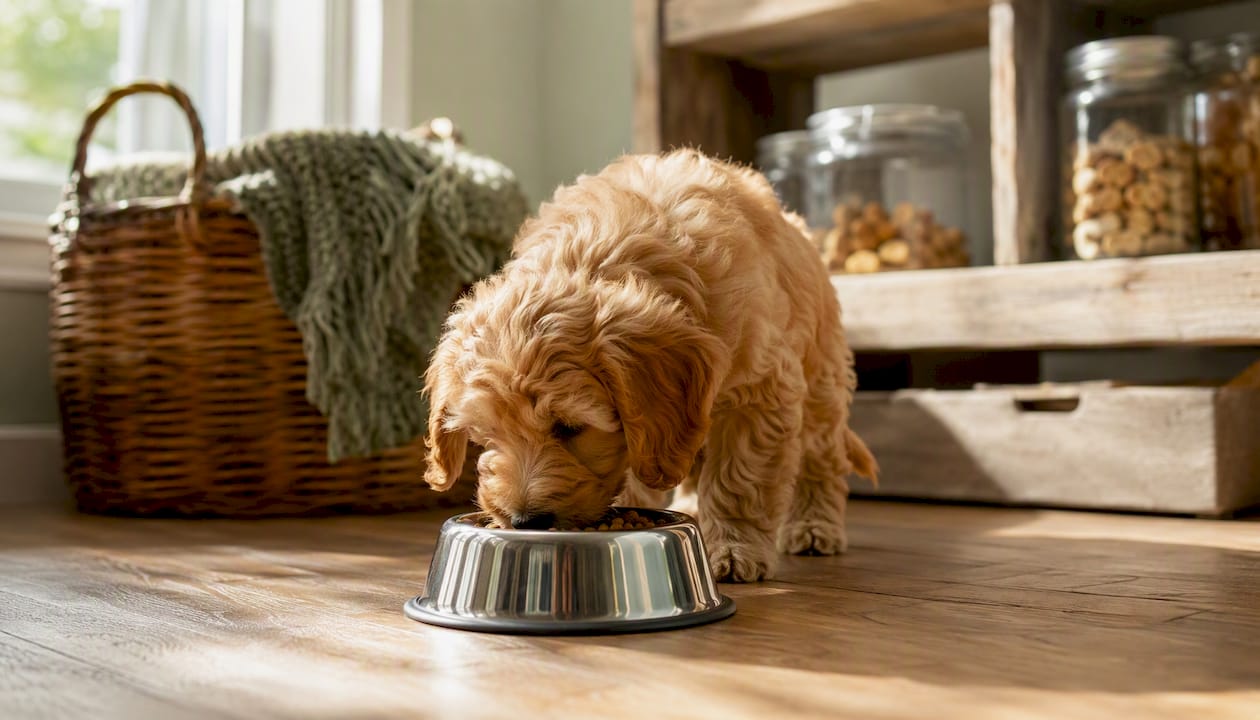
Buy the same food your puppy was already eating. A sudden diet switch is one of the fastest ways to trigger loose stools in a puppy whose gut is already stressed from a new environment. If you do plan to switch brands eventually, do it slowly over 7 to 10 days, mixing in a little more of the new food each day. Stainless steel or ceramic bowls beat plastic here, since plastic scratches easily and can trap bacteria and odors that plastic-sensitive dogs sometimes react to with chin acne.
Containment and sleep
A crate sized for an adult dog is a common and expensive mistake. The Canadian Kennel Club notes that a crate too large for house training defeats its own purpose, since a puppy will simply use one end as a bathroom and sleep in the other. Buy a crate with a divider panel instead, sized so your puppy can stand up, turn around, and lie down comfortably. Nothing more. You slide the divider back as they grow instead of buying a new crate every few months.
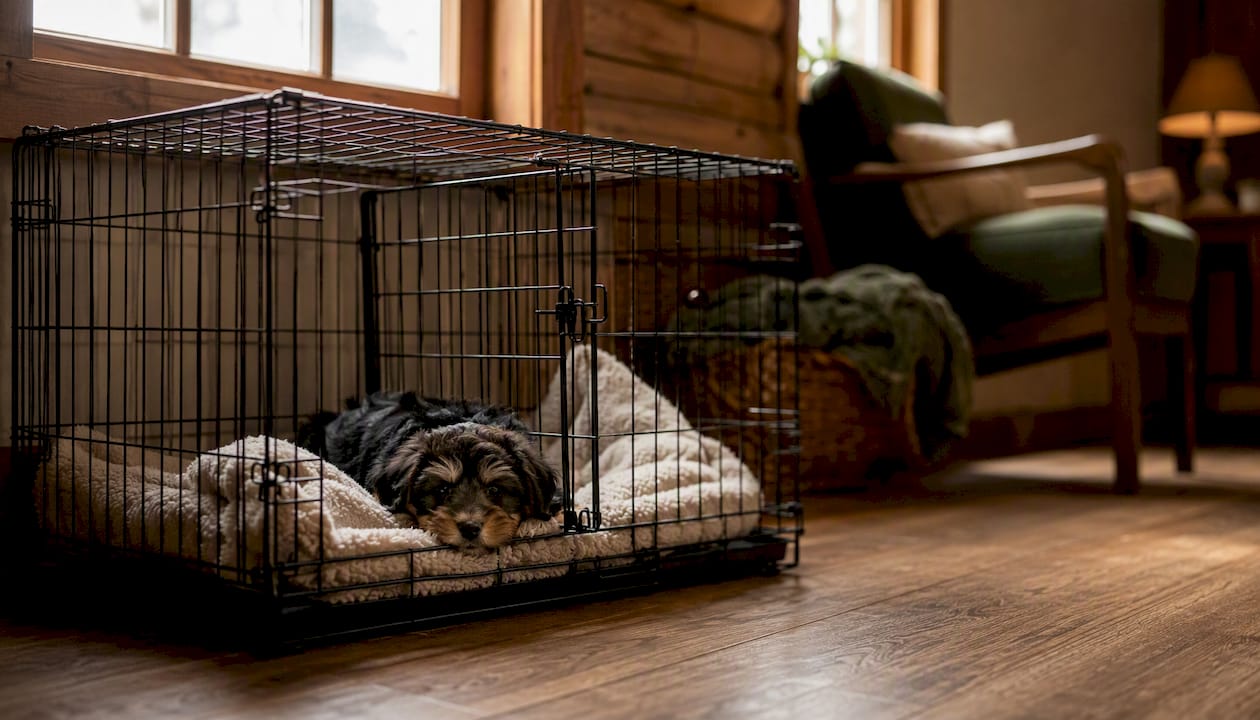
An exercise pen or a set of baby gates gives your puppy a safe, contained space when you can’t watch them directly, which matters more in week one than almost anything else on this list.
Walking and ID
An adjustable collar grows with your puppy for the first several months. A harness distributes pressure across the chest rather than the throat, which matters for small breeds and any dog prone to trachea sensitivity. Pair either one with a durable leash and a tag listing a working phone number. Microchip registration should happen at that first vet visit if it wasn’t already done by the breeder.
Cleaning supplies
Regular soap and water won’t fully break down the proteins in dog urine, which is exactly why accidents keep happening in the same spot. An enzymatic cleaner actually breaks the scent trail down at a molecular level, and the Canadian Kennel Club’s housetraining guidance points to lingering odor as one of the most underestimated causes of repeat accidents. Keep a bottle within reach at all times during the first two months.
Grooming and dental
A soft brush suited to your puppy’s coat type, a puppy-safe shampoo, dog-specific toothpaste and a finger brush, and a pair of nail clippers cover the basics. PetSmart’s supply guide recommends starting dental desensitization early, since a puppy who’s used to having their mouth handled at eight weeks old is a far easier patient at eight years old.
Health and first aid
A simple first-aid kit for minor scrapes, plus a conversation with your vet about flea, tick, and heartworm prevention appropriate for your region and your puppy’s age. Don’t buy parasite prevention products off a shelf before that first exam. Dosing depends on weight and age, and your vet needs to weigh in.
Enrichment and training
Teething toys with varied textures, a puzzle feeder to slow down fast eaters and build problem-solving skills, a clicker, and a treat pouch round out the list. Dogster’s supply breakdown specifically calls out training treats as a separate line item from regular kibble, since you’ll want something small and high-value for reward-based training sessions.
Pro Tip: Skip any toy with small, detachable parts like plastic eyes or squeakers that pop out easily. A good rule of thumb: if it could fit entirely in your puppy’s mouth and be swallowed whole, it’s the wrong size.
What Should You Do in the First Day, Week, and Month?
The supply list matters, but timing matters just as much. Here’s how the first month actually breaks down.
Day one is about calm, not activity. Keep visitors to a minimum, set up the crate in a quiet corner near where the family sleeps, and resist the urge to introduce your puppy to every neighbor on the block. There’s no scientifically defined “7-7-7” or “10-10-10” socialization rule despite how often you’ll see it repeated online. What actually works, according to the Canadian Kennel Club, is a consistent schedule and a secure first night close to the family, not a rigid countdown of experiences to check off.
Week one is when routine starts to matter. Feed at the same times each day, take your puppy to the same potty spot every time, and begin short, low-pressure handling exercises like touching paws and ears for a few seconds at a time. This is also when gentle, controlled socialization can start, provided it happens in safe settings like your own yard or a friend’s vaccinated dog, not the dog park.
The first month is about expanding carefully. Vaccinations and deworming continue on your vet’s schedule, and socialization broadens under supervision. VCA Canada points to a critical window that closes around 14 to 16 weeks, so intentional, varied exposures to new sounds, surfaces, and people during this stretch pay off for years. Basic training sessions, five to ten minutes at a time, can begin as soon as your puppy settles into the house.
| When | Action | Why It Matters |
|---|---|---|
| Within 72 hours | First vet exam | Establishes baseline health, starts parasite prevention |
| Day one | Consistent feeding and potty schedule | Builds predictability, speeds up housetraining |
| Day one | Gentle handling exercises | Prepares puppy for grooming, vet visits, nail trims |
| The first month | Follow-up vaccinations and deworming | Continues immunity building per vet schedule |
| 14 to 16 weeks | Controlled socialization exposures | Closes before the critical window ends around 14 to 16 weeks |
If you want more depth on the housetraining piece specifically, our potty training guide walks through the schedule-building process in more detail than fits here.
How Do You Pick the Right Size and Safety Features?
Buying the right item matters more than buying the most expensive one. A few rules of thumb save you from returns, wasted money, and the occasional safety scare.
Food: Match whatever your breeder or shelter was already feeding, at least for the first two weeks. If a switch is coming, Petful’s guidance recommends stretching the transition over 7 to 10 days, gradually increasing the new food’s share of each meal. Our own nutrition guide for new owners covers what to look for on a label if you’re choosing a food for the long term.
Crate: Just big enough to stand, turn, and lie down flat. Buy for the adult size with a divider rather than buying multiple crates as your puppy grows.
Collar and harness: Use the two-finger rule, meaning you should be able to slide two fingers comfortably under the collar without it slipping over the head. Harnesses tend to be the safer default for small breeds and any dog with a flatter face, since they take pressure off the throat entirely.
Toys: Bigger than your puppy’s mouth, free of small removable pieces, and made of materials rated for teething rather than adult chewing, which tend to be too hard on baby teeth.
| Category | Durability | Safety Fit | Price Range |
|---|---|---|---|
| Crate | High if metal wire or hard plastic | Divider prevents overspacing | Moderate to high, one-time cost |
| Collar/harness | Moderate, replace as puppy grows | Two-finger rule for fit | Low, replace every few months |
| Bed/bedding | Low to moderate, washable matters more | No stuffing puppy could tear open | Low |
| Toys | Varies widely by material | No small detachable parts | Low, ongoing replacement |
| Bowls | High for stainless steel | No sharp edges, tip-resistant base | Low |
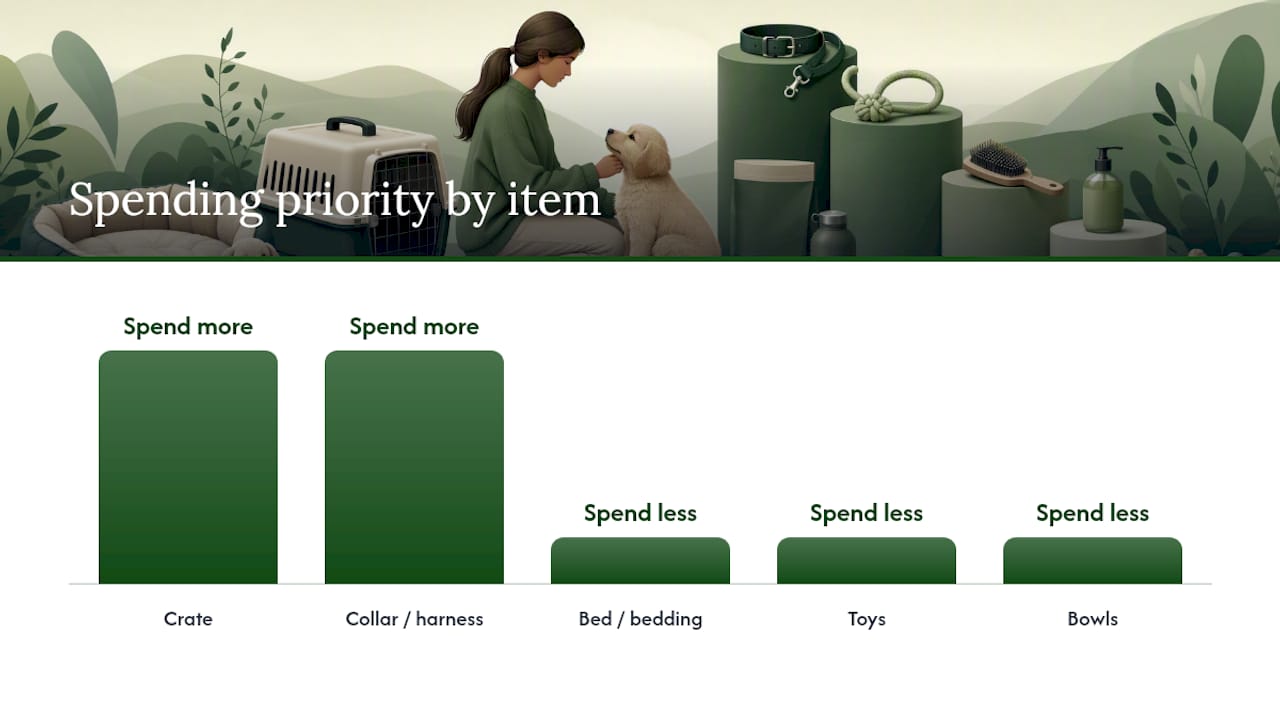
Spend more on the crate and the collar or harness. Spend less on toys, since puppies destroy them regardless of price, and a $30 chew toy in shreds by Thursday isn’t a better investment than a $10 one.
What Do Breeders and Vets Wish New Owners Knew?
The biggest gap between a good starter kit and a great one usually isn’t a missing item. It’s a missing routine.
Set up a crate, choose your potty spot before day one, and keep the breeder’s food brand for at least the first week. Consistency is what actually reduces stress in those first days, not the number of toys on the floor.
One detail almost nobody thinks to pack: a towel or blanket rubbed against the mother or littermates before pickup. That familiar scent in the car and crate does more to settle a nervous puppy on the ride home than almost anything you can buy.
Digitize your paperwork the same week you bring your puppy home. Take photos of vaccine records and microchip confirmation and store them somewhere you can pull up instantly, whether that’s an email to yourself or a folder on your phone. A boarding kennel or an emergency vet clinic won’t wait while you dig through a filing cabinet.
That first vet exam within 72 hours isn’t just a formality. It gives your vet a real baseline before anything’s gone wrong, starts a parasite prevention plan on schedule, and confirms the health records your breeder handed over actually match what’s in front of them.
Pro Tip: Ask your breeder directly what food, treats, and comfort items your puppy is already used to before you buy anything new. A five-minute question saves you an unnecessary gastrointestinal upset in week one.
Why We Pack a Go-Home Kit for Every Puppy That Leaves Here
We send every puppy home with a kit built from twenty years of watching what actually helps a new owner in that first anxious week. It’s never just food and a leash. We include a blanket already carrying the litter’s scent, written feeding instructions covering exactly what and how much your puppy has been eating, and copies of every health record so nothing gets lost between our hands and yours.
We’ve learned that the families who call us with questions in week two are almost never asking about the puppy’s temperament. They’re asking about a stomach upset from a food switch, or a crate that’s too big, or a schedule that hasn’t settled yet. Every one of those questions is answerable with the right prep beforehand, which is exactly why we don’t stop supporting you at pickup. If something comes up, a question about feeding, training, or anything else, you can reach out. That support doesn’t have an expiration date.
Get a Head Start With a Ready-Made Starter Kit
Assembling every item on this list from scratch takes an evening of tab-switching between pet stores, comparing crate dimensions, and reading ingredient labels. There’s a faster route, and it’s one we built specifically for families picking up a puppy from us.
Our Go-Home Puppy Kit covers the day-one essentials: feeding instructions matched to what your puppy already eats, a scent item for the ride home, and the paperwork organized in one place. For families who want more coverage from the start, the Classic Holistic Starter Kit adds grooming and enrichment basics, while the Deluxe Holistic Starter Kit rounds out training tools and higher-end bedding for owners who’d rather not shop eight categories separately.
None of these kits replace a veterinary exam or hands-on training. They’re the supply side of the equation, built to save you the shopping trip so you can focus on the vet visit and the first few nights. If you’re still deciding on a breed or a specific puppy, our available puppies page is updated regularly, and every kit ships or can be picked up in Lindsay, Ontario, alongside your new puppy.
Sources
- Canadian Veterinary Medical Association — Your pet’s health
- Canadian Kennel Club — Quick tips for a happy puppy
- Petful — New Puppy Checklist: Supplies, Vet & Paperwork
- Dogster — New Puppy Checklist: 23 Vet-Approved Supplies