


Yes, you can introduce a doodle puppy to a resident cat safely, but only with a slow, staged, supervised process instead of a single face-to-face meeting. Start by setting up separate safe zones for each animal, swapping their scents before they ever meet, and planning short visual sessions with the puppy on a leash. Do these three things in the next few minutes:
- Set up a cat-only sanctuary room with litter, food, water, and vertical escape routes.
- Build a puppy “success station” (crate or gated area) stocked with toys and chews.
- Start scent swapping today by trading a blanket or towel between the two animals.
Expect real progress over days to weeks, not hours. If the puppy chases, stop the session immediately. That single habit, more than anything else, decides how smoothly the rest of this goes.
Key Takeaways
A successful puppy-to-cat introduction depends on staged separation, scent swapping, leashed control, and preventing chase behavior before it becomes a habit.
| Point | Details |
|---|---|
| Start with separation | Give both animals at least 3 days apart before any scent or visual introduction begins. |
| Swap scents early | Trade blankets or towels daily to build familiarity before face-to-face contact. |
| Keep the puppy leashed | Prevent chasing from the first session since it becomes self-rewarding once it starts. |
| Watch for stress signals | Freezing, hissing, or hiding mean it’s time to slow down, not push forward. |
| Expect weeks, not days | Most pairs need two to four weeks of staged sessions before unsupervised time is safe. |
Table of Contents
- How Do You Prepare Your Home Before The First Meeting?
- What Are The Stages For Introducing A Puppy To A Cat?
- What If The Puppy Chases Or The Cat Hisses?
- What Does A First-Week Session Plan Look Like?
- What Doodle Owners Should Know Before Pickup
- Where To Find More Guidance
- Our Honest Take On Rushing This Process
- Frequently Asked Questions
- Sources
How Do You Prepare Your Home Before The First Meeting?
Preparation determines almost everything that happens next. Skipping the setup phase is the single most common reason introductions fail, according to the RSPCA Knowledgebase, because the cat never gets a genuine escape option and stays in a state of low-grade panic.
Your cat needs a room the puppy cannot enter, ever, with a litter box, food, water, a scratching post, and something tall to climb, like a cat tree or a clear shelf. Cats regulate stress by gaining height and distance, so vertical space isn’t optional decor. It’s the actual safety mechanism.
Set up the puppy’s side with equal care:
- Choose a crate or gated area as the puppy’s success station, stocked with a chew toy and a soft bed.
- Gather a baby gate, a 6-foot leash, a well-fitted harness, and two towels for scent swapping.
- Stock high-value treats (small pieces of cooked chicken or cheese work better than kibble for this).
- Pick calm windows for sessions, ideally right after the puppy has had exercise and a nap.
A Go Home Puppy Kit from your breeder often already contains half of this list. Ask before you buy duplicates.
Pro Tip: Feed both animals on opposite sides of the same closed door during prep week. Food creates positive associations faster than almost anything else you can do.
What Are The Stages For Introducing A Puppy To A Cat?
A staged, stepwise protocol, moving from full separation through scent, sight, leashed contact, and finally supervised freedom, is what humane societies and vets consistently recommend to reduce stress for both animals. Rushing any single stage is the fastest way to set the relationship back weeks.
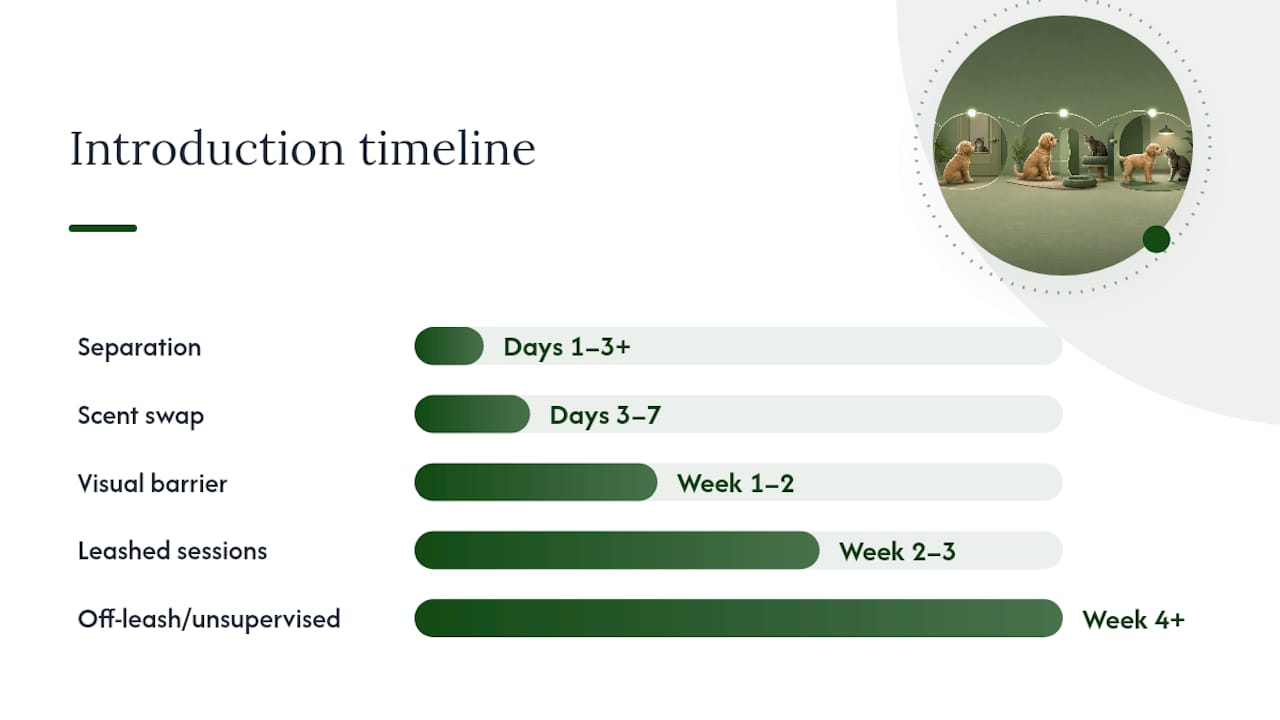
Stage 1: Full separation (minimum 3 days). The puppy and cat should have zero physical or visual contact. Watch for calm eating, normal litter box use, and relaxed body posture before moving forward. If your cat is still hiding constantly or refusing food, extend this stage.
Stage 2: Scent swapping. Rub a towel on the puppy, then place it near the cat’s resting spot, and do the reverse with a cat-scented item near the puppy’s bed. Reward each animal with a treat the moment they investigate the new scent calmly, which builds a positive association before any face-to-face contact happens.

Stage 3: Visual contact through a barrier. Crack a door or use a baby gate so the animals can see each other without physical access. Keep these sessions to about 5 minutes, two or three times a day, and end on a calm note every single time.
Stage 4: Leashed parallel sessions (around week two). Bring the puppy into the same room on a 6-foot leash while the cat has full freedom to approach or retreat. Practice “leave it” and “sit” during these sessions so the puppy has something else to focus on besides the cat.

Stage 5: Supervised off-leash, then unsupervised. Once several leashed sessions pass without hissing, lunging, or fixation, allow brief off-leash time under close watch. Unsupervised time together should wait until you’ve had multiple incident-free weeks, not days.
| Stage | Timing | What to watch for |
|---|---|---|
| Separation | Days 1–3+ | Calm eating, normal litter use |
| Scent swap | Days 3–7 | Curious sniffing, no growling or hissing |
| Visual barrier | Week 1–2 | Relaxed posture, no prolonged staring |
| Leashed sessions | Week 2–3 | Puppy responds to “leave it,” cat stays in room |
| Off-leash/unsupervised | Week 4+ | Multiple calm sessions with no chasing or swatting |
A few things worth remembering as you move through this:
- Frequent short sessions beat one long meeting almost every time.
- Chasing is self-rewarding for puppies, so prevention matters far more than correction once it starts.
- Progress isn’t linear. Some pairs click in two weeks; others need a couple of months.
What If The Puppy Chases Or The Cat Hisses?
Setbacks are normal, not a sign you’re doing this wrong. What matters is how fast you interrupt the moment and how you recover afterward.
If the puppy lunges or chases, say “leave it” firmly, redirect with a toy, and end the session. Because chasing reinforces itself the first time it works, letting even one chase run its course makes the next one more likely.
If your cat hisses or swats, separate the animals immediately and give both a full day of decompression before trying again, this time at an earlier, easier stage than where you stopped.
Watch for these stress signals before things escalate:
- Cat: freezing, flattened ears, prolonged hissing, or hiding for more than a day.
- Puppy: stiff-legged staring, raised hackles, or fixated tracking of the cat’s movement.
- Either animal: refusing food or skipping the litter box, both signs the stress is bigger than one bad session.
Most pairs need a few regressions before things click, and that’s a normal part of the process, not a failure. If you see repeated aggression, any injury, or no progress after several weeks of consistent effort, bring in a vet or a certified animal behaviorist rather than pushing through on your own.
What Does A First-Week Session Plan Look Like?
Run these two scripts during week one and you’ll cover most of what matters.
Checklist before you start:
- Cat sanctuary room with litter, food, and a vertical perch.
- Puppy success station (crate or gated pen) with a chew toy.
- Baby gate, harness, 6-foot leash, and two scent-swap towels.
- High-value treats within reach for both animals.
Session A (visual barrier, 3–5 minutes): Sit near the gate with the puppy calm beside you; let the cat approach or ignore you entirely. Toss a treat to the cat every time it looks at the puppy without hissing. End the moment either animal seems tense.
Session B (leashed parallel, 5–10 minutes): Exercise the puppy beforehand so energy is already burned off. Reward calm behavior every 10 to 15 seconds at first, stretching the interval as the puppy settles. Stop at the first sign of fixation or a stiff cat posture.
What Doodle Owners Should Know Before Pickup
Doodle puppies carry retriever drive and poodle smarts in equal measure, which means high energy paired with a fast ability to learn “leave it” once you start training it consistently. That combination cuts both ways during cat introductions: expect more chasing impulse early on, but faster progress once basic cues stick.
Before you bring your puppy home, ask your breeder a few direct questions:
- Has the litter had any early exposure to cats or calm adult dogs?
- What does the starter kit include, and does it cover crate training basics?
- What temperament notes exist for this specific puppy versus its littermates?
Twenty years of raising doodles for service-animal-quality temperaments has taught us one thing above all: the puppies who settle fastest around cats are the ones whose owners tire them out mentally, not just physically, before every session.
Lakewoodranchdoodles offers lifetime breeder support and virtual visits for exactly this reason. Do exercise before meetings and use enrichment toys to take the edge off. Don’t skip leash training just because your puppy seems “friendly.”
Where To Find More Guidance
- San Diego Humane Society: introducing dogs and cats
- Animal Humane Society: how to introduce a dog and cat
- RSPCA Knowledgebase on puppy and cat introductions
- Certified trainer directories through your local vet or breeder network
Our Honest Take On Rushing This Process
Most guides treat puppy-cat introductions as a checklist to finish quickly. That framing does readers a disservice. The pairs who succeed long-term are usually the ones whose owners treated week one as diagnostic, not decorative, watching closely for what actually calms their specific puppy down rather than following a generic timeline on autopilot.
The conventional advice undersells one thing: doodle energy isn’t a flaw to manage around, it’s the variable that decides your whole timeline. A puppy who’s mentally tired settles into “leave it” faster than one who’s just physically worn out. Prioritize enrichment and training cues before you prioritize the meeting schedule itself.
If we had to pick one place readers cut corners, it’s skipping the cat’s vertical escape routes because “the room seemed fine already.” That single oversight causes more stalled introductions than an impatient puppy ever does.
Frequently Asked Questions
Can you introduce a doodle puppy to a resident cat at any age? Even a puppy as young as 7 weeks old should go through the same slow, supervised protocol as an older puppy. Age doesn’t shortcut the staging.
How long does it usually take for a puppy and cat to get along? Most pairs need several weeks of staged introductions, though some take longer and a few never become close, just tolerant.
What’s the biggest mistake owners make when introducing a puppy to a cat? Letting the puppy chase even once. Because chasing is self-rewarding, a single successful chase makes the next attempt far more likely.
Should I get professional help if the introduction isn’t going well? Yes, if you see repeated aggression, any injury, or zero progress after several weeks of consistent effort, a vet or certified behaviorist can help identify what’s stalling things.
Ready to bring home a doodle puppy built for this kind of process from day one? Browse available puppies from Lakewoodranchdoodles, where over 20 years of breeding for temperament and trainability means your puppy arrives already primed to learn cues like “leave it” quickly.
Sources
- Introducing Puppies To Cats — Vets4Pets
- How to introduce a puppy to cats — Dogster
- How to introduce a dog and cat — San Diego Humane Society
- How should I introduce my new dog or puppy to my existing cat? — RSPCA Knowledgebase