


Stopping puppy biting requires one immediate, consistent action: the moment teeth touch skin, you go silent, stand up, and remove all attention for 30 seconds. This technique, known formally as negative punishment in applied animal behavior, is the foundation of every effective puppy biting solution. Doodle breeds like Goldendoodles and Bernadoodles are mouthy by nature during early development, and that mouthiness peaks at a predictable window. Understanding when and why it happens makes the training far less frustrating. Lakewoodranchdoodles has guided owners through this exact phase for over 20 years, and the results are consistent: calm, clear responses beat any correction every time.
Why do Doodle puppies bite and when does it peak?
Puppy biting is not a behavior problem. It is a biological stage, and recognizing that distinction changes how you respond to it. Doodle puppies explore the world through their mouths, communicate discomfort through nipping, and relieve teething pain by chewing on whatever is nearby, including your hands.
The biting phase peaks between 12 and 20 weeks, then drops significantly by 5–6 months with consistent training. That window matters because it tells you the urgency: what you do in those first few months sets the pattern for the rest of the dog’s life.
Doodle breeds carry traits from both Poodles and retriever lines. Poodles are highly oral and stimulus-driven. Golden Retrievers were bred to carry things in their mouths. Put those two together and you get a puppy that mouths constantly, not out of aggression, but out of instinct and curiosity.
- Teething discomfort drives chewing from about 8 weeks through 5 months, as baby teeth loosen and adult teeth push through.
- Exploration and play are the primary reasons a puppy nips at hands, feet, and clothing during interaction.
- Overarousal is a major trigger. A puppy that is overtired or overstimulated bites harder and more frequently.
- Communication plays a role too. Nipping is how puppies signal excitement, frustration, or a need for engagement.
Biting is a symptom of unmet needs rather than a dominance display or a sign of a “bad” dog. Addressing rest, chewing outlets, and arousal levels tackles the root cause, not just the surface behavior.
What is the proven training protocol to stop puppy biting?
The most reliable method to train a doodle not to bite follows four steps, applied every single time teeth make contact with skin. Partial application does not work. The protocol only produces results when it is used completely and consistently.
- Go silent immediately. No “ow,” no “no,” no reaction at all. Any verbal response, even a yelp, can excite the puppy further or teach it that biting gets a reaction.
- Stand up and turn your back. Physical withdrawal signals that biting ends the interaction. Do not push the puppy away, as that motion reads as play.
- Remove all attention for 30 seconds. Leave the room if needed. The puppy must experience a complete pause in engagement.
- Return calmly and resume. If biting starts again, repeat the sequence from step one without frustration or commentary.
Immediate, consistent removal of attention the moment teeth touch skin is the only method reliably shown to stop biting. The 30-second window is not arbitrary. It matches the puppy’s short-term memory for cause and effect.
One detail most owners miss: rapid jerking movements reinforce prey-driven biting in puppies prone to it. Pulling your hand away fast triggers the same instinct as a fleeing animal. Freeze first, then withdraw slowly.
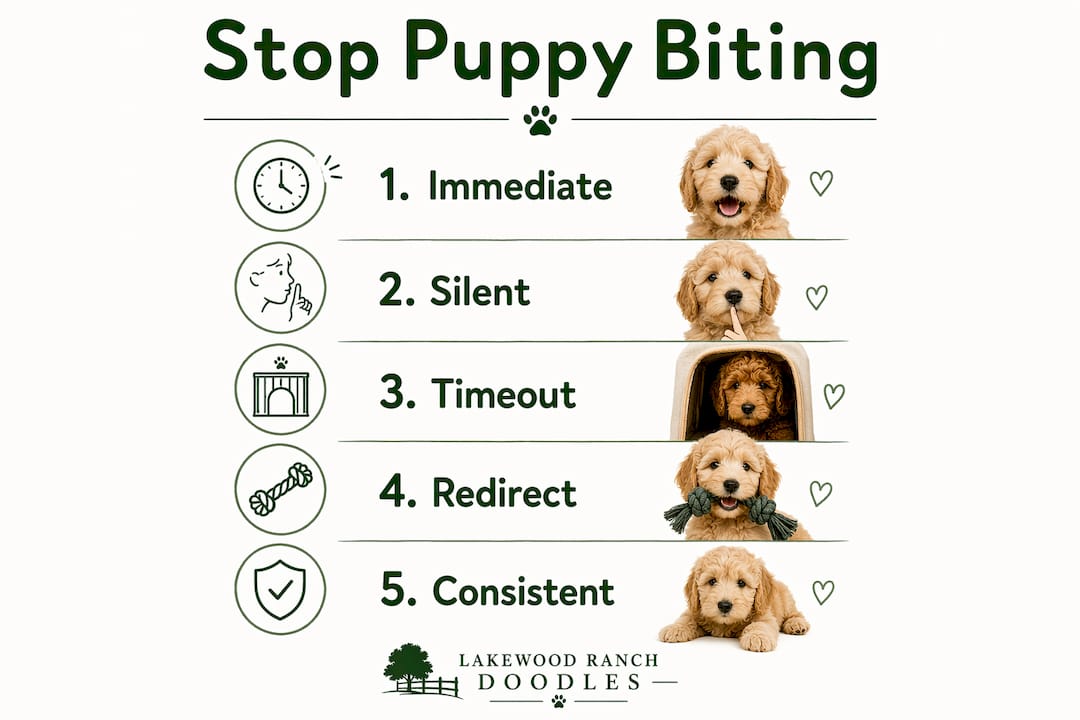
Pro Tip: After the 30-second timeout, offer a chew toy before re-engaging. This teaches the puppy what to do with its mouth, not just what not to do.
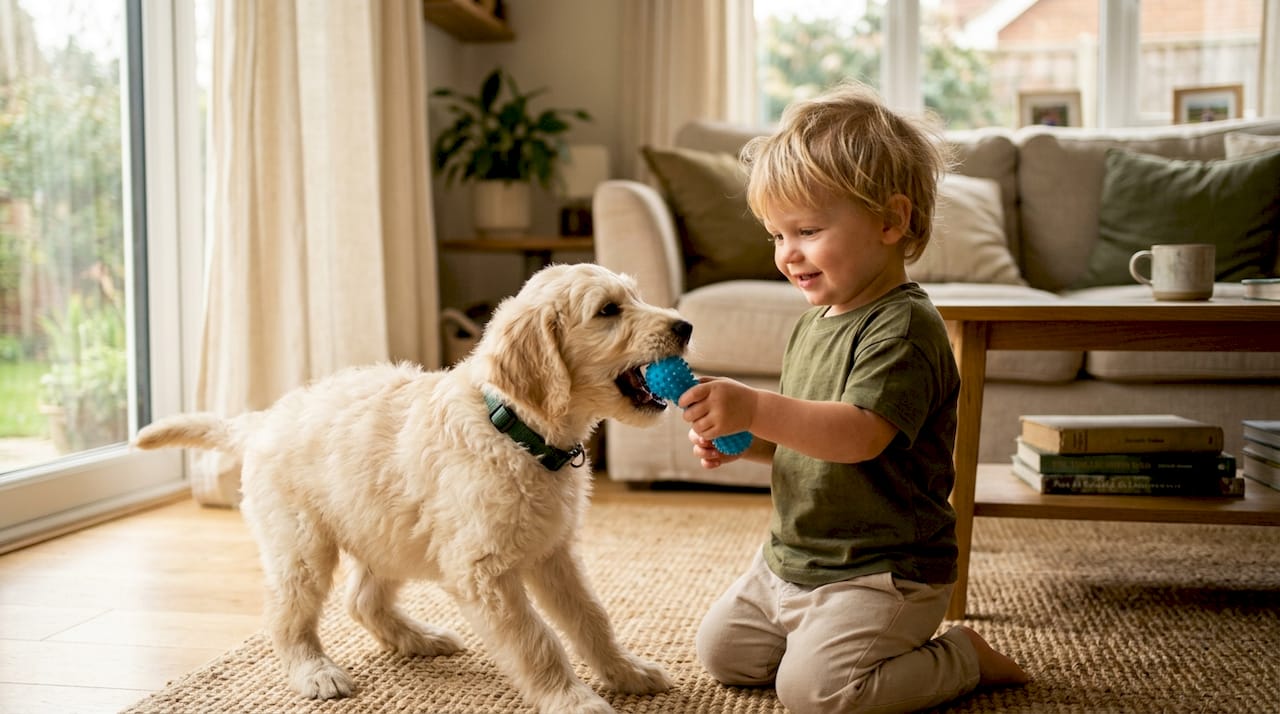
Consistency across all family members is non-negotiable. One person who laughs at biting or lets it slide undoes every session the rest of the household runs correctly. Hold a five-minute family meeting before the puppy comes home. Agree on the exact steps and commit to running them every time, without exception.
You can reinforce the right behavior by pairing the timeout protocol with training your puppy to redirect onto appropriate toys. The combination of “biting ends play” and “toy keeps play going” accelerates learning significantly.
How to prevent puppy biting before it starts
Reactive training fixes biting after it happens. Proactive management stops it from escalating in the first place. The difference between a puppy that bites constantly and one that mouths occasionally often comes down to environment setup.
Providing toys proactively before biting starts prevents escalation and teaches puppies the right outlet for mouthing. Keep chew toys in every room where the puppy spends time. Offer one the moment you sit down to interact, before the puppy has a chance to target your hands.
- Avoid rough hand play. Wrestling with your hands teaches the puppy that hands are toys. Use a rope, a tug toy, or a fetch ball instead.
- Manage fast movements. Running feet and flapping clothing trigger prey instincts. Teach children to move calmly around the puppy and to stop moving when biting starts.
- Use sniffing and licking activities. Licking mats, snuffle mats, and food-stuffed toys like Kong products lower arousal and satisfy the oral drive without any biting.
- Enforce rest. Puppies need 16–18 hours of sleep per day. An overtired Doodle bites harder and more often. Crate rest after play sessions is not optional.
Pro Tip: Watch for pre-bite signals: a sudden burst of energy, a glazed look, or frantic circling. These are signs the puppy is hitting overarousal. Redirect to a chew toy or put the puppy down for a rest before biting starts.
Long-term success requires balancing physical exercise, mental stimulation, and enforced rest with structured play that lowers arousal. The Lakewoodranchdoodles holistic approach to raising Doodles is built on exactly this balance, and it shows up clearly in how their puppies handle stimulation from day one.
Common mistakes that keep puppy biting going
Most owners who struggle to stop puppy biting are making one or more of the same errors. Identifying the mistake is the fastest path to fixing the problem.
- Inconsistency among family members. Mixed responses create a variable reward pattern. The puppy learns that biting sometimes works, which makes the behavior more persistent, not less.
- Physical corrections. Scruff shakes, nose taps, and loud yelps either excite the puppy or create fear. Neither outcome reduces biting. Physical corrections also damage trust during a critical bonding window.
- Delayed response. Waiting three seconds to react is too long. The puppy cannot connect the correction to the bite. The response must happen within one second of teeth touching skin.
- Ignoring underlying causes. A puppy that bites constantly despite correct training is often overtired, under-stimulated, or in teething pain. Address the root cause alongside the training protocol.
Biting that persists past 6 months, or biting that draws blood regularly before that age, warrants a call to a professional trainer or your veterinarian. Most Doodle puppies respond well before that point with consistent handling, but some need additional support.
When biting continues despite correct technique, review the nip nipping in the bud resource from Lakewoodranchdoodles. It covers toy-based redirection strategies in detail and is written specifically for Doodle owners managing this phase.
Key takeaways
Stopping puppy biting requires immediate, silent attention withdrawal every time teeth touch skin, combined with proactive toy redirection and consistent household-wide commitment.
| Point | Details |
|---|---|
| Peak biting window | Biting is most intense from 12–20 weeks and drops sharply by 5–6 months with consistent training. |
| The four-step protocol | Go silent, stand up, remove attention for 30 seconds, then return calmly and resume interaction. |
| Household consistency | One person who allows biting undermines every other training session in the home. |
| Proactive toy placement | Offer chew toys before biting starts, not after, to teach the right outlet from the beginning. |
| Root causes matter | Overtiredness and lack of chewing outlets drive most biting episodes; address both alongside training. |
What 20 years of raising Doodles taught me about biting
The owners who struggle most with puppy biting are usually the ones who take it personally. They see the biting as defiance or a sign that something is wrong with their dog. After two decades of raising Goldendoodles, Bernadoodles, and Cockapoos, I can tell you with confidence: it is never personal, and it is almost never a problem with the dog.
What I have seen work, without fail, is calm and early boundaries applied by every single person in the house. Not just the “dog person.” Everyone. The moment one family member decides the biting is “cute” or “just a phase we can deal with later,” the training resets. Doodles are sharp. They notice inconsistency faster than most breeds.
The other thing I tell every new owner: prevention beats reaction with these dogs. Doodles are high-energy, high-curiosity puppies. If you wait for the biting to start before you respond, you are always one step behind. Set the environment up so biting has nowhere to go. Toys everywhere. Rest enforced. Rough hand play off the table from day one.
Realistic timeline: most Doodle puppies with consistent handling show clear improvement within two to three weeks. Full resolution by five to six months is normal. If you are still fighting it at seven months, something in the protocol is breaking down, and it is worth getting eyes on the situation from a professional.
The payoff is real. A Doodle that learns bite inhibition early becomes a dog that is genuinely safe around children, guests, and strangers. That trust is built in these early weeks. It lasts a lifetime.
— Lakewood
Lakewoodranchdoodles supports you through every stage
Puppy biting is one of the most common challenges new Doodle owners face, and you do not have to figure it out alone.
Lakewoodranchdoodles has spent over 20 years breeding Goldendoodles, Bernadoodles, and Cockapoos with the temperaments and trainability that make this phase manageable. Every puppy leaves with a foundation built for success. The Classic Holistic Starter Kit includes the tools and guidance to handle biting, chewing, and early training from day one. For ongoing support, the It’s a Dogs Life resource hub covers everything from starter kits to training tips written specifically for new Doodle owners. Call Lakewoodranchdoodles at 705 875 5195 or book a virtual visit to get personalized advice for your puppy.
FAQ
When does puppy biting usually stop?
Puppy biting peaks between 12 and 20 weeks and reduces significantly by 5–6 months with consistent training. Most Doodle puppies show clear improvement within two to three weeks of applying a structured protocol.
Why does my Doodle puppy bite harder when I pull away?
Rapid withdrawal triggers prey-driven biting instincts in puppies. Freeze first, withdraw slowly, then remove attention completely for 30 seconds.
Should I yelp to stop my puppy from biting?
Yelping is not recommended for Doodle puppies. It can excite rather than deter them, and physical or loud corrections worsen biting by increasing stress and engagement.
How many chew toys does my puppy need?
Keep at least one chew toy accessible in every room where the puppy spends time. Offering toys proactively before biting starts is more effective than redirecting after the bite has already happened.
What if my whole family is consistent but biting still continues?
Check for underlying causes first: overtiredness, teething pain, or insufficient mental stimulation. If biting persists past 6 months or regularly draws blood, consult a professional trainer or your veterinarian for a hands-on assessment.