


Puppy socialization is the deliberate process of safely exposing a young dog to diverse experiences that build positive associations and prevent fear-based behaviors. Known formally as socialization and habituation, this process shapes how your puppy responds to the world for the rest of its life. The primary socialization window runs from 3 to 14 weeks of age, making early action non-negotiable. Understanding how puppy socialization works gives you a real advantage before your puppy even comes home.
How does puppy socialization work?
Puppy socialization works by pairing new experiences with calm, positive outcomes during a narrow developmental window when the brain is most receptive to forming lasting associations. The American Veterinary Society of Animal Behavior (AVSAB) recognizes this window as the single most important period in a dog’s behavioral development. What your puppy learns to accept now, it will accept for life. What it never encounters, it may fear forever.
The goal is not to flood your puppy with experiences. The goal is controlled, gradual exposure that the puppy can process without becoming overwhelmed. Think of it as building a mental library of “safe” things. Each positive encounter adds a new entry. Each frightening, forced, or painful encounter can close the book on that category entirely.
Socialization also includes habituation, which means the puppy learns to stop reacting to stimuli that are not threatening. A well-socialized dog can exist calmly in a busy environment without overreacting to every sound, person, or dog it encounters. That calm confidence is the real measure of success.
What is the puppy socialization window, and why does it close?
The socialization window runs from 3 to 14 weeks, and it closes because of neurological development. During this period, a puppy’s brain actively forms associations at a rate it will never match again. After 14 weeks, the brain shifts toward caution. New experiences become harder to accept, not impossible, but harder.
Missing this window has real consequences:
- Puppies with limited early exposure are more likely to develop fear, anxiety, and aggression as adults.
- Behavioral problems from poor socialization require significantly more time and professional help to address.
- Neurological sensitivity during this window cannot be fully replicated later in life.
The window closing does not mean socialization stops. Emotional maturity in dogs arrives between 2 and 4 years of age. Socialization should continue actively through adolescence and into adulthood. Puppies that receive strong early exposure but no follow-through during adolescence can still develop reactive or fearful behaviors. Think of the 3–14 week window as the foundation, and everything after as the structure built on top of it.
Pro Tip: Start socialization the day your puppy comes home, even if that is at 8 weeks. Every positive experience in those first days counts toward the foundation.
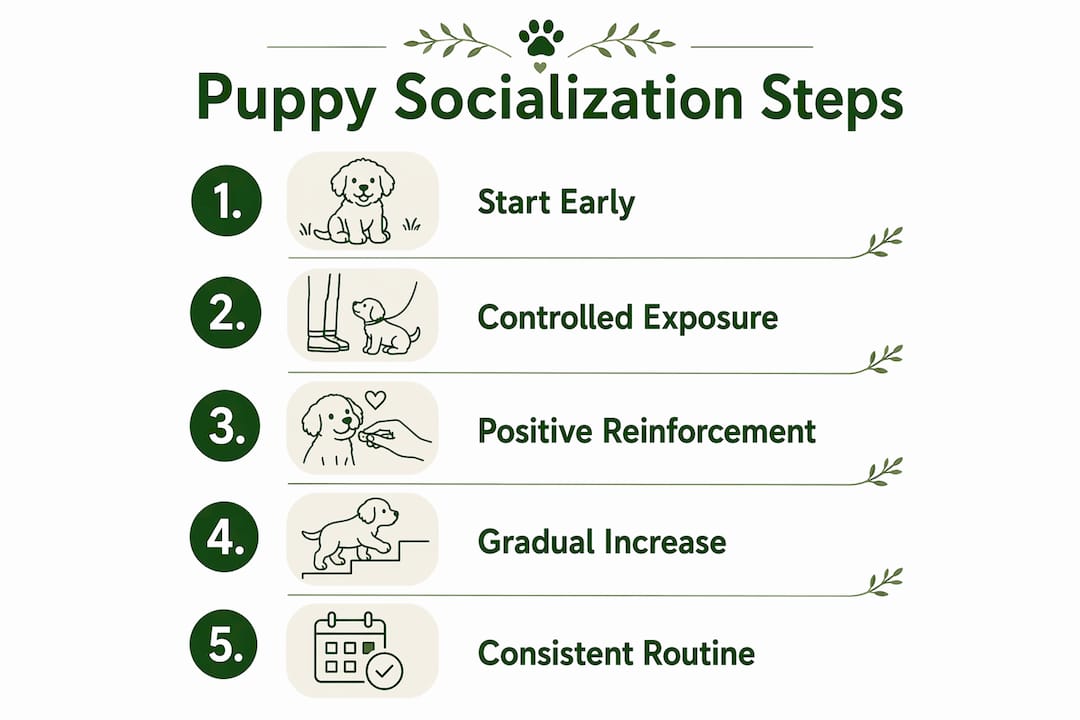
What types of stimuli should you expose your puppy to?
A complete socialization plan covers five core categories. Each one targets a different type of experience your dog will encounter throughout its life.
People. Your puppy needs to meet people of different ages, sizes, ethnicities, and appearances. That includes people wearing hats, sunglasses, uniforms, and beards. Children move and sound differently than adults. Elderly people move differently than teenagers. Each variation is a separate entry in your puppy’s mental library.
Other animals. Exposure to calm, vaccinated dogs teaches your puppy how to read and respond to canine body language. Cats, livestock, and other household animals also belong in this category if your puppy will encounter them.
Environments. Indoor and outdoor spaces, different floor surfaces, vehicles, elevators, stairs, and public places all count. A puppy that has only ever walked on carpet may panic on tile or gravel. Varied surfaces build physical confidence alongside social confidence.
Sounds. Household appliances, traffic, thunder, fireworks, and sudden loud noises are all worth introducing at low volume before your puppy encounters them at full intensity. Sound desensitization is one of the most overlooked parts of early socialization.
Handling. Touching paws, ears, and mouths, brushing, nail trimming, and vet-style examinations all prepare your puppy for grooming and medical care. A puppy that accepts handling calmly is safer for everyone involved.
A balanced socialization plan recommends gradual, frequent exposure to 100 or more novel experiences before 16 weeks, spread across all five categories. That number sounds large, but a single walk through a parking lot can cover surfaces, sounds, strangers, and vehicles at once.
Pro Tip: Keep a simple checklist on your phone. Tracking new experiences helps you spot gaps and keeps sessions intentional rather than random.
How do you socialize a puppy safely before full vaccination?
Vaccination timing and socialization timing overlap in a way that worries many new owners. The good news is that behavioral risks from poor socialization outweigh infection risks from controlled, appropriate socialization. The key word is controlled.
Follow these steps to socialize safely:
- Start puppy classes at 7–8 weeks. Puppies can begin socialization classes as early as 7–8 weeks if they have received at least one set of vaccines at least 7 days prior. Reputable programs require vaccination proof from all enrolled puppies.
- Avoid dog parks until 16–18 weeks. Dog parks are high-traffic, uncontrolled environments. Wait until two weeks after the final DHPP vaccine before visiting them.
- Use low-risk exposures early. Carry your puppy in your arms through busy areas. Arrange private playdates with vaccinated, healthy dogs. Visit friends’ homes and yards. These exposures carry minimal disease risk and maximum socialization value.
- Keep sessions short. Successful socialization sessions run 5 to 20 minutes, introducing 3–5 new stimuli per week. Longer sessions increase stress without increasing benefit.
- Watch for stress signals. Yawning, lip licking, turning away, and freezing all indicate your puppy is at its limit. End the session before those signals escalate.
Pro Tip: Your vet’s parking lot is a great early socialization spot. Your puppy encounters smells, sounds, and strangers in a familiar, controlled setting without entering a high-risk area.
How do you recognize and respond to fear during socialization?
Fear during socialization is normal. How you respond to it determines whether your puppy builds confidence or learns that fear is the right reaction.
Watch for these signals:
- Tail tucked between the legs
- Body low to the ground or freezing in place
- Ears pinned back
- Yawning, lip licking, or excessive panting
- Avoidance or hiding behind your legs
- Sudden loss of interest in treats
The instinct to pick up or soothe a frightened puppy is understandable, but coddling reinforces fear. When you soothe in a soft, worried voice, your puppy reads your tone as confirmation that something is wrong. That makes the fear worse, not better.
The better approach is called “jollying.” Use a happy, upbeat voice and offer high-value treats. Let your puppy observe the scary thing from a distance it can handle. Do not force the puppy closer. Allow it to approach on its own terms. This method builds genuine confidence because the puppy chooses to engage rather than being pushed into it. Jollying with treats encourages curiosity and confidence far more effectively than forced interaction or anxious reassurance.
What makes a good puppy socialization program?
Not all puppy classes deliver the same results. The structure and philosophy of the program matter as much as attendance.
A quality program includes these features:
| Feature | What to look for |
|---|---|
| Class size | 6–8 puppies maximum, matched by age and size |
| Vaccination policy | Proof of vaccines required from all participants |
| Training method | Positive reinforcement only, no dominance-based corrections |
| Play structure | Controlled play with instructor supervision, not free-for-all sessions |
| Instructor role | Active intervention in bullying or fearful behavior |
Quality puppy classes feature professionals who step in when one puppy overwhelms another. Free-for-all play sessions can traumatize shy puppies and teach bold ones that bullying works. Controlled play, where the instructor manages pairings and breaks up rough interactions, produces better outcomes for every dog in the room.
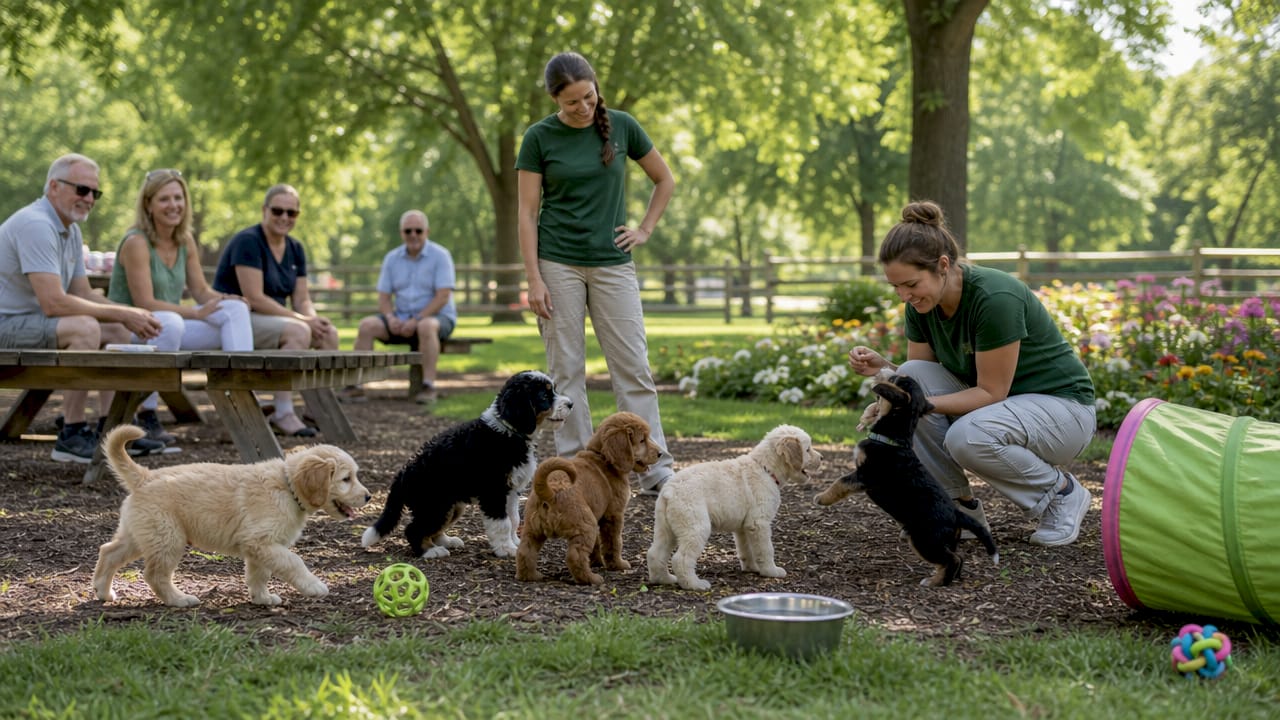
Socialization also belongs in daily life, not just class time. Walks, car rides, errands, and visits to friends all count. The goal is a dog that can remain calm in busy environments without needing to engage every person or animal it sees. That kind of neutral confidence comes from consistent, lifelong exposure, not a six-week class alone.
Pro Tip: Ask any instructor about their philosophy before enrolling. If they mention “dominance” or “alpha” methods, find a different class. Positive reinforcement is the standard backed by behavioral science.
For ongoing support after class ends, resources like training your puppy and getting a trainer can help you keep momentum through adolescence.
Key Takeaways
Early, varied, and positive exposure during the 3–14 week window is the single most effective way to build a confident, well-adjusted adult dog.
| Point | Details |
|---|---|
| Socialization window | The 3–14 week period is the most critical for forming lasting positive associations. |
| Five stimulus categories | Cover people, animals, environments, sounds, and handling before 16 weeks. |
| Safe early exposure | Start classes at 7–8 weeks with vaccines; avoid dog parks until 16–18 weeks. |
| Fear response | Use jollying with treats and distance, never coddling, to build real confidence. |
| Lifelong commitment | Continue active socialization through adolescence and into adulthood, up to age 4. |
What 20 years of watching puppies grow taught me
New owners often ask me how much socialization is enough. My honest answer is that most people underestimate how specific it needs to be. Exposing your puppy to “people” is not the same as exposing it to a man in a hard hat, a child on a bicycle, and a person using a walker. Each one is a different experience to a young dog’s brain.
The mistake I see most often is owners who rush. They want their puppy to love everything immediately. When the puppy hesitates or pulls back, they push it forward. That one moment of forced interaction can undo a week of careful work. Patience is not passive. Letting your puppy set the pace is an active, deliberate choice that pays off every single time.
I also see owners give up on socialization after the puppy class ends. Adolescence, roughly 6 to 18 months, is when many dogs start testing their environment again. A puppy that seemed perfectly social at 12 weeks can become reactive at 9 months if the work stops. Socialization is not a phase. It is a practice, like exercise or nutrition, that supports your dog’s wellbeing for its entire life.
The puppies I have watched grow into the calmest, most confident adult dogs all had one thing in common. Their owners stayed curious, stayed consistent, and never stopped introducing new experiences in a way the dog could handle. That is the whole secret.
— Lakewood
Lakewoodranchdoodles: bred for socialization from day one
At Lakewoodranchdoodles, socialization starts before your puppy ever comes home. Located in Lindsay, Ontario, our family has spent over 20 years raising puppies with service-animal-quality temperaments, which means early handling, varied stimuli, and calm, confident dispositions are built into every litter from birth.
Every puppy we raise, from our Goldendoodle puppies to our Bernadoodle puppies, receives daily human contact, exposure to household sounds, and gentle handling across all five socialization categories. We also provide lifetime breeder support, so you are never navigating socialization alone after your puppy goes home. Browse our available puppies or call us at 705 875 5195 to schedule a visit, in person or virtual.
FAQ
What is the puppy socialization window?
The puppy socialization window runs from 3 to 14 weeks of age. This is the period when a puppy’s brain forms lasting associations most readily, making early positive exposure critical for lifelong behavior.
When can I start socializing my puppy safely?
Puppies can begin socialization classes at 7–8 weeks if they have received at least one vaccine set at least 7 days prior. Avoid dog parks until two weeks after the final DHPP vaccine, typically around 16–18 weeks.
How long should puppy socialization sessions be?
Sessions should run 5 to 20 minutes, introducing 3–5 new stimuli per week. Short, frequent sessions are more effective than long, infrequent ones and reduce the risk of overwhelming your puppy.
What should I do if my puppy is scared during socialization?
Use a happy, upbeat voice and offer treats while allowing your puppy to observe the scary stimulus from a comfortable distance. Never force the interaction. Let your puppy approach on its own terms to build genuine confidence.
Does socialization end after puppyhood?
Socialization should continue actively through adolescence and until emotional maturity at 2 to 4 years of age. Dogs that receive strong early socialization but no follow-through during adolescence can still develop reactive or fearful behaviors.