


Whole-dog breeding, the industry term for what owners commonly call holistic dog breeding, is defined as a breeding philosophy that prioritizes genetic health, temperament, and natural rearing over appearance alone. The holistic dog breeding practices benefits are measurable: dogs bred this way show stronger immune function, better behavioral stability, and longer lifespans. Frameworks like the Royal Kennel Club’s 2026 Breeding for Health Framework are now pushing the entire industry toward genetic diversity and away from closed pedigrees. For Canadian breeders and owners, understanding these principles means making better decisions from day one.
1. What are the core holistic dog breeding practices benefits?
Whole-dog breeding delivers results across three measurable areas: physical health, behavioral stability, and genetic resilience. These outcomes are not accidental. They follow directly from deliberate choices made at every stage of a breeding program, from pairing selection to how puppies spend their first eight weeks.
The modern breeding shift toward health-centered governance prioritizes genetic breadth over traditional closed registries. That shift matters because closed gene pools concentrate inherited disease. Breeders who work outside that model produce dogs with broader genetic protection.
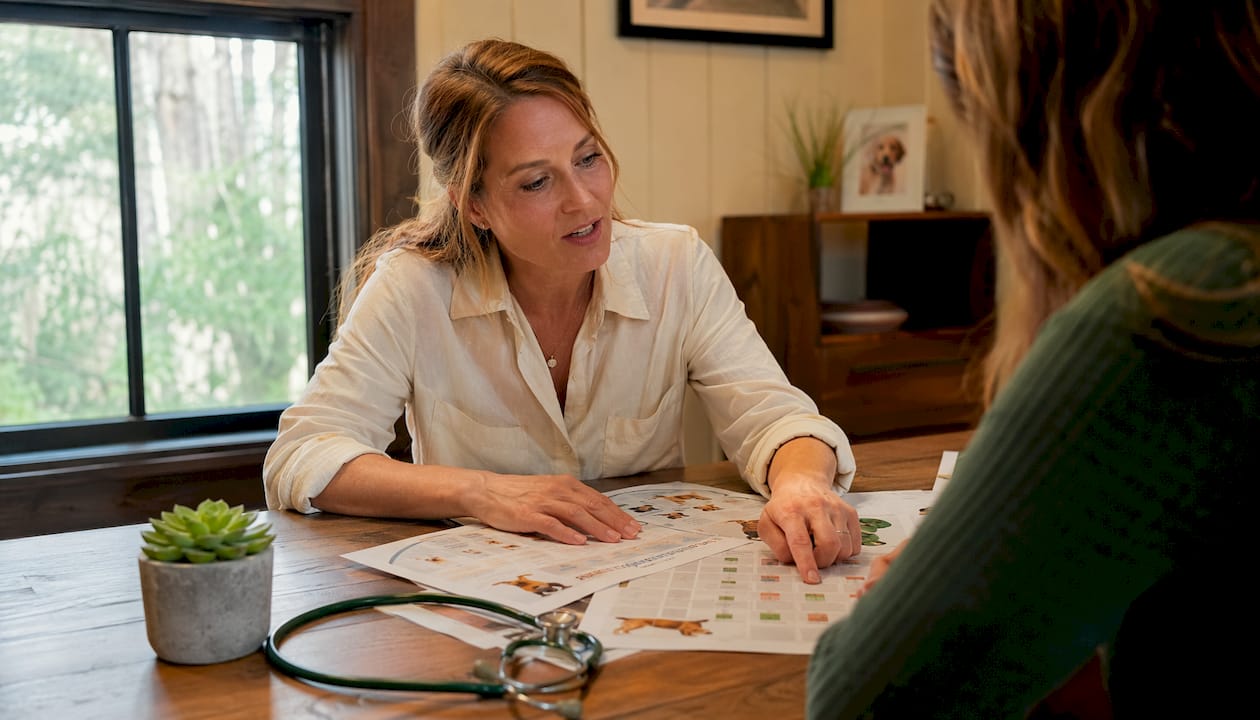
Lakewoodranchdoodles, located in Lindsay, Ontario, has built its entire program on this foundation. With over 20 years of hands-on experience, the team breeds Goldendoodles, Bernadoodles, and Cockapoos with service animal quality temperaments as the standard, not the exception.
2. How genetic management produces healthier dogs
The Coefficient of Inbreeding, or COI, is the single most useful number in a breeder’s toolkit. It measures the probability that a puppy inherits identical gene copies from both parents. A high COI signals risk, not just for rare diseases but for everyday problems like reduced fertility and higher puppy mortality.
Managing COI carefully prevents the negative health impacts that come with excessive inbreeding, including what geneticists call the popular sire effect, where one heavily used male spreads hidden genetic faults across an entire breed population. Think of COI as a risk dial, not a pass/fail score. The goal is to keep it low enough to protect health while still producing consistent, predictable traits.
Outbred dogs tend to live longer and carry fewer inherited health problems than highly inbred individuals. Studies in Golden Retrievers confirm this pattern directly. That evidence supports a phased approach to genetic management:
- Establish type early with controlled, limited inbreeding to set consistent physical and behavioral traits.
- Transition to outcrossing as the program matures, introducing new bloodlines to widen the gene pool.
- Use predictive pairing tools to model COI before breeding, not after.
- Run health screenings for orthopedic, cardiac, and genetic markers on every breeding dog.
- Track lineage across generations to catch accumulating inbreeding before it becomes a problem.
Short-term controlled inbreeding can establish breed type, but planned outcrossing must follow to preserve long-term health. Breeders who skip that second step pay for it in vet bills and shortened lifespans.
Pro Tip: Ask any breeder you consider for the COI percentage of your specific litter’s parents. A responsible breeder will have that number ready and will explain what it means.
3. Natural rearing philosophies and individualized care
Natural rearing is the practice of raising dogs in conditions that support their biological and behavioral needs rather than applying one-size-fits-all protocols. Veteran breeder Paula Vandervoort shifted to this approach after encountering severe autoimmune disease linked directly to conventional breeding methods. Her experience is not unusual. Many breeders arrive at natural rearing after watching dogs fail under standard protocols.
The core principles of natural rearing include:
- Stress management as a health variable, not just a welfare concern.
- Environment design that supports immune development through clean air, outdoor access, and low chemical exposure.
- Individualized health protocols built around each dog’s history and risk profile.
- Collaboration with holistic veterinarians who understand the interaction between genetics, nutrition, and immune function.
“Holistic breeding is often a response to personal losses caused by autoimmune or behavioral disorders linked to intensive conventional methods. It signals a desire for more natural, context-sensitive care that treats the whole dog, not just the symptom.”
Vaccination is one area where natural rearing diverges sharply from conventional practice. Early vaccination can interfere with immune development in puppies. Whole-dog breeders work with holistic vets to build individualized vaccine schedules based on actual risk assessment rather than calendar dates. The result is a puppy whose immune system develops without unnecessary interference.
4. Behavioral enrichment and temperament focus
Temperament is not luck. It is the product of deliberate selection and structured early experience. Whole-dog breeders evaluate behavioral stability alongside physical health, choosing breeding pairs that consistently produce calm, adaptable, and confident offspring.
The 7-7-7 rule is a structured exposure protocol used widely in ethical breeding programs. The 7-7-7 rule guides puppies through seven different surfaces, seven different objects, and seven different social groups before they leave the breeder. This structured exposure reduces anxiety and builds the kind of adaptability that makes a dog easy to live with for 12 to 15 years.
Here is how behavioral enrichment works in practice:
- Surface exposure (grass, gravel, tile, carpet, wood) builds physical confidence and reduces startle responses.
- Object novelty (umbrellas, strollers, bicycles) prepares puppies for the unpredictable environments of real life.
- Social variety (children, seniors, strangers, other animals) teaches appropriate greeting behavior early.
- Sound desensitization (traffic, appliances, crowds) prevents noise-based anxiety from developing.
- Mild stress recovery exercises teach puppies to self-regulate after brief challenges.
Selecting for temperament stability under real-life stress improves behavioral resilience and reduces anxiety-linked issues in adult dogs. This matters especially for families considering service and emotional support dogs, where behavioral reliability is non-negotiable.
Pro Tip: When visiting a litter, watch how puppies recover after a mild startle, like a clap or a dropped object. Fast recovery signals strong temperament. Prolonged hiding or freezing signals the opposite.
5. Nutrition and ongoing health stewardship
Nutrition is not a finishing touch in whole-dog breeding. It is a foundational variable that shapes immune function, bone development, and behavioral stability from the first weeks of life. Nutrition supports immune function and development in ways that complement genetic health management directly.
Whole-dog breeding programs use organic and natural feeding protocols because synthetic additives and low-quality fillers create inflammatory load in developing puppies. The goal is a diet that mirrors what a dog’s biology is built to process: high-quality protein, natural fats, and minimal processing.
Ongoing health stewardship goes beyond nutrition. Responsible programs run lifelong monitoring across multiple systems:
- Orthopedic screening (OFA hip and elbow evaluations) to catch structural problems before they become breeding liabilities.
- Cardiac evaluations by board-certified cardiologists to rule out inherited heart conditions.
- Genetic panel testing for breed-specific mutations that cause preventable disease.
- Eye certifications through recognized veterinary ophthalmology programs.
| Health area | Screening method | Timing |
|---|---|---|
| Hips and elbows | OFA radiograph evaluation | Before first breeding |
| Heart function | Cardiologist auscultation | Annual, pre-breeding |
| Genetic mutations | DNA panel testing | Once, any age |
| Eye health | CAER ophthalmology exam | Annual, pre-breeding |
Integrating nutrition with genetic management produces compounding benefits. A dog with a clean genetic profile and a well-supported immune system from birth is simply more resilient than one with only half that equation covered.
Key takeaways
Whole-dog breeding produces healthier, longer-lived, and better-adjusted dogs by combining genetic management, natural rearing, structured behavioral enrichment, and lifelong health stewardship into one deliberate program.
| Point | Details |
|---|---|
| COI management protects health | Keeping inbreeding coefficients low reduces inherited disease and improves lifespan. |
| Natural rearing supports immunity | Individualized nutrition, low-stress environments, and tailored vaccination build stronger immune systems. |
| Early enrichment shapes behavior | The 7-7-7 rule and structured exposure produce calmer, more adaptable adult dogs. |
| Ongoing screening catches problems early | Orthopedic, cardiac, and genetic testing before breeding prevents passing faults to offspring. |
| Nutrition compounds genetic gains | Organic, species-appropriate feeding amplifies the health benefits of careful genetic selection. |
What 20 years of whole-dog breeding actually taught me
The hardest lesson I learned is that conventional breeding shortcuts feel efficient until they are not. I watched dogs from well-regarded lines develop autoimmune conditions, anxiety disorders, and structural problems that nobody predicted. Those experiences pushed me toward a more deliberate, whole-animal approach, and the difference in outcomes has been stark.
What the industry rarely talks about is how much behavioral problems cost families. A dog with anxiety or reactivity is not just difficult to live with. It often ends up surrendered or medicated for life. Selecting for temperament stability and investing in early enrichment is the single highest-return decision a breeder can make. It costs more time upfront and pays back for 12 to 15 years.
The other thing I would tell any breeder starting this path: do not try to do it alone. Collaboration with holistic veterinarians, genetic counselors, and other ethical breeders accelerates your learning faster than any book. The breeding community in Ontario is small enough that those relationships matter enormously. The dogs are better for it, and so are the families who take them home.
— Lakewood
Lakewoodranchdoodles: where whole-dog breeding meets real families
Lakewoodranchdoodles has practiced whole-dog breeding from Lindsay, Ontario for over 20 years. Every Goldendoodle, Bernadoodle, and Cockapoo raised here goes through genetic screening, structured behavioral enrichment, and a nutrition program built around natural feeding principles. Temperament is evaluated, not assumed.
The program is built for families who want a dog that is healthy, trainable, and genuinely well-adjusted from day one. Lifetime breeder support means you are never navigating ownership alone. Whether you are looking for a family companion or a service-quality dog, the foundation is the same: health first, always. Browse available puppies and see what 20 years of deliberate breeding looks like in practice.
FAQ
What is holistic dog breeding?
Holistic dog breeding, also called whole-dog breeding, is a philosophy that prioritizes genetic health, temperament, and natural rearing over appearance. It combines COI management, individualized nutrition, structured behavioral enrichment, and tailored health protocols into one deliberate program.
What does holistic breeding mean for breeders in Ontario?
For Ontario breeders, whole-dog breeding means applying genetic diversity tools like COI testing, running full health screenings, and raising puppies with structured early enrichment. Programs like Lakewoodranchdoodles in Lindsay, Ontario represent this approach at a multigenerational level.
How does holistic breeding improve puppy temperament?
Structured exposure protocols like the 7-7-7 rule and deliberate selection for behavioral stability produce puppies that recover quickly from stress and adapt well to new environments. This reduces anxiety and reactivity in adult dogs.
Are vaccination schedules different in holistic breeding programs?
Yes. Whole-dog breeders work with holistic veterinarians to build individualized vaccine schedules based on each puppy’s actual risk profile rather than standard calendar timing. This approach protects immune development during critical early weeks.
Does genetic diversity actually make dogs healthier?
Studies in Golden Retrievers confirm that outbred dogs live longer and carry fewer inherited health problems than highly inbred individuals. Managing COI and introducing planned outcrossing are the primary tools breeders use to achieve that diversity.