


Goldendoodle exercise needs by age break down like this: puppies get roughly 5 minutes per month of age, twice daily, until growth plates close; adolescents (6 to 18 months) climb gradually while mental work does the heavy lifting; adults need 30 to 90 minutes daily depending on size; seniors keep the same frequency but drop the intensity. The one rule that protects everything else: don’t let a puppy do structured, repetitive exercise past that 5-minute-per-month ceiling.
- Puppy (8 weeks to 6 months): Short, frequent bursts on soft ground. No stairs, no forced runs, no jumping off furniture.
- Adolescent (6 to 18 months): Exercise climbs, but mental games matter more than mileage right now.
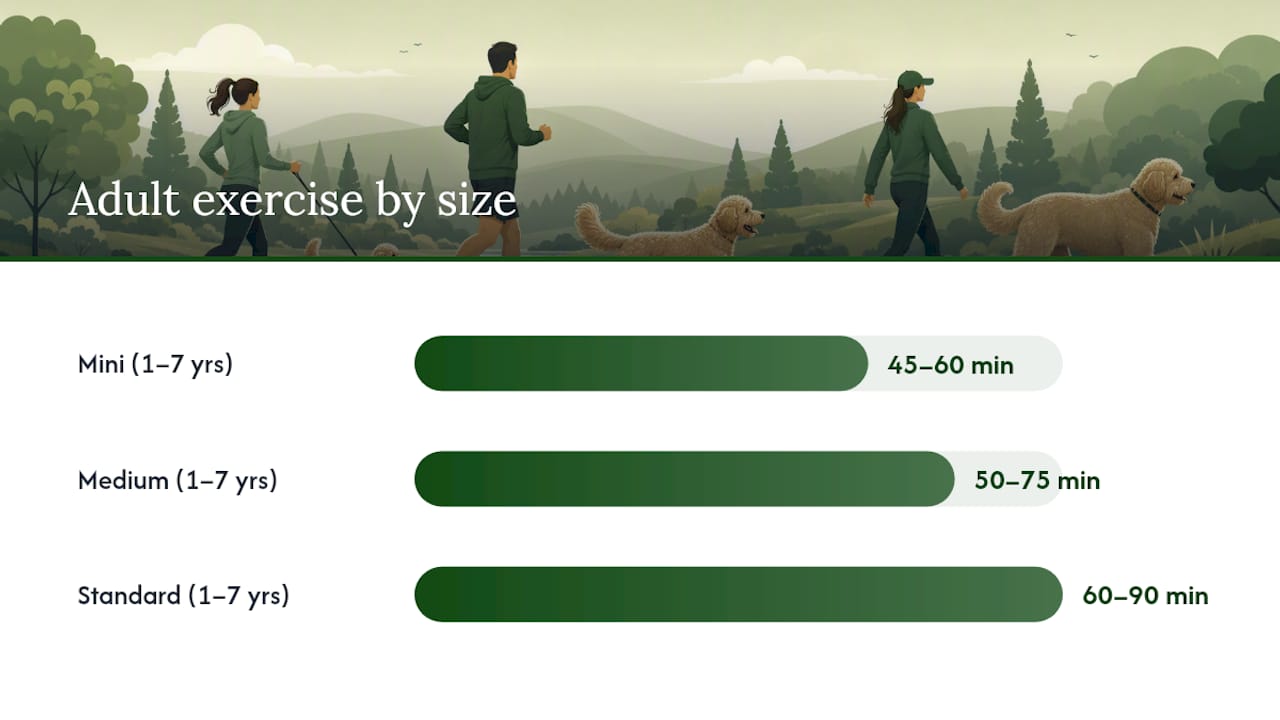
- Adult (1 to 7 years): Minis need about 45 to 60 minutes a day; Standards often want 60 to 90.
- Senior (7+ years): Same number of walks, shorter and slower, with swimming as a joint-friendly substitute.
If you’re reading this today because your puppy just got home, shorten your walks, stick to grass or packed dirt, and add a five-minute sniff-and-search game before dinner.
Key Takeaways
Matching exercise to your Goldendoodle’s exact age and size prevents joint damage, curbs destructive behavior, and keeps the dog genuinely tired rather than just walked.
| Point | Details |
|---|---|
| Follow the 5-minute rule | Give puppies 5 minutes of structured exercise per month of age, twice daily, until growth plates close. |
| Size changes the adult total | Minis need about 45 to 60 minutes daily; Standards often need 60 to 90 minutes. |
| Watch adolescence closely | Between 6 and 18 months, prioritize mental work over hard physical exertion. |
| Seniors need frequency, not intensity | Keep the same number of daily walks but shorten and slow them; add swimming for joint relief. |
| Red flags mean a vet call | Limping, stiffness, or gait changes at any age warrant veterinary assessment, not waiting it out. |
Table of Contents
- Goldendoodle Exercise Needs by Age: The Full Breakdown
- Sample Daily Exercise Schedules by Age
- Physical Activities and Mental Games That Work at Every Age
- Protecting Joints: Surfaces, Overexertion Signs, and Vet Red Flags
- Building Exercise Into Your New Puppy’s Routine
- Frequently Asked Questions
- Sources
Goldendoodle Exercise Needs by Age: The Full Breakdown
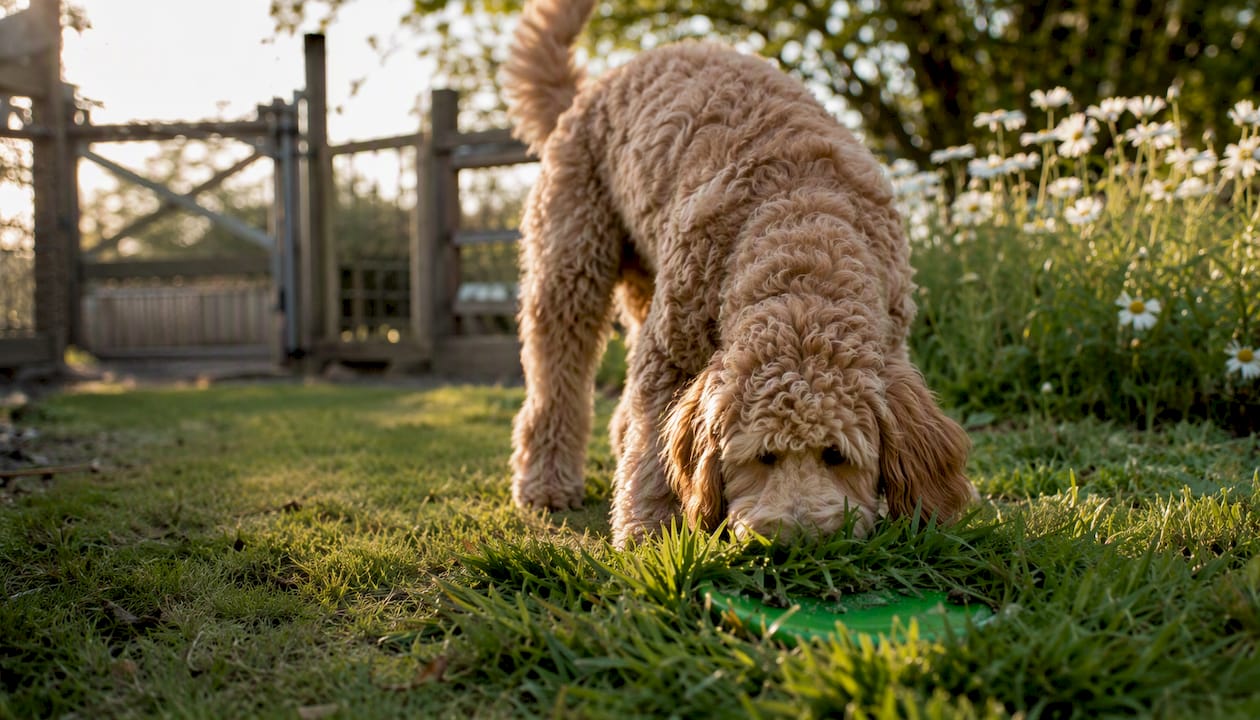
The rule most breeders and vets repeat is simple: 5 minutes of structured exercise per month of age, twice a day, until the growth plates close. A 3-month-old puppy gets two 15-minute sessions. A 5-month-old gets two 25-minute sessions. This isn’t a suggestion pulled from thin air. It’s the standard guidance Purina gives new puppy owners, and it shows up across veterinary sources because it maps to how cartilage and growth plates actually mature.
During this window, stick to free play in the yard, gentle leash walks, and supervised time with other calm dogs. Skip repetitive ball-chasing (all that sudden stopping and pivoting stresses soft joints), skip stairs, and skip anything on concrete or asphalt for long stretches. VCA Hospitals recommends starting with short intervals, such as several 5 to 10 minute bursts spread through the day, then building duration and speed as the puppy grows.
Adolescence, roughly 6 to 18 months, is where most owners get surprised. Your dog looks bigger and acts wired, but the skeleton isn’t done growing. This is the mismatch that trips people up: the dog’s energy level shoots past its physical readiness, and if you respond by ramping up hard runs and jumping drills, you’re gambling with joints that haven’t finished forming. The better move is increasing exercise gradually while leaning harder on mental work, obedience drills, scent games, and structured training, to burn off the excess energy without the impact.
Once your Goldendoodle reaches full adulthood (roughly 1 to 7 years, depending on size), daily needs settle into a predictable range. Minis typically do well on 45 to 60 minutes. Standards often want 60 to 90 minutes, split across two or more sessions. Medium-sized Goldendoodles land in between, usually 50 to 75 minutes, according to the age-by-age breakdown from Goldendoodle Report. PetMD lists a simpler 30 to 60 minute baseline for many adult Goldendoodles, which works fine as a floor if your dog is on the calmer end or has a lower activity drive. The best mix combines a brisk walk, some off-leash play, and at least one mentally demanding task like training or a puzzle feeder.
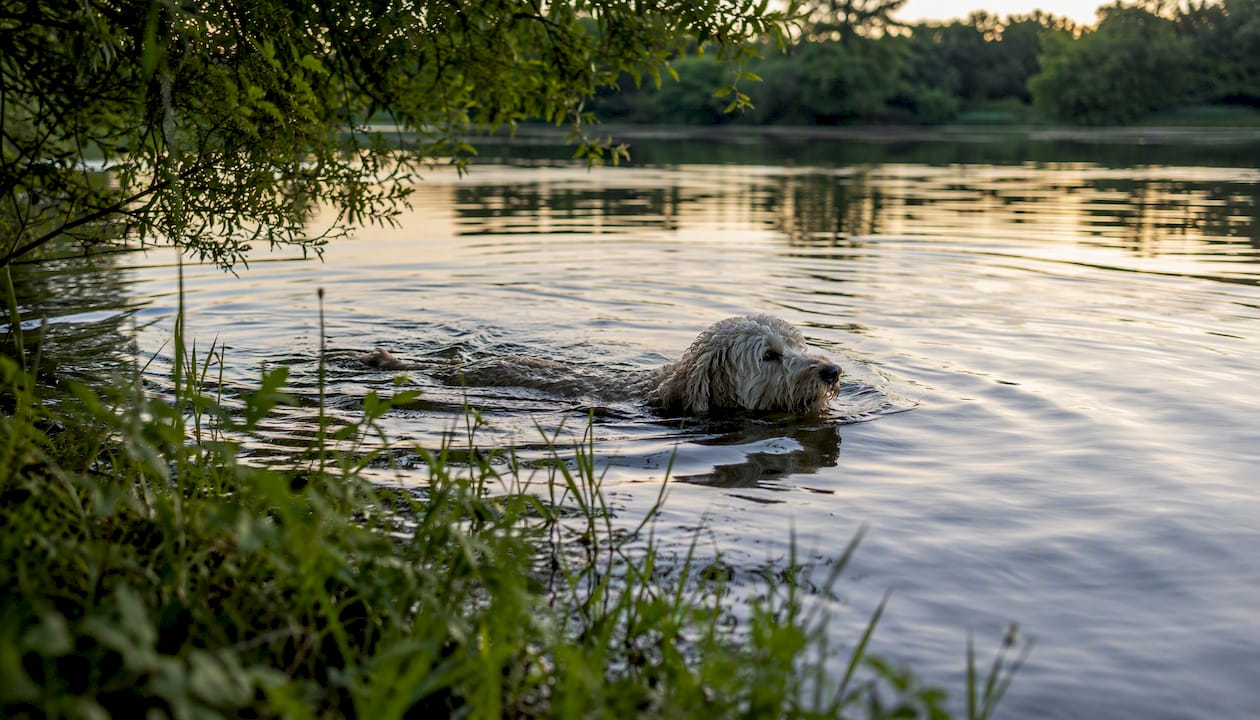
Senior Goldendoodles, generally 7 years and up, still need daily movement, just gentler. Cut the pace, not the frequency. Shorter, more frequent walks beat one long outing that leaves an older dog stiff the next morning. Swimming becomes especially valuable here since it works the cardiovascular system without loading the joints.
Growth plate closure timing varies by size, and it matters because it defines when “structured” exercise (repetitive runs, jogging alongside a bike, agility jumps) becomes safe. Minis typically close around 10 to 12 months. Mediums run 12 to 15 months. Standards, being the largest, often don’t finish until 15 to 18 months. Free play and gentle leash walks are fine before that. Anything with sustained impact should wait.
Sample Daily Exercise Schedules by Age
Here’s how those numbers translate into an actual day. Pick the one that matches your dog’s age and adjust the minutes to size.
- Puppy (4 months old): Two 20-minute sessions. Morning: leash walk on grass plus a few minutes of free play. Evening: short training session followed by gentle yard time.
- Adolescent (10 months old): 45 to 60 minutes total, split three ways. Morning walk (20 minutes), midday scent game or puzzle toy (10 minutes), evening walk with some off-leash recall practice (20 minutes).
- Adult Standard (3 years old): 60 to 90 minutes. Morning walk or jog (30 minutes), afternoon fetch or swim (20 to 30 minutes), evening training or agility practice (15 to 20 minutes).
- Senior (9 years old): 30 to 40 minutes, spread across three short outings rather than one long walk, with a weekly swim if joints are stiff.
Little and often beats one big session, especially for puppies whose joints tire fast and seniors whose stamina has dropped. If a day gets away from you, swap a walk for ten minutes of mental enrichment or a supervised swim. It won’t fully replace physical activity, but it keeps boredom and destructive behavior at bay.
Physical Activities and Mental Games That Work at Every Age
Goldendoodles are working-line smart, which means tired legs without a tired brain still leaves you with a dog pacing the kitchen at 9pm. Build routines that hit both.
- Leash walks: Safe from week one; increase distance as the 5-minute rule allows.
- Off-leash play in a fenced area: Fine once basic recall is solid, usually mid-puppyhood onward.
- Controlled fetch: Wait until after adolescence, once growth plates are closer to closing, to avoid repetitive joint strain.
- Supervised swimming: A genuinely low-impact option recommended for adults, seniors, and high-energy dogs needing an outlet that spares the joints.
- Agility classes: Hold off on jumps and weave poles until growth plates close; foundational obedience can start much earlier.
- Scent work, puzzle toys, and trick training: Safe at any age and genuinely tiring in a way that surprises most new owners.
Pro Tip: Stack a short walk, a 10-minute scent game, and a 5-minute training drill back to back. That combination tires a Goldendoodle out faster than 40 minutes of straight walking, because it works the brain and the body in the same session.
Protecting Joints: Surfaces, Overexertion Signs, and Vet Red Flags
A puppy’s joints are still forming cartilage into bone. Repeated impact on hard ground during that window is one of the most preventable causes of early joint trouble in large, fast-growing breeds like Goldendoodles.
Stick to grass, packed dirt, or soft sand for puppies. The American Kennel Club specifically flags hard, unforgiving surfaces as a risk for concussive force on developing joints. Avoid prolonged jumping, repeated stair climbing, and any exercise that involves sudden hard stops until structured activity is appropriate for your dog’s size and age.
Watch for limping, stiffness after rest, reluctance to walk, a changed gait, or swelling around a joint. These aren’t “wait and see” signs at any life stage, puppy or senior. Call your vet rather than pushing through it.
What Breeders and Vets Watch Week to Week
Track gait, recovery time after activity, appetite, and sleep quality, especially during the first year. A simple weekly log catches slow changes you’d otherwise miss.
- Add about 5 minutes per session every few weeks as your dog matures.
- Get a vet’s sign-off before any sudden jump in intensity.
- Example progression: an adolescent moving from two 20-minute walks to a mixed day (walk, swim, training) over one week, adding activity gradually rather than all at once.
A Breeder’s Note on Growing Into Exercise
Most Goldendoodle puppies we’ve placed need a careful step-up in activity between months four and twelve, not a straight line. If you want guidance tailored to your pup’s age and size, our training and care resources are there whenever you need them.
Building Exercise Into Your New Puppy’s Routine
If you’re bringing home a Goldendoodle puppy, getting the exercise plan right from week one sets the tone for years of healthy joints and good behavior. Lakewoodranchdoodles’ holistic approach to care pairs health-first breeding with the kind of lifetime support that helps you navigate exactly these questions, from the first week home through the senior years. Browse our available Goldendoodle puppies or reach out for a virtual visit if you’re still deciding which size and generation fits your lifestyle.
Frequently Asked Questions
How much exercise does a Goldendoodle puppy need? About 5 minutes per month of age, twice a day, until growth plates close, per the guideline widely cited by Purina. A 4-month-old gets roughly two 20-minute sessions.
When can a Goldendoodle start running or jogging alongside me? Wait until growth plates close, which varies by size: around 10 to 12 months for Minis, 12 to 15 for Mediums, and 15 to 18 for Standards.
How much exercise does an adult Goldendoodle need daily? Most adults do well with 30 to 90 minutes a day depending on size, with Standards on the higher end and Minis needing less.
Do senior Goldendoodles still need daily exercise? Yes, but shorter and gentler. Keep the same frequency of walks while reducing pace and distance, and consider swimming for low-impact cardio.
What are the warning signs my Goldendoodle is overexercised? Limping, stiffness after rest, reluctance to walk, a changed gait, or joint swelling all warrant a call to your vet rather than waiting to see if it resolves.
Sources
- AKC: Puppies’ mental and physical exercise
- Purina: How much exercise does a puppy need?
- VCA Hospitals: Exercise guidelines for puppies
- Goldendoodle Report: Goldendoodle exercise needs by age
- PetMD: Goldendoodle dog breed health and care