


Goldendoodle allergy friendly home tips are targeted grooming, cleaning, and environmental strategies that reduce allergen exposure in your living space. No dog breed is 100% hypoallergenic, including Goldendoodles. What sets them apart is their Poodle-influenced coat, which traps allergen particles instead of releasing them into the air. Allergens come from proteins in a dog’s dander, saliva, and urine. With the right routines in place, allergy-sensitive owners across Canada can live comfortably with a Goldendoodle.
How to groom your Goldendoodle to minimize allergens
Grooming is the single most effective tool for controlling allergen levels on your dog. A clean, well-maintained coat sheds less dander and holds fewer allergen particles against your furniture, floors, and clothing.
Professional grooming every 6–8 weeks
Professional grooming every 6–8 weeks resets allergen loads by removing accumulated skin flakes and loose hair. Between appointments, brushing 3–4 times weekly keeps dander from building up. Curly coats need daily brushing because the tight curl pattern traps debris close to the skin. Skipping sessions allows mats to form, and mats are allergen traps.
Choosing the right tools
Slicker brushes and steel greyhound combs remove mats and allergen-trapping undercoat far more effectively than standard pet brushes. Work in sections, brushing down to the skin rather than skimming the surface. This technique, called line-brushing, is especially critical during the puppy-to-adult coat transition between 6 and 12 months. Line-brushing to the skin prevents tight mats that harbor allergens during that vulnerable coat change period.

Bathing and ear care
Bathe your Goldendoodle every 4–6 weeks using a gentle, hypoallergenic formula. Lakewoodranchdoodles recommends an oatmeal-based dog shampoo for dogs with sensitive skin because it cleans without stripping natural oils. Rinse thoroughly. Shampoo residue left on the coat causes skin dryness and increases dander production. Dry the coat completely after every bath to prevent moisture buildup near the skin.
Ear care matters more than most owners realize. Goldendoodles have floppy, hair-filled ears that trap moisture and debris. Weekly ear cleaning with a vet-approved solution prevents infections that worsen allergen accumulation. Ask your vet whether ear plucking is appropriate for your dog, since opinions on that practice vary.
Pro Tip: Always brush your Goldendoodle before bathing. Wet mats tighten and become nearly impossible to remove without cutting.
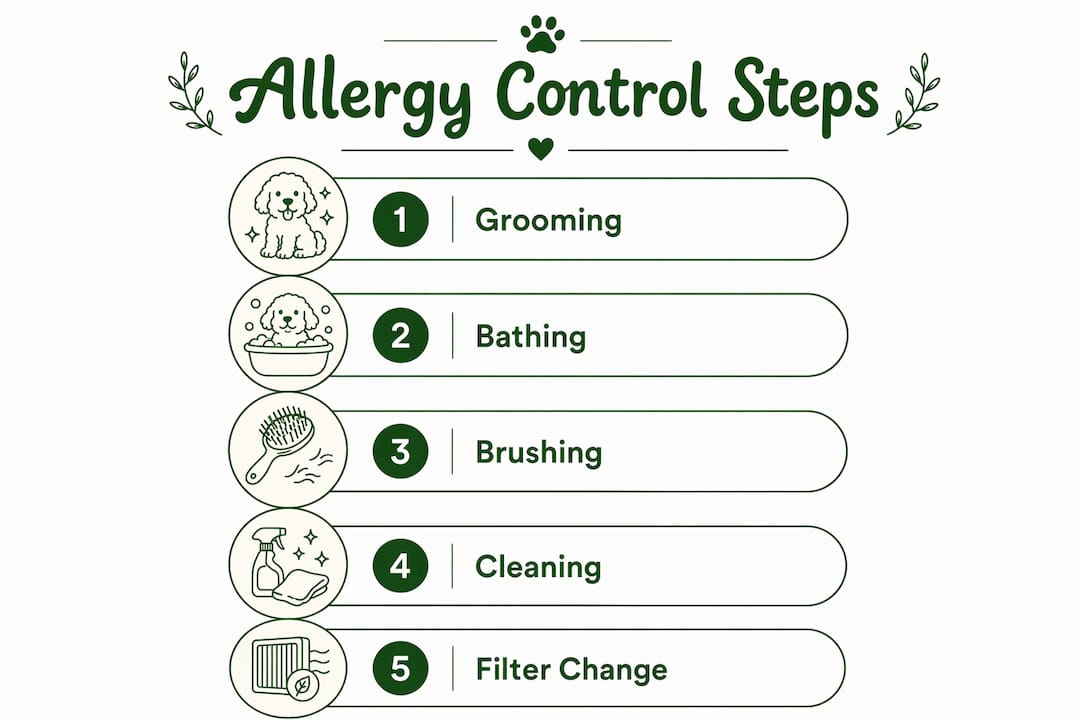
Home cleaning routines for reducing Goldendoodle allergen exposure
Your dog’s grooming routine controls allergens at the source. Your home cleaning routine controls what escapes into the air and settles on surfaces. Both are non-negotiable for allergy management.
A weekly cleaning schedule that works
- Vacuum 2–3 times per week. HEPA-filter vacuums trap microscopic dander particles that standard vacuums recirculate into the air. Focus on high-traffic areas, upholstered furniture, and baseboards.
- Run HEPA air purifiers continuously. Place one in the bedroom and one in the main living area. HEPA filtration improves indoor air quality by capturing airborne allergens before they settle.
- Wash pet bedding weekly. Hot water laundering of pet bedding, blankets, and soft toys removes dander trapped in fabric fibers. Use unscented detergent to avoid irritating your dog’s skin.
- Replace heavy drapes and carpets where possible. Hard flooring and washable curtains hold far less dander than thick pile carpet or velvet drapes.
- Create a dog-free bedroom. Keeping the bedroom a dog-free zone gives allergy-sensitive people 7–8 hours of low-allergen recovery time each night.
Pro Tip: Change your HVAC filter monthly instead of quarterly. Pet dander clogs filters faster than household dust alone.
| Cleaning task | Frequency | Why it matters |
|---|---|---|
| HEPA vacuum floors and furniture | 2–3 times weekly | Removes settled dander before it becomes airborne again |
| HEPA air purifier operation | Continuous | Captures airborne particles in real time |
| Pet bedding and blanket wash | Weekly in hot water | Eliminates dander embedded in fabric |
| Hard surface wipe-down | Weekly | Removes dander from counters, shelves, and baseboards |
| HVAC filter replacement | Monthly | Prevents recirculation of trapped allergens |
Which Goldendoodle coat type is best for allergy-sensitive homes?
Coat type is the most overlooked variable in dog allergy management. Not all Goldendoodles shed the same amount, and the difference comes down to genetics.
Curly vs. wavy vs. straight coats
Curly coats, inherited from the Poodle parent, shed the least and trap dander closest to the skin where it can be brushed out during grooming. Wavy coats fall between curly and straight in terms of shedding. Straight coats shed more freely and spread allergens across surfaces faster. For allergy-sensitive households, a curly coat is the clear choice.
| Coat type | Shedding level | Grooming demand | Allergy friendliness |
|---|---|---|---|
| Curly | Low | High (daily brushing) | Best |
| Wavy | Moderate | Moderate (3–4x weekly) | Good |
| Straight | Higher | Lower | Least suitable |
Why generation matters
Selecting an F1B or multigenerational Goldendoodle improves allergy-friendliness because these generations carry a higher proportion of Poodle genetics. An F1B is 75% Poodle and 25% Golden Retriever. Multigenerational dogs bred by experienced breeders like Lakewoodranchdoodles offer even more coat predictability. That predictability means fewer surprises when it comes to shedding and allergen output.
Test before you commit
Spend meaningful time with a specific puppy before bringing it home. Individual allergy sensitivity varies, and a coat type that works for one person may not work for another. Prospective owners should spend significant time with Goldendoodles before adoption to gauge their personal allergic response. Lakewoodranchdoodles offers both in-person and virtual visits so you can meet puppies before making a decision.
Lifestyle and diet tips that support allergy-friendly living
Grooming and cleaning address allergens from the outside. Diet and lifestyle choices address them from the inside. Both sides of the equation matter.
Diet’s effect on dander and skin health
- Switch protein sources if skin issues appear. Chicken is a common food allergen in Goldendoodles and can worsen skin irritation and increase dander production. Salmon and lamb-based diets are lower-risk alternatives.
- Choose limited ingredient formulas. Fewer ingredients mean fewer potential triggers. Look for single-protein, grain-free options formulated for sensitive dogs.
- Consult your vet before changing your dog’s diet. Skin changes can signal food sensitivity, environmental allergies, or both. A vet can run tests to identify the actual cause.
Routine care that reduces allergen output
- Schedule regular vet checkups. Skin and coat health decline when underlying conditions go untreated. Catching issues early keeps dander levels lower.
- Keep your dog active. Consistent exercise reduces stress-related shedding. A dog that gets daily walks and play sessions maintains a healthier coat than one that is sedentary.
- Maintain a consistent grooming calendar. Irregular grooming creates peaks in allergen buildup. Predictable schedules keep allergen levels steady and manageable.
- Integrate grooming with your dog’s wellness visits. Ask your vet to assess coat and skin condition at every appointment. Early intervention prevents the kind of skin breakdown that spikes dander production.
For a full overview of daily care practices, Lakewoodranchdoodles has a detailed dog care guide that covers nutrition, exercise, and coat health in one place.
Key Takeaways
Creating an allergy-friendly home with a Goldendoodle requires consistent grooming, targeted cleaning, and deliberate coat type selection working together.
| Point | Details |
|---|---|
| No dog is fully hypoallergenic | Goldendoodles reduce allergen spread through coat type, not by eliminating allergens entirely. |
| Grooming frequency is non-negotiable | Professional grooming every 6–8 weeks and regular brushing are the most direct controls on dander. |
| HEPA tools make a measurable difference | HEPA vacuums and air purifiers capture dander that standard equipment recirculates into the air. |
| Coat type and generation affect allergen output | Curly coats and F1B or multigenerational dogs produce the most predictable, low-shedding results. |
| Diet influences skin and dander levels | Switching from chicken to salmon or lamb can reduce skin irritation and lower dander production. |
What 20 years of breeding Goldendoodles taught me about allergies
The biggest misconception I hear from allergy-sensitive families is that a low-shedding dog is a low-maintenance dog. That is exactly backwards. Curly-coated Goldendoodles shed less, but they require more grooming, not less. When that grooming does not happen on schedule, the coat mats, allergens accumulate, and the family that chose the dog specifically for allergy reasons ends up in a worse situation than if they had a shedding breed they brushed daily.
The second thing I have learned is that allergy testing before adoption is not optional. It is the most responsible step a sensitive owner can take. Spending time with a specific puppy, not just the breed in general, tells you far more than any coat description on paper. Every dog is an individual. Every person’s immune response is individual. The match has to work on both sides.
What actually works long-term is a system, not a single fix. Grooming on a calendar. HEPA filtration running continuously. Bedding washed every week without exception. A dog-free bedroom. These are not dramatic changes. They are habits. Families who build those habits in the first three months rarely struggle with allergens later. Families who treat grooming as optional almost always do.
Coat type selection, breeder transparency, and owner commitment are the three factors that determine whether a Goldendoodle works in an allergy-sensitive home. Get all three right, and the dog is a genuine fit. Miss one, and no amount of air purifiers will compensate.
— Lakewood
Lakewoodranchdoodles can help you find the right match
Lakewoodranchdoodles has spent over 20 years breeding Goldendoodles with health, temperament, and coat quality as the foundation of every litter. Located in Lindsay, Ontario, the team works directly with allergy-sensitive families to identify puppies whose coat genetics align with lower-allergen living.
Every puppy at Lakewoodranchdoodles comes with lifetime breeder support, which means you are not on your own when grooming questions or skin concerns come up. Browse the current available Goldendoodle puppies to see which litters are ready now. You can also book an in-person or virtual visit to spend time with a specific puppy before committing. Call 705 875 5195 or use the inquiry form to get started.
FAQ
Are Goldendoodles truly hypoallergenic?
No dog breed is 100% hypoallergenic, including Goldendoodles. Their Poodle-influenced coats reduce allergen spread by trapping dander rather than releasing it freely into the air.
How often should I groom my Goldendoodle to control allergens?
Professional grooming every 6–8 weeks combined with brushing 3–4 times weekly significantly reduces dander buildup. Curly-coated dogs need daily brushing to prevent mats that trap allergens.
What is the best Goldendoodle generation for allergy-sensitive owners?
F1B and multigenerational Goldendoodles carry more Poodle genetics, which produces curlier, lower-shedding coats. These generations offer the most predictable allergy-friendly traits.
Can my dog’s diet affect my allergy symptoms?
Yes. Food allergens like chicken can worsen your dog’s skin irritation and increase dander output. Switching to a salmon or lamb-based limited ingredient diet can reduce that effect.
How do I create an allergy-friendly zone in my home?
Keep the bedroom completely dog-free to give yourself 7–8 hours of low-allergen recovery each night. Pair that with a HEPA air purifier in the bedroom and weekly washing of any soft surfaces the dog contacts elsewhere in the home.