


If you’re searching for Cooperslane.com alternatives, the most reliable routes are Lakewoodranchdoodles (Lindsay, Ontario), the AKC Marketplace, national breed club referral lists, and breed-specific rescues through Petfinder or Adopt-a-Pet. Each channel serves a different buyer, but all four give you a verifiable starting point.
Before you contact anyone, run three quick checks:
- Health testing on file: hip/elbow clearances, EIC DNA, and CAER eye results should be publicly listed or provided on request.
- Visit transparency: A reputable breeder welcomes in-person or virtual visits to their facility before you commit.
- Written contract with lifetime support: Any breeder worth your deposit puts the health guarantee and return policy in writing.
According to the PuppyBase 2026 Puppy Price Index, the average puppy price across breeds sits around $2,386, with reputable Lab and retriever-type litters typically running higher. Rescue adoption fees, by contrast, generally fall in the $200–$600 range.
Key Takeaways
Reputable Cooperslane alternatives share three verifiable traits: documented health clearances, visit transparency, and a written contract with lifetime support.
| Point | Details |
|---|---|
| Verify health clearances | Request OFA, PennHIP, EIC, and CAER certificates and confirm them on the OFA database before paying a deposit. |
| Use vetted search channels | Start with AKC Marketplace, the Labrador Retriever Club referral list, or Petfinder for rescue placements. |
| Set realistic cost expectations | The 2026 average puppy price is about $2,386; rescue adoption fees typically run $200–$600. Litters from reputable Lab and retriever-type breeders often cost more than the average, so be prepared for higher prices in those cases. |
| Watch for red flags | No health certificates, no visit access, and no written contract are disqualifying, not negotiable. |
| Lakewoodranchdoodles | A Lindsay, Ontario hobbyist breeder offering retriever-type and doodle litters with lifetime support and on-site or virtual visits. |
Table of Contents
- What makes a breeder actually reputable?
- Commercial breeder, hobbyist, or rescue: which fits your situation?
- What to do after you choose a breeder
- Legal protections you should know about
- How to verify a breeder’s credentials
- What health testing and lifetime support actually protect you from
- Lakewoodranchdoodles: a local alternative worth considering
- Useful resources for verifying breeders and prices
- Sources
What makes a breeder actually reputable?
Reputation in the breeding world is built on documentation, not marketing language. The three pillars that separate ethical breeders from the rest:
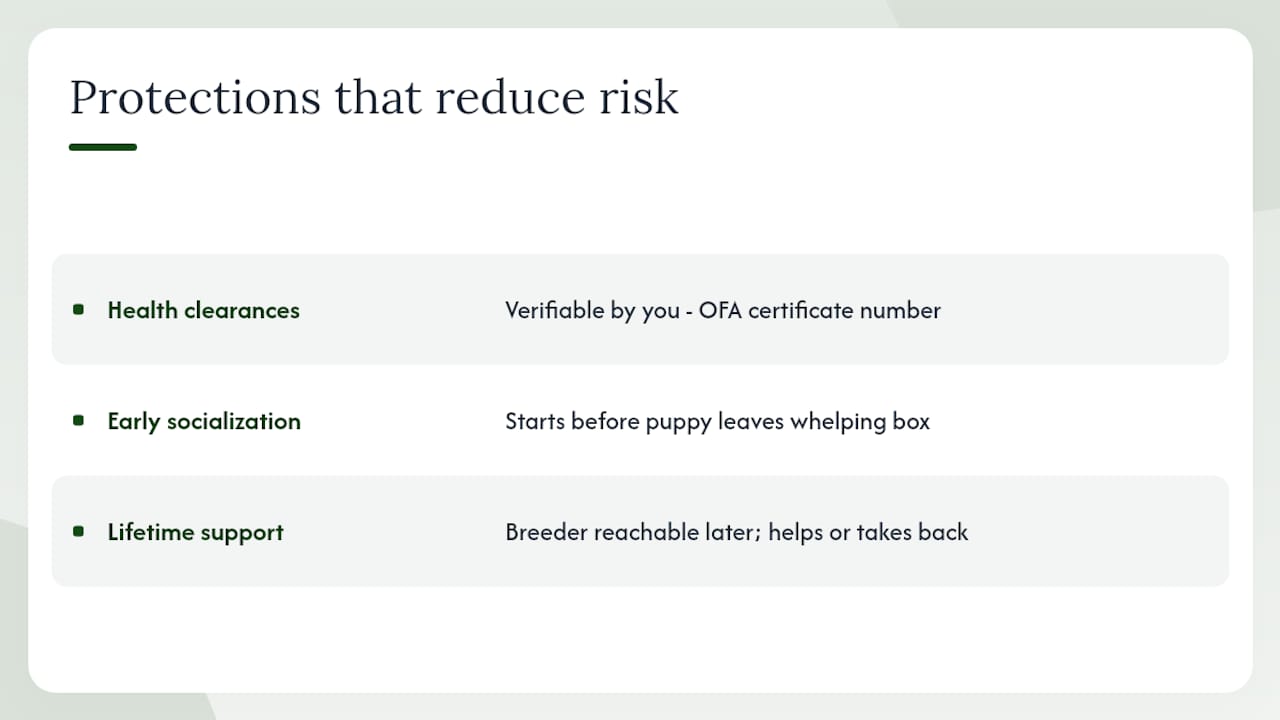
Health testing. According to Bestie Paws, non-negotiable clearances for Labrador-type dogs include OFA hip and elbow evaluations, EIC (Exercise-Induced Collapse) DNA testing, and CAER eye clearances. PennHIP is an additional hip-scoring method some breeders use alongside OFA. Ask for the certificate numbers so you can verify them directly on the OFA database.
Socialization and temperament work. AKC guidance is clear: owner commitment and structured early work shape Labrador temperament far more than bloodline marketing. A breeder who starts neurological stimulation, handling, and exposure protocols in the whelping box is giving you a measurable head start.
Contract and support. A written puppy contract should specify the health guarantee period, what conditions trigger a return or refund, and whether the breeder offers ongoing support. Lifetime breeder support, where a breeder stays reachable through your dog’s senior years, is rare and worth prioritizing.
Commercial breeder, hobbyist, or rescue: which fits your situation?
These three categories are genuinely different, not just marketing labels.
Commercial breeders produce high volumes, often across multiple breeds. Health testing may be present, but the depth of individual puppy socialization tends to be thinner. Waitlists are shorter, but so is post-sale support.
Hobbyist breeders typically run one or two breeds, whelp one to three litters per year, and are personally invested in where each puppy lands. Health testing is usually more thorough, waitlists run six to twelve months for reputable programs, and lifetime support is standard among the best. This is the category Lakewoodranchdoodles occupies.

Rescue organizations through Petfinder and Adopt-a-Pet offer a different value entirely. You often get an adult dog with a known temperament profile, lower cost, and immediate placement. The tradeoff: puppy availability is unpredictable, and Adopt-a-Pet notes that many dogs listed as “Labs” are actually retriever mixes. Confirming pedigree matters, especially if you need a specific temperament for service or support work.
One caution worth noting: The Labrador Site points out that designer crossbreeds can produce less predictable adult traits than focused purebred lines, with some traits not emerging until six months or later. That is not a reason to avoid doodles or mixes, but it is a reason to ask your breeder what temperament testing they do at eight weeks.
What to do after you choose a breeder
Pay the deposit only after you have seen the health clearance certificates, reviewed the contract, and spoken with at least one reference from a previous litter. Then:
- Confirm your place on the waitlist in writing, with an estimated litter date.
- Schedule a visit, in person or virtual, to see where the puppies are raised.
- Book a vet appointment for the week your puppy arrives. A puppy vaccine schedule should be in place from day one.
- Ask the breeder which vaccines and deworming the puppy has already received, and get the records in writing.
If you are crossing the Canada-US border with a puppy, USDA APHIS requires a health certificate issued by an accredited veterinarian within ten days of travel. Check current requirements directly with USDA APHIS before your pickup date, as rules change.
Legal protections you should know about
Several US states have “puppy lemon laws” that require breeders to disclose known health conditions and provide remedies if a puppy develops a covered genetic condition within a set window, typically one to two years. California, New York, and Florida have among the most detailed statutes. Check your state’s consumer protection office for the exact terms.
A written contract is your primary protection regardless of state law. It should name the specific health conditions covered, the remedy (replacement, refund, or veterinary reimbursement), and the timeframe. Never accept a verbal guarantee.
This is general information, not legal advice. Confirm current laws with your state’s consumer protection office or a qualified attorney.
How to verify a breeder’s credentials
- OFA database (ofa.org): Search by kennel name or dog name to confirm hip, elbow, cardiac, and eye clearances.
- CHIC (Canine Health Information Center): Confirms a dog has met the breed’s minimum health testing requirements.
- AKC Marketplace (akc.org/marketplace): Lists AKC-registered breeders; filter by breed and location.
- The Labrador Retriever Club (thelabradorclub.com): Maintains a breeder referral list of club members who have agreed to a code of ethics.
- Petfinder / Adopt-a-Pet: Search by breed and zip code for rescue placements.
Breed confusion is more common than buyers expect, and visual identification alone is unreliable. Always request the registration papers and health certificates, not just photos.
What health testing and lifetime support actually protect you from
The conventional wisdom says “find a breeder who loves their dogs.” That is true but incomplete. What actually reduces your long-term risk is a specific combination: documented health clearances that you can verify independently, early socialization that starts before the puppy leaves the whelping box, and a breeder who is still reachable when your dog is seven years old and showing signs of hip dysplasia.
Marketing language about “English lines” or “champion bloodlines” is not a substitute for an OFA certificate number you can look up yourself. AKC experts are direct on this: owner commitment and structured work from puppyhood are the primary drivers of good long-term temperament, not the marketing story around the sire’s pedigree.
The other thing buyers underestimate is the value of a breeder who answers the phone three years later. Lifetime support is not a sales line. It means the breeder helps you troubleshoot separation anxiety, recommends a trainer, or takes the dog back if your circumstances change. That backstop is worth more than a slightly shorter waitlist.
Our puppy temperament guide walks through exactly how we match puppies to owners, because the right temperament fit matters as much as health testing.
Lakewoodranchdoodles: a local alternative worth considering
If you are open to a retriever-type or doodle alternative, Lakewoodranchdoodles in Lindsay, Ontario offers Goldendoodles, Bernedoodles, Cockapoos, occasional Moyen Poodles, and Golden Retrievers, all raised with over 20 years of multigenerational experience focused on service-animal-quality temperaments.
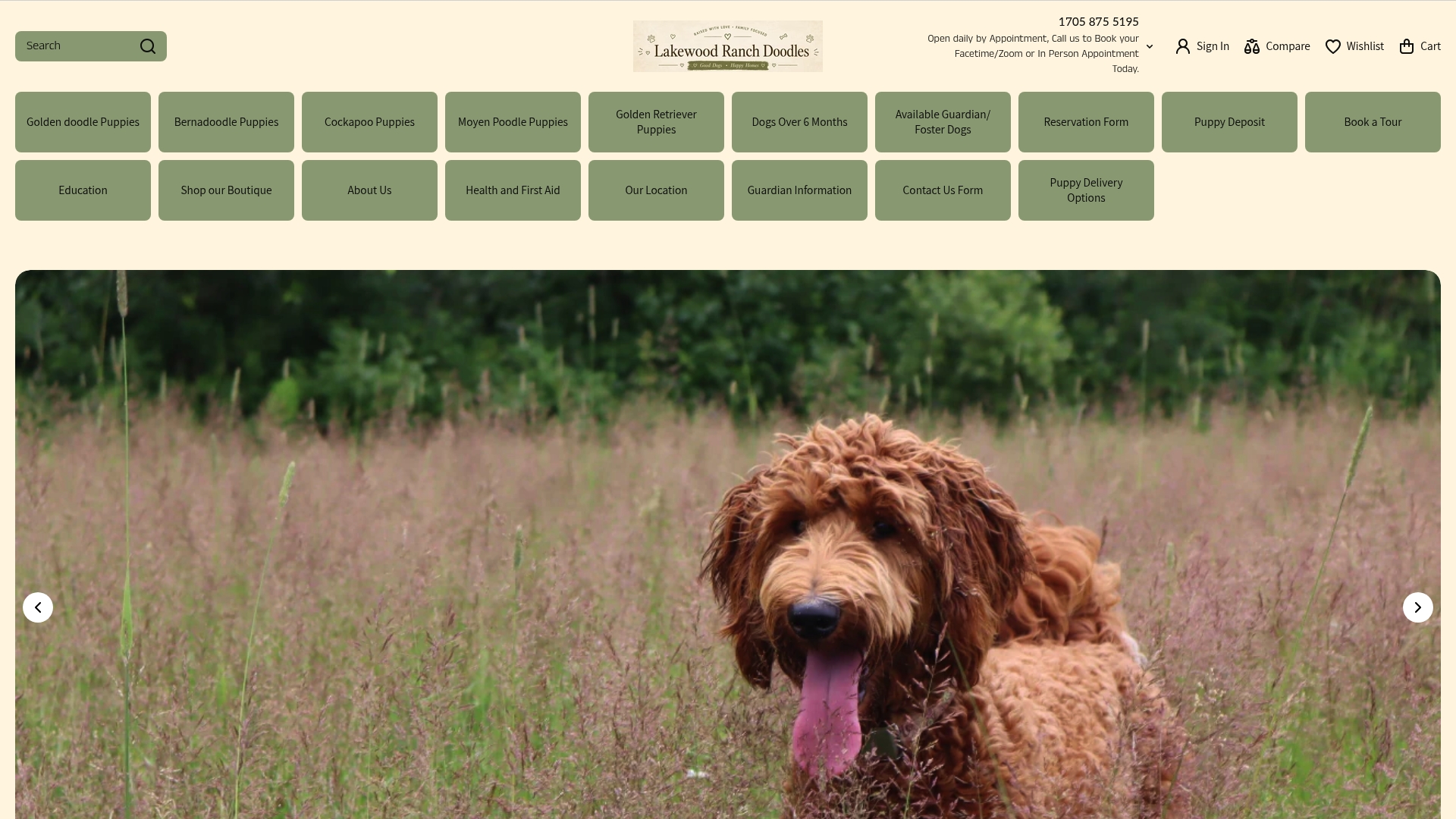
What sets Lakewoodranchdoodles apart from a standard listing on AKC Marketplace:
- Lifetime breeder support from first inquiry through your dog’s senior years
- Daily visits by appointment and virtual visits available (call 705 875 5195)
- Documented health practices and temperament-focused breeding across all litters
- Puppy starter resources and holistic care guidance included with every placement
Browse available puppies to see current litters, or check the Goldendoodle puppies page if a retriever-type companion is what you have in mind. Ready to ask a question? Call or book a visit directly.
Useful resources for verifying breeders and prices
The sources below let you cross-check any breeder independently before you commit.
| Resource | What it gives you |
|---|---|
| OFA database | Searchable health clearances by dog or kennel name |
| CHIC / AKC Marketplace | Breed minimum testing confirmation and registered breeder listings |
| The Labrador Retriever Club | Code-of-ethics breeder referral list |
| Petfinder / Adopt-a-Pet | Breed-specific rescue listings by zip code |
| PuppyBase Price Index | 2026 average and range benchmarks across breeds |
Puppy price benchmarks (2026, US market):
| Tier | Typical range |
|---|---|
| Rescue / adoption fee | $200–$600 |
| Average across breeds | ~$2,386 |
| Reputable Lab / retriever-type breeder | Typically above $2,386 average |
To verify health clearances, go to ofa.org, enter the dog’s registered name or the kennel name, and check that hip, elbow, EIC, and CAER results are listed. CHIC numbers confirm a dog has met the breed club’s minimum testing panel. Neither check takes more than two minutes and both are free.
Sources
- Golden Retriever vs. Labrador Retriever: How to Tell the Difference
- Puppy Price Index 2026: What 276 Dog Breeds Actually Cost | PuppyBase
- English Labrador Retriever — Complete Breed Guide - Bestie Paws Hospital
- Dogs Similar to Labs: Your Guide to Labrador-Like Breeds - Adopt a Pet
- Springador (insight on designer crossbreeds) - The Labrador Site
- Iheartdogs
- The Canine Confusion: Breeds Often Mistaken for Other Breeds - Hands2Paws