


Most Cockapoos live 12–15 years, and a well-cared-for dog reaching 16 or 17 is genuinely common. Where your individual dog lands in that range depends on a handful of factors you can actually influence.
The main variables are:
- Size. Toy and miniature Cockapoo crosses tend to outlive larger ones. The Poodle parent’s size matters more than most buyers realize.
- Genetics. Inherited conditions from either parent breed can shorten life if they go unscreened and unmanaged.
- Weight. Obesity is one of the most preventable lifespan reducers in any dog breed.
- Preventive care. Dental hygiene, regular wellness exams, and consistent grooming have a measurable effect on how healthy a dog stays into its senior years.
The sections below explain the evidence behind each factor and give you a concrete action plan for pushing your Cockapoo toward the high end of the range.
Key Takeaways
Consistent preventive care, starting in puppyhood, is the most reliable way to push a Cockapoo toward the upper end of its 12–15 year life expectancy.
| Point | Details |
|---|---|
| Typical lifespan range | Most Cockapoos live 12–15 years; 16–17 is common with good care; 18–20+ is exceptional. |
| Top controllable actions | Weight control and daily dental care have the greatest documented impact on longevity. |
| Size affects the range | Toy and miniature crosses tend to outlive standard crosses; ask your breeder about parent size. |
| Choosing a healthy puppy | Request OFA hip, patella, and eye screening documentation from any breeder before buying. |
| Lakewoodranchdoodles | Breeds Cockapoos with health-screened parents and offers lifetime support through your dog’s senior years. |
Table of Contents
- What the Cockapoo lifespan numbers actually mean
- 1. Genetics and parent-breed health screenings
- 2. Size and the Poodle parent variety
- 3. Weight and obesity
- 4. Dental hygiene
- 5. Diet quality
- 6. Exercise and mental stimulation
- 7. Preventive veterinary care
- Health problems that can shorten a Cockapoo’s life
- Concrete steps to extend your Cockapoo’s healthy years
- When is a Cockapoo considered senior?
- How to choose a breeder who gives your Cockapoo the best start
- Owner reports vs. veterinary perspective on extreme longevity
- A note from Lakewood on what we see in practice
- Lakewoodranchdoodles Cockapoos: bred for a long, healthy life
- Sources
What the Cockapoo lifespan numbers actually mean
The 12–15 year range cited across breed resources is the realistic middle ground, not a ceiling. Many owners report their dogs living to 16 or 17 with consistent care. Reports of 18, 19, or even 20-year-old Cockapoos do exist, but veterinary professionals treat that kind of longevity as exceptional rather than something to plan around.
Typical Cockapoo life expectancy: 12–15 years. Many well-cared-for dogs reach 16–17. Ages of 18–20+ are documented but are outliers, not the norm.
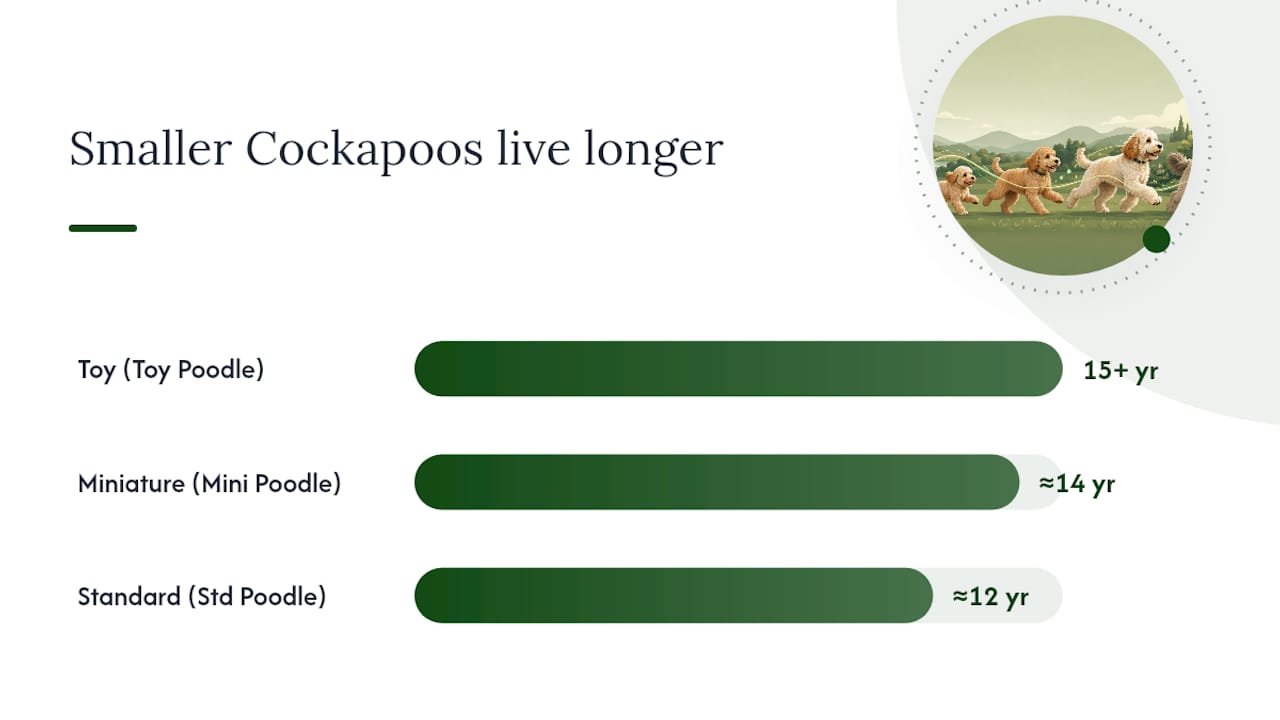
Size plays a real role here. Smaller Cockapoos, particularly toy and miniature crosses, generally outlive larger ones because smaller body size correlates with longer lifespan in dogs broadly. A Cockapoo bred from a Toy Poodle parent will typically be smaller and longer-lived than one from a Standard Poodle cross. If you want a rough sense of where your dog sits in human-equivalent years, the American Kennel Club’s dog age calculator is a useful reference for converting dog years to a human-age equivalent.
Part of what gives Cockapoos their comparatively long life expectancy is hybrid vigor. Crossing a Cocker Spaniel with a Poodle can reduce the severity of hereditary defects that accumulate in restricted purebred lines, giving the offspring a broader genetic base. That advantage is real, but it is not a guarantee. It depends entirely on the health of the parent dogs.
| Size class | Typical Cockapoo lifespan |
|---|---|
| Toy cross (Toy Poodle parent) | Often toward the upper end of 12–15 years, sometimes beyond |
| Miniature cross (Mini Poodle parent) | Mid-to-upper range, 12–15 years typical |
| Standard cross (Standard Poodle parent) | Tends toward the lower end of the range |
1. Genetics and parent-breed health screenings
Genetics is the one factor you cannot change after the puppy comes home, which is exactly why it deserves the most attention before you buy. Both the Cocker Spaniel and the Poodle carry hereditary conditions, and a puppy whose parents were never screened is carrying unknown risk.
Inherited conditions including luxating patella, hip dysplasia, and various eye and ear disorders are primary drivers of lifespan variation in Cockapoos when left unmanaged. A responsible breeder will have documentation showing that parent dogs were evaluated for these conditions before breeding. Ask for it. If a breeder cannot produce health certificates, that is a meaningful red flag.
2. Size and the Poodle parent variety
The specific Poodle parent used, whether Toy, Miniature, or Standard, materially affects adult size. Smaller parent crosses tend to live longer on average. A Standard Poodle cross increases the dog’s adult weight and can reduce life expectancy compared to a Toy or Miniature cross. If longevity is a priority, the size of the Poodle parent is worth discussing directly with your breeder before committing to a puppy.
3. Weight and obesity
Carrying excess weight shortens a dog’s life. It accelerates joint deterioration, strains the heart, and increases the risk of diabetes. Maintaining a healthy weight through portion control and regular exercise is one of the most effective owner-controlled ways to promote Cockapoo longevity. Cockapoos are food-motivated and will eat past satiety if given the chance. Measure portions, resist table scraps, and weigh your dog monthly.
4. Dental hygiene
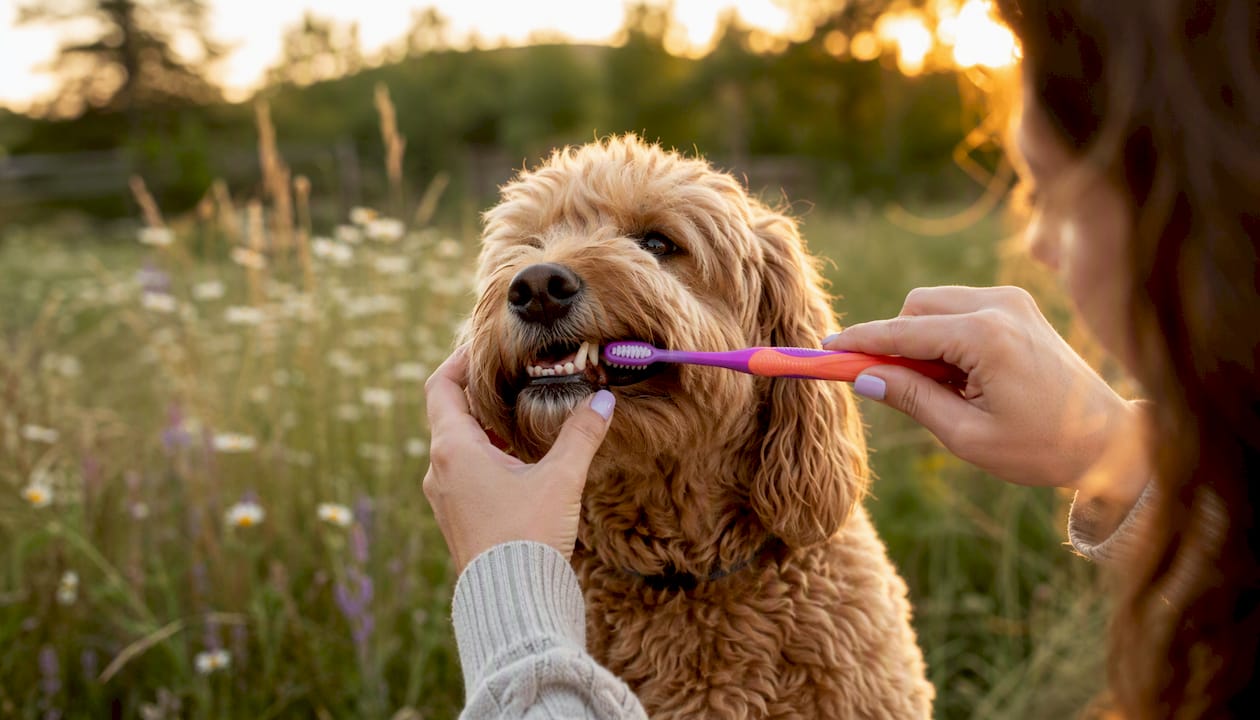
Dental disease is the most underestimated lifespan risk in small dogs. By age three, most dogs show some degree of periodontal disease if their teeth are not brushed regularly. Bacteria from infected gums can enter the bloodstream and damage the heart, kidneys, and liver over time. Veterinarians consistently recommend routine dental care as a preventive measure with real downstream effects on senior health. Brushing three to four times per week is the minimum; daily is better.
5. Diet quality
Not all dog food is equal. A diet built on named meat proteins, appropriate fat levels, and minimal filler supports organ function, coat health, and a stable weight. Cheap, grain-heavy kibble is not inherently dangerous, but a higher-quality diet tends to produce better long-term health markers. Ask your vet for a specific recommendation based on your dog’s size and age.
6. Exercise and mental stimulation
Cockapoos are active, curious dogs. Regular exercise maintains a healthy weight, supports cardiovascular health, and reduces anxiety-driven behaviors that can lead to destructive habits or stress. Thirty to sixty minutes of activity per day is a reasonable target for an adult Cockapoo. Mental stimulation, through training, puzzle feeders, or scent games, matters just as much as physical exercise for this breed.
Pro Tip: The two highest-impact actions you can take for your Cockapoo’s lifespan are weight control and dental care. Both are cheap, both are daily habits, and both have documented effects on how long and how well small dogs live. Start both in puppyhood before bad habits form.
7. Preventive veterinary care
Annual wellness exams catch problems before they become expensive or life-threatening. Vaccinations and parasite prevention (heartworm, fleas, ticks) are non-negotiable basics. For dogs under seven, once-yearly exams are the standard. After seven, twice-yearly visits give your vet a much better chance of catching early-stage kidney disease, heart changes, or dental deterioration before they compound. Daily exercise, quality nutrition, and regular vet checkups are consistently recommended to help most Cockapoos reach the upper end of their expected range.
Health problems that can shorten a Cockapoo’s life
Knowing what to watch for is half the battle. These are the conditions most likely to affect a Cockapoo’s quality of life or longevity if they go undetected.
Luxating patella. The kneecap slips out of position, causing intermittent lameness or a characteristic skipping gait. Mild cases are managed with weight control and exercise modification; severe cases require surgery. Left untreated, it leads to chronic pain and arthritis.
Hip dysplasia. Abnormal hip joint development causes pain and reduced mobility. Signs include reluctance to jump, stiffness after rest, and a bunny-hop gait. Screening parent dogs with OFA (Orthopedic Foundation for Animals) hip evaluations reduces the risk of passing this on.
Ear infections. Cockapoos inherit the Cocker Spaniel’s floppy ears and the Poodle’s dense coat, a combination that traps moisture and debris in the ear canal. Chronic infections cause pain, hearing loss over time, and persistent inflammation. Grooming every six weeks and weekly ear checks are the primary prevention tools.
Eye disorders. Progressive retinal atrophy (PRA) and cataracts appear in both parent breeds. PRA causes gradual vision loss and has no cure; early detection through annual eye exams allows owners to adapt the dog’s environment before full blindness sets in.
Dental disease. Already covered as a lifespan factor, but worth repeating here: by the time a dog shows obvious signs (bad breath, difficulty eating, pawing at the mouth), the disease is usually advanced. Start brushing early and schedule professional cleanings as your vet recommends.
Screening checklist for buyers and first-vet visits: Ask the breeder for OFA hip and patella evaluations on both parents, a CERF or OFA eye exam on the dam and sire, documentation of any genetic testing performed, and a record of the puppy’s first vet visit and vaccinations. At your first vet appointment, request a full physical including a patella check, ear and eye exam, and dental assessment. Health certificates from the breeder are not a guarantee, but their absence is a warning sign.
Responsible breeders should provide health screening details to buyers, and breed clubs such as the American Cockapoo Club maintain lists of vetted breeders who follow these standards.
Concrete steps to extend your Cockapoo’s healthy years
These are ordered by frequency, not importance. All of them matter.
- Daily: Brush teeth or use a vet-approved dental chew. Check ears for redness, odor, or discharge. Provide at least 30 minutes of exercise.
- Weekly: Weigh your dog and log the number. Check eyes for discharge or cloudiness. Inspect paws and coat for mats, debris, or skin irritation.
- Every 6–8 weeks: Professional grooming appointment. This is also when a groomer can flag skin issues, lumps, or ear problems you might miss at home.
- Every 3–6 months: Review your dog’s diet and portion size against current weight. Adjust if needed.
- Annually (under age 7): Full wellness exam, vaccinations, heartworm test, fecal parasite screen, dental assessment.
- Twice yearly (age 7+): Full wellness exam with senior bloodwork panel (kidney, liver, thyroid, blood glucose). Discuss joint supplements if stiffness is present.
Caring for your dog from puppyhood with this kind of consistent schedule is the single most reliable way to catch problems early and keep a Cockapoo healthy into its teens.
Pro Tip: Keep a simple health log: weight, appetite, energy level, and any unusual behaviors. A five-minute weekly entry gives your vet a timeline that is far more useful than “he seemed off a few months ago.” Early trends in weight loss or energy decline are often the first signs of something treatable.
Grooming deserves its own emphasis here. The Cockapoo’s coat, whether wavy or curly, traps moisture near the ears and eyes. Regular professional grooming reduces chronic ear infections and eye irritation, both of which can become persistent problems that undermine senior health if ignored. For practical guidance on grooming frequency and technique, Lakewoodranchdoodles’s grooming and care resources cover what new owners need to know.
When is a Cockapoo considered senior?
Most Cockapoos enter the adult stage around 12–18 months and are generally considered senior at around 9–10 years. Smaller dogs age more slowly than larger ones, so a Toy Cockapoo cross at 10 may be biologically younger than a Standard cross at the same age.
Common signs that your dog is entering its senior phase:
- Slower to rise after rest, stiffness in the hindquarters
- Reduced enthusiasm for exercise or shorter play sessions
- Weight changes in either direction without a diet change
- Increased water intake or more frequent urination
- Cloudiness in the eyes, reduced responsiveness to sounds
- Worsening breath or reluctance to chew hard food
- More sleep, less interest in new stimuli
When these signs appear, care should shift. Twice-yearly vet visits become the standard rather than the exception. A senior bloodwork panel gives your vet a baseline for kidney and liver function, thyroid levels, and blood glucose. Diet may need to shift to a lower-calorie, joint-supporting formula. Some dogs benefit from omega-3 supplementation or glucosamine for joint comfort; discuss this with your vet before adding anything.
Pro Tip: Starting twice-yearly vet visits at age 9 rather than waiting for obvious decline gives you a two-to-three-year head start on catching the conditions most likely to affect a senior Cockapoo. Kidney disease, in particular, is often asymptomatic until it is well advanced.
How to choose a breeder who gives your Cockapoo the best start
The breeder you choose sets the genetic foundation your dog will live on for the next 12–15 years. That is not a small decision.
Questions to ask any breeder before committing:
- What health screenings have been performed on both parents? Can you provide documentation?
- How old are the parent dogs, and what is their current health status?
- Have the puppies been socialized with people, children, and other animals?
- Do you offer lifetime breeder support after the puppy goes home?
- Can I contact previous buyers as references?
- Are you affiliated with any breed club or registry that holds you to a health standard?
Documents worth requesting:
- OFA hip and patella evaluations for both parents
- CERF or OFA eye exam results
- Any genetic panel results (PRA, progressive rod-cone degeneration)
- Puppy’s first vet visit record and vaccination history
Trust signals that separate serious breeders from casual ones: multi-year or multigenerational experience, transparent health-record sharing, willingness to allow an independent vet check before purchase, and a genuine lifetime support policy that does not end at the sale.
Cockapoo puppies from Lakewoodranchdoodles come with exactly that kind of support, including health-focused breeding practices and a team that stays with you from first inquiry through your dog’s senior years.
Owner reports vs. veterinary perspective on extreme longevity
You will find stories online of Cockapoos living to 18, 19, or 20 years. Those stories are real, but they need context.
Part of why extreme-age reports circulate is demographic. Because Cockapoos became widely popular relatively recently, a large portion of the current Cockapoo population is under 10 years old. The dogs generating longevity data right now are a young population. That means the pool of dogs old enough to report on is still developing, and the outliers, the 18- and 19-year-olds, get noticed and shared precisely because they are unusual.
There is also selection bias at work. Owners of exceptionally long-lived dogs are more likely to post about it. Owners whose dogs passed at 11 or 12 are less likely to share that publicly. The result is an online impression that skews older than the actual population average.
Plan for 12–15 years. Hope for more. Do the work that makes more likely.
A note from Lakewood on what we see in practice
Over more than 20 years of breeding Cockapoos, the pattern we see consistently is this: the dogs that live longest are not the ones with the luckiest genetics. They are the ones whose owners stayed engaged. Regular vet visits, consistent dental care, a healthy weight maintained from puppyhood, and a grooming schedule that keeps ears clean. Those are the variables that separate a 12-year-old dog from a 16-year-old one.
On our end, we screen parent dogs before every breeding, prioritize temperament and structural health, and socialize puppies from their earliest days. We also stay in contact. If you have questions about your Cockapoo’s health at year three or year thirteen, we are still here to help you think through it.
If you have specific questions about our breeding program or what to expect from a Cockapoo’s health over its lifetime, reach out directly at 705 875 5195 or book a virtual visit. We are happy to talk through it.
Lakewoodranchdoodles Cockapoos: bred for a long, healthy life
Lakewoodranchdoodles breeds Cockapoos with longevity in mind from the start. Parent dogs are health-screened before breeding, puppies are socialized in a home environment from day one, and every buyer receives lifetime breeder support that does not expire when the puppy goes home. That last part matters more than it sounds: having a knowledgeable breeder to call when your dog is eight years old and showing new symptoms is genuinely useful.
No breeder can guarantee a specific lifespan, and we will never claim otherwise. What we can offer is a puppy with the strongest possible genetic foundation, a healthy start, and a team that stays with you for the long haul. Browse our available Cockapoo puppies or check our available puppies page to see current litters and inquire about upcoming ones.
Sources
- Cockapoo lifespan guide — Petful
- How Long Do Cockapoos Live? — Dogster
- Cockapoo breed info — VCA Hospitals
- Cockapoo lifespan overview — Hepper